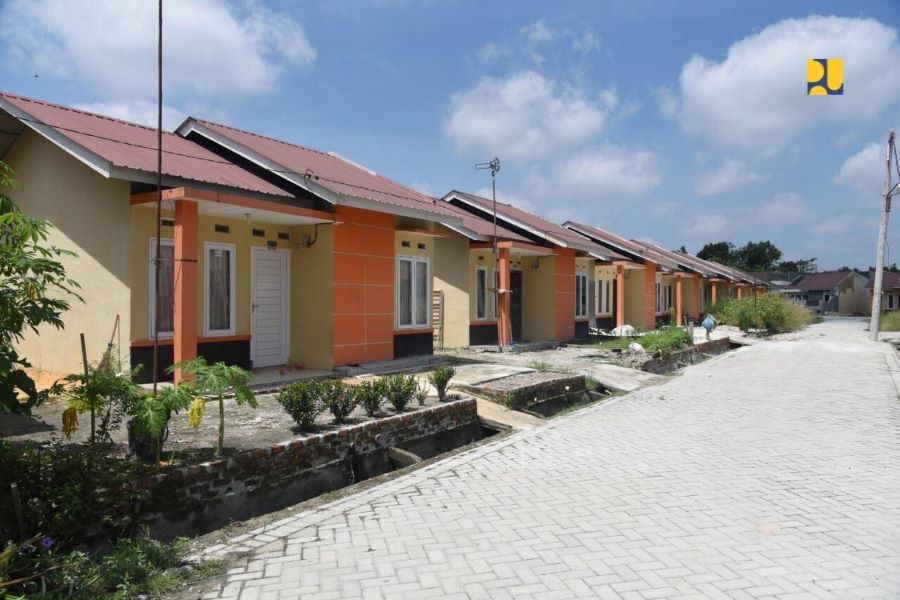
The Indonesian government, through the Ministry of Housing and Settlements (PKP), has officially announced that the distribution of subsidized housing under the Housing Financing Liquidity Facility (FLPP) program has surpassed the 100,000-unit milestone as of mid-July 2026. Minister of Housing and Settlements Maruarar Sirait, popularly known as Ara, expressed strong confidence that the ambitious annual target of 350,000 units remains within reach, despite the scale of the challenge. This progress report comes during the first year of President Prabowo Subianto’s administration, signaling a rigorous push toward fulfilling the national mandate of providing decent and affordable housing for all Indonesians, particularly Low-Income Communities (MBR).
As of July 17, 2026, the verified data shows that 102,900 units have been successfully distributed to eligible citizens. Minister Ara emphasized that while the FLPP is a legacy program, its execution under the current administration has been intensified to meet the escalating demand for homeownership. The Minister’s optimism is rooted in a strategy of "aggressive collaboration" between the government, financial institutions, and private developers. During a press briefing following the inauguration of the new headquarters for the Public Housing Savings Management Agency (BP Tapera) in Jakarta, the Minister underscored that the first-year performance of the Prabowo administration reflects a significant upward trend in housing accessibility.
Historical Trajectory and Scaled Ambitions
The current target of 350,000 units for 2026 represents a substantial increase compared to previous years, highlighting a shift in government priorities toward aggressive infrastructure development in the residential sector. For context, in 2023, the government successfully realized the distribution of 228,000 subsidized units. By 2025, this figure grew to 278,000 units. The jump to a 350,000-unit goal for 2026 is part of the broader "Three Million Houses Program," a flagship policy of President Prabowo Subianto aimed at eradicating the housing backlog that has persisted for decades.

This growth trajectory is not merely numerical but also structural. The government has increased the budget allocation for FLPP to ensure that the liquidity needed by lending banks is readily available. The FLPP scheme remains the backbone of subsidized housing in Indonesia, offering a fixed interest rate of 5% for up to 20 years, which is significantly lower than commercial mortgage rates. This financial cushion is what allows MBR individuals—ranging from factory workers to informal traders—to transition from renting to owning property.
Strategic Role of BP Tapera and Digital Transformation
A pivotal element in achieving the 2026 target is the performance of BP Tapera. As the primary manager of housing funds, BP Tapera has been tasked with transforming its operational model to be more transparent, accountable, and professional. Minister Ara, who also serves as the Chairman of the BP Tapera Committee, noted that the agency faces immense pressure from both the public and developers to deliver results without bureaucratic delays.

The inauguration of the new BP Tapera Central Office is seen as a strategic move to centralize and improve the quality of housing finance services. The new facility is designed to serve as a hub for consultation for all stakeholders, including participants (workers), employers, distributing banks, and property developers. Beyond physical infrastructure, the agency is undergoing a digital transformation. The integration of the SiKasep (Subsidized Housing Mortgage Information System) and SiKumbang (Developer Information System) applications has been streamlined to ensure that the process from house selection to credit approval is faster and less prone to manipulation.
Heru Pudyo Nugroho, the Commissioner of BP Tapera, stated that the relocation to a more modern headquarters symbolizes a "new era" of sustainable housing finance management. He emphasized that the agency is committed to ensuring that every rupiah managed is directed toward high-quality housing that meets the technical standards set by the Ministry of PKP.

Regional Performance: West Java as the National Engine
The distribution of subsidized housing is not uniform across the archipelago, with certain provinces showing exceptional demand and execution capabilities. According to recent data, West Java continues to lead the nation in FLPP distribution. By the middle of 2026, West Java alone accounted for 62,291 units, representing approximately 24% of the national total.
The high concentration of subsidized housing in West Java is attributed to its status as an industrial powerhouse. With numerous industrial estates in Bekasi, Karawang, and Purwakarta, the demand from the labor force for affordable housing near their workplaces is staggering. The provincial government’s cooperation in streamlining local permits (PBG) has also played a crucial role in allowing developers to break ground faster than in other regions. Following West Java, provinces such as East Java and Banten also reported strong numbers, driven by urbanization and the expansion of satellite cities around major metropolitan areas.

Strengthening the Supply Side: The Developer’s Perspective
While the government provides the financing, the success of the 350,000-unit target relies heavily on the "supply side"—the developers. Organizations such as Real Estate Indonesia (REI) and Himperra (Association of Indonesian Residential and Housing Developers) have been vocal about the need for consistent land-use policies.
Minister Ara acknowledged that developers of subsidized housing face unique challenges, including the rising cost of raw materials and the scarcity of affordable land near urban centers. To address this, the Ministry of PKP is exploring the use of "idle land" owned by state-owned enterprises (BUMN) and local governments to be converted into residential zones for MBR. By reducing the land acquisition cost, the government hopes to maintain the price ceiling for subsidized houses, which is currently adjusted periodically to reflect economic conditions.

Furthermore, the Minister has challenged developers to not only focus on quantity but also on the quality of the buildings. Subsidized houses must be equipped with basic infrastructure, including clean water access, proper sanitation, and electricity, before they are handed over to the residents.
Economic Implications and the Multiplier Effect
The push to reach 350,000 subsidized units is not just a social welfare program; it is a vital economic engine. The housing sector is known for its extensive multiplier effect, influencing over 170 sub-sectors of the economy. From the manufacturing of cement, steel, and ceramics to the retail of furniture and home appliances, the construction of 350,000 homes creates millions of jobs across the country.

Economists suggest that every billion rupiah invested in housing construction can contribute significantly to the local GDP and stimulate micro-businesses within the vicinity of the new housing complexes. For the Prabowo administration, the housing program is a key pillar in achieving the targeted 8% national economic growth. By providing stable housing, the government is also indirectly improving public health and educational outcomes, as families in permanent homes tend to have better access to essential services.
Challenges and Future Outlook
Despite the optimistic outlook, several hurdles remain for the second half of 2026. The primary concern is the potential for "budget exhaustion." If the pace of distribution continues to accelerate, the government may need to seek additional funding or reallocate budgets from other sectors to ensure the FLPP program does not stall in the fourth quarter.

Another challenge is the "occupancy rate" of subsidized houses. There have been reports in previous years of subsidized units remaining empty because they were built in locations with poor accessibility to public transport or jobs. To counter this, Minister Ara has emphasized the "compact city" concept, encouraging the development of vertical subsidized housing (Rusunami) in dense urban areas where land for landed houses is no longer available.
As the government moves toward the end of the 2026 fiscal year, the focus will remain on monitoring and evaluation. The Ministry of PKP and BP Tapera are expected to conduct rigorous audits to ensure that the beneficiaries of these subsidies are truly those who qualify under the MBR criteria, preventing the misallocation of funds to speculators or higher-income individuals.

In conclusion, the achievement of 102,900 units by mid-July is a strong indicator of a functioning housing ecosystem. With the leadership of Minister Maruarar Sirait and the support of President Prabowo’s policy framework, the goal of 350,000 units is more than just a political promise—it is a tangible objective that is currently being realized on the ground. The synergy between transparent financing through BP Tapera, efficient construction by developers, and strict oversight by the Ministry of PKP will be the deciding factor in whether 2026 becomes a landmark year for Indonesian housing. For the millions of Indonesians still dreaming of their first home, the current momentum provides a glimmer of hope that the "Three Million Houses Program" is well on its way to transforming the national residential landscape.