

The Ministry of Housing and Settlements (PKP) has officially announced that the distribution of subsidized housing through the Housing Financing Liquidity Facility (FLPP) has surpassed the 100,000-unit milestone as of mid-July 2026. Minister of Housing and Settlements Maruarar Sirait, speaking during a strategic briefing in Jakarta, expressed unwavering optimism that the government’s ambitious target of 350,000 units for the current fiscal year remains well within reach. This optimistic outlook comes amidst a period of significant transition and acceleration in the national housing sector, marking the first full year of President Prabowo Subianto’s administration and his flagship "Three Million Houses" program.
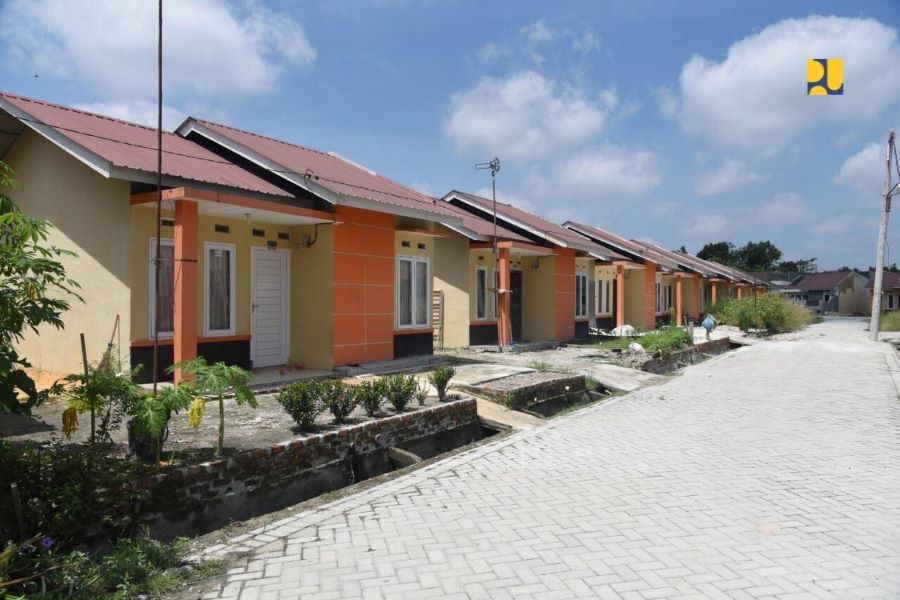
According to official data released by the government, the distribution of subsidized homes reached exactly 102,900 units by July 17, 2026. While this figure represents roughly 30% of the annual goal, Minister Sirait—frequently referred to as Minister Ara—emphasized that the momentum of the housing sector traditionally accelerates in the second half of the year. He noted that the foundational work laid in the early months of the administration is now beginning to yield tangible results, setting the stage for a massive surge in housing handovers and mortgage realizations in the coming months.
Strategic Acceleration Under the New Administration
The FLPP program, a cornerstone of Indonesia’s efforts to provide affordable living to Low-Income Communities (MBR), has seen a steady evolution in its scope and efficiency. Minister Ara highlighted that while FLPP is not a new initiative, its implementation under President Prabowo’s leadership has been revitalized with a focus on higher volume and better targeting. The administration has integrated housing as a primary pillar of its social welfare and economic growth strategy, viewing the construction sector as a multiplier for local economies.

"In the first year of President Prabowo’s administration, the achievement in subsidized housing distribution has shown a consistent upward trend," Minister Ara stated. He further explained that the target of 350,000 units for 2026 is a significant leap from previous years, reflecting the government’s commitment to aggressively reducing the national housing backlog, which currently stands at millions of units. To achieve this, the Ministry is fostering a culture of "hard work and radical collaboration" among all stakeholders, including the People’s Housing Savings Management Body (BP Tapera), commercial banks, and private developers.
The Minister, who also serves as the Chairman of the BP Tapera Committee, underscored that the 2026 target is not merely a number but a mandate to provide dignity and stability to Indonesian families. The strategy involves streamlining the bureaucratic hurdles that have historically slowed down the development of subsidized estates, ensuring that developers can break ground faster and that MBR applicants can secure financing with fewer obstacles.

Historical Performance and Growth Trajectory
To understand the magnitude of the 2026 target, it is essential to look at the historical data of FLPP distribution. In 2023, the government successfully realized 228,000 units of subsidized housing. By 2025, that figure rose to 278,000 units. The jump to a 350,000-unit target for 2026 represents a nearly 26% increase in annual capacity over the previous year.
This growth trajectory is supported by increased budget allocations and a more robust digital infrastructure for monitoring housing stock and applicant eligibility. The government’s data-driven approach allows BP Tapera to identify regions with the highest demand and ensure that the supply of subsidized houses matches the local needs. For instance, West Java continues to lead the national distribution, accounting for approximately 24% of the total national realization, with over 62,291 units distributed in that province alone by mid-year.

The increasing trend in distribution is also a reflection of the stabilizing economic environment. Despite global inflationary pressures on construction materials, the Indonesian government has maintained the 5% fixed-interest rate for FLPP mortgages, making homeownership a viable reality for the MBR segment. This subsidy ensures that monthly installments remain affordable for workers in the informal sector and low-wage earners in urban centers.
Strengthening the Role of BP Tapera
A pivotal moment in the current housing roadmap was the recent inauguration of the new Head Office of BP Tapera in Jakarta. Minister Ara described this move as a strategic step to strengthen the institution’s service capabilities and support the acceleration of the "Three Million Houses" program. The new headquarters is designed to be more than just an administrative hub; it is intended to be a center for transformation and digital integration.

"BP Tapera faces many challenges and carries the hopes of both the people and developers," Minister Ara remarked. "The institution is demanded to operate with the highest level of integrity, adhering to targets and regulations while simultaneously pioneering breakthroughs in human resource management and service delivery."
The transformation of BP Tapera focuses on three core pillars: transparency, accountability, and professionalism. By moving toward a fully digital ecosystem, BP Tapera aims to provide real-time updates to participants, employers, and developers. This transparency is crucial for maintaining public trust, especially as the body manages significant public funds and government subsidies. The digital transition is expected to shorten the time required for mortgage approval and disbursement, which is critical for developers who rely on cash flow to continue their construction cycles.

Heru Pudyo Nugroho, the Commissioner of BP Tapera, echoed the Minister’s sentiments, stating that the relocation of the office serves as a symbolic and functional "new chapter" for the organization. "This move is a marker for us to carry out the mandate of managing sustainable housing financing for the MBR segment with renewed vigor," Nugroho said. He emphasized that the focus remains on ensuring that the housing fund is managed sustainably to benefit not just current applicants, but future generations as well.
Regional Dynamics and Market Demand
The distribution of subsidized housing is not uniform across the archipelago, reflecting the diverse economic landscapes of Indonesia’s provinces. West Java remains the primary engine of the FLPP program due to its high population density and the concentration of industrial zones. The realization of over 62,000 units in this province highlights the massive demand for affordable housing near employment hubs.

However, the Ministry of PKP is also pushing for more equitable distribution in other regions, particularly in Central Java, East Java, and the emerging industrial centers in Kalimantan and Sulawesi. The "Three Million Houses" program specifically aims to address the housing needs in rural and coastal areas, moving beyond the traditional focus on suburban satellites of major cities.
By involving local governments in land-clearing processes and infrastructure development, the Ministry hopes to lower the cost for developers to build in less-populated areas. The goal is to create integrated residential zones that are connected to public transportation and essential services, preventing the creation of "isolated" subsidized housing complexes that lack economic vitality.

Implications and Economic Impact
The push to reach 350,000 subsidized units in 2026 has profound implications for the Indonesian economy. The construction sector is a labor-intensive industry that provides millions of jobs, from skilled engineers to manual laborers. For every house built, there is a secondary demand for materials such as cement, steel, bricks, and paint, most of which are sourced from domestic manufacturers.
Furthermore, increasing homeownership among the MBR segment has long-term social benefits. Families with stable housing are more likely to invest in education and healthcare, contributing to the overall human capital development of the nation. From an urban planning perspective, the successful distribution of subsidized housing helps curb the growth of informal settlements and slums, leading to more organized and resilient cities.

Analysts suggest that if the government achieves its 350,000-unit target, it will signal a high level of institutional maturity in the housing sector. It would demonstrate that the synergy between the Ministry of PKP, BP Tapera, and the banking sector is capable of handling large-scale social engineering projects. However, the road ahead is not without obstacles. Potential risks include fluctuations in the cost of raw materials and the need for continuous land availability in increasingly crowded urban areas.
Future Outlook: Beyond 2026
As the government moves into the second half of 2026, the focus will shift toward ensuring that the quality of the houses built meets the required standards. Minister Ara has been vocal about the need for "decent and livable" housing, insisting that "subsidized" should not mean "low quality." Rigorous inspections and developer grading systems are being implemented to ensure that the 350,000 families receiving these homes are provided with safe and durable structures.

The optimism expressed by Minister Maruarar Sirait reflects a broader confidence in the Prabowo administration’s ability to deliver on its promises. With 102,900 units already accounted for and a revitalized BP Tapera at the helm of financing, the Indonesian housing sector is witnessing a period of unprecedented activity. The success of this year’s target will serve as a litmus test for the "Three Million Houses" program, potentially setting a new benchmark for how the state addresses the fundamental human right to shelter.
The Ministry of PKP and BP Tapera are expected to provide another comprehensive update in the fourth quarter of the year. For now, the message from the government is clear: the gears of the national housing machine are turning faster than ever, and the goal of providing 350,000 affordable homes by the end of 2026 is firmly in sight. Through a combination of digital transformation, institutional integrity, and strategic collaboration, the administration aims to turn the dream of homeownership into a reality for hundreds of thousands of Indonesian citizens.



