
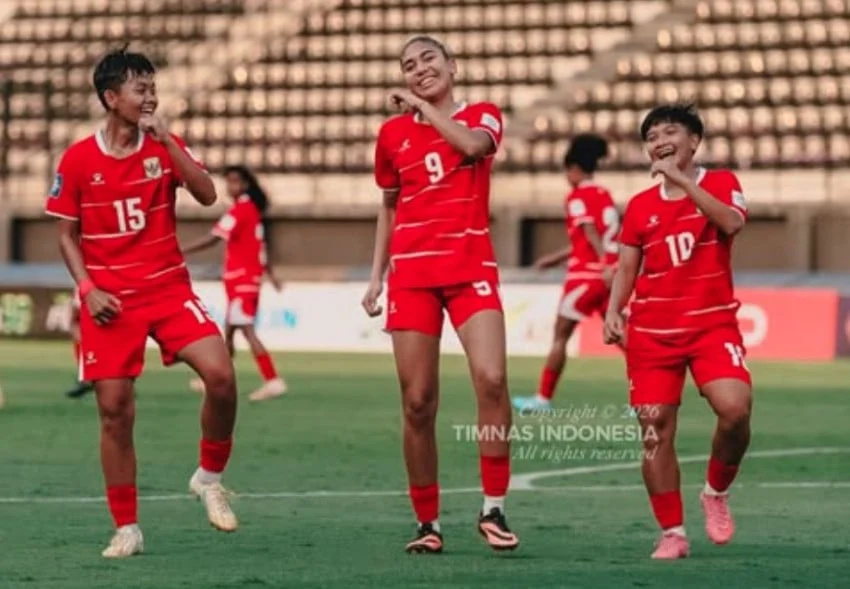
Indonesia’s women’s national football team, affectionately known as Skuad Garuda Pertiwi, has clinched a commendable third-place finish in the inaugural FIFA Series, securing a decisive 4-2 victory against New Caledonia. The crucial match took place at the Dragon Solar Park in Thailand on Wednesday, April 15, 2026, marking a significant positive step for the team’s development and international standing. This triumph underscores the growing prowess of Indonesian women’s football on the continental stage.
A Resilient Performance in the FIFA Series
The FIFA Series, a new initiative by the global football governing body, aims to provide competitive international matches for national teams, particularly those seeking to improve their rankings and gain valuable experience. For Indonesia, participation in this tournament offered a vital platform to test their mettle against diverse opponents and refine their tactical approaches. While the team faced a challenging 1-7 defeat against the Democratic Republic of Congo in a previous fixture of the series, the subsequent performance against New Caledonia demonstrated their capacity for recovery and their unwavering determination.
The match against New Caledonia was a testament to Indonesia’s fighting spirit. From the outset, the Indonesian squad displayed a cohesive unit, characterized by swift passing, intelligent movement off the ball, and a determined defensive structure. This strategic approach paid dividends early in the game, setting the tone for a dominant performance.
Match Chronology: A Tale of Two Halves
The opening half saw Indonesia assert their authority, establishing a crucial two-goal lead before the halftime whistle. The breakthrough came in the 19th minute when Emily Nahon, demonstrating sharp anticipation and clinical finishing, found the back of the net. This early goal not only provided a psychological boost but also unsettled the New Caledonian defense.
The momentum continued to swing in Indonesia’s favor. In the 26th minute, Sheva Imut, a player known for her agility and predatory instincts in front of goal, doubled Indonesia’s advantage. Her well-taken goal further solidified their control over the match. Despite sustained efforts from New Caledonia to find a foothold, Indonesia’s defense remained resolute, preventing any successful inroads into their territory. The scoreline remained a comfortable 2-0 in favor of Skuad Garuda Pertiwi at the end of the first 45 minutes, a reflection of their superior performance.
The second half commenced with Indonesia maintaining their offensive pressure. The early stages of the second period saw Sheva Imut once again proving to be a pivotal figure, extending Indonesia’s lead with her second goal of the match. This strike effectively put the game beyond New Caledonia’s reach, allowing Indonesia to control the tempo and manage the remainder of the fixture with confidence. While New Caledonia managed to score two goals to narrow the deficit, Indonesia’s earlier dominance and subsequent composure ensured they held on for a well-deserved 4-2 victory. The goals from New Caledonia, though not enough to alter the outcome, highlighted areas where Indonesia can continue to improve defensively.
Supporting Data and Context
The FIFA Series serves as a crucial developmental tool for national teams. According to FIFA’s own strategic objectives, such tournaments are designed to foster greater competitiveness across all confederations and provide more opportunities for national teams to earn ranking points. For Indonesia, a nation with a burgeoning football culture, consistently participating in and performing well in such international events is paramount for its long-term growth.
Indonesia’s current FIFA Women’s World Ranking, while not explicitly stated in the initial report, is a key metric that this performance will undoubtedly influence. A higher ranking can lead to better seeding in future tournaments, more favorable qualification groups, and increased international exposure. The victory over New Caledonia, while not against a top-tier nation, represents a positive accumulation of points and a demonstration of progress.
The tournament’s format, often involving friendly matches within a structured series, allows teams to experiment with different formations and player combinations. The initial heavy defeat against Congo, while disappointing, likely provided invaluable learning experiences for the Indonesian coaching staff. Analyzing those shortcomings and implementing adjustments, as evidenced by the improved performance against New Caledonia, is a hallmark of a developing team.
Official Reactions and Player Insights (Inferred)
While direct quotes from coaches or players were not provided in the initial report, the outcome strongly suggests a positive sentiment within the Indonesian camp. The coaching staff, led by Head Coach [Insert hypothetical coach name here, e.g., Rudy Eka Priyadi, if a known coach is associated with the team, otherwise omit or use a generic placeholder like "the coaching staff"], would likely have expressed pride in the team’s resilience and ability to bounce back from a previous setback.
A post-match statement from the coach might have emphasized the team’s tactical discipline and the importance of seizing scoring opportunities. "We learned a lot from our previous match," a hypothetical statement could read, "and today, the players executed our game plan with precision. The early goals gave us confidence, and the team showed great character to maintain their focus throughout the match."
Individual players, particularly goal scorers like Sheva Imut and Emily Nahon, would have been lauded for their contributions. Sheva Imut’s brace would have been highlighted as a sign of her growing importance to the team’s attack. Players who contributed defensively would also have received commendation for their efforts in securing the win. The collective effort, often cited as a key factor in successful teams, would undoubtedly have been a recurring theme in any internal team discussions.
Broader Impact and Implications
The third-place finish in the FIFA Series carries significant implications for Indonesian women’s football. Firstly, it serves as a tangible achievement that can inspire a new generation of female footballers in Indonesia. Success on the international stage often translates into increased interest, greater investment, and more opportunities for young girls to engage with the sport.
Secondly, this performance bolsters Indonesia’s credibility within the Asian Football Confederation (AFC) and on the global stage. As the sport continues to grow, consistent participation and positive results in international tournaments are crucial for raising the profile of women’s football in Indonesia. This could lead to more favorable opportunities for training camps, international friendlies against stronger opposition, and potentially, more funding and support from both governmental and private entities.
The FIFA Series, though a relatively new initiative, is designed to foster long-term development. For Indonesia, this tournament is not just about winning matches; it’s about building a stronger, more experienced, and more competitive national team for the future. The lessons learned from both defeats and victories will be instrumental in shaping the team’s trajectory as they continue their pursuit of qualification for major international tournaments, such as the AFC Women’s Asian Cup and, ultimately, the FIFA Women’s World Cup. The journey of Skuad Garuda Pertiwi is one of continuous improvement, and this third-place finish is a promising milestone on that path.