
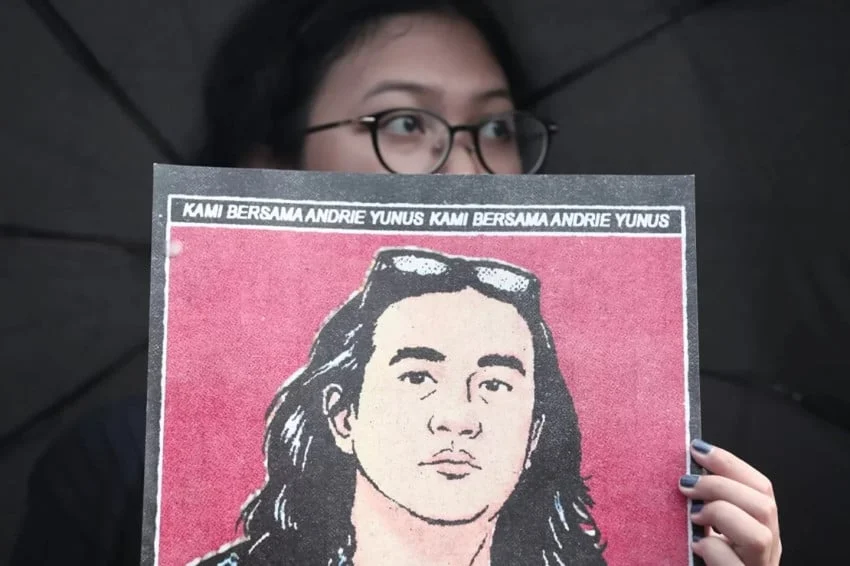
The legal proceedings involving the brutal chemical attack on KontraS activist Andrie Yunus have reached a critical juncture as the Military Oditurat 07-II Jakarta prepares to formally hand over the case files to the Military Court II-08 Jakarta. Head of the Military Oditurat 07-II, Colonel Chk Andri Wijaya, confirmed on Wednesday, April 15, 2026, that the administrative and evidentiary transfer is scheduled to take place on Thursday, April 16, 2026, at precisely 10:00 AM WIB. This procedural step marks the transition from the investigative phase to the trial phase, a move that has been closely monitored by human rights organizations, the international community, and the highest levels of the Indonesian government. Colonel Andri Wijaya emphasized that the process would be transparent, inviting members of the media to witness the submission of the dossiers, which underscores the military’s stated commitment to accountability in a case that has sparked widespread public indignation.
The case centers on the physical assault of Andrie Yunus, a prominent member of the Commission for the Disappeared and Victims of Violence (KontraS), who was targeted in a chemical splashing incident that left him with severe injuries. Because the primary suspects identified in the investigation are active-duty members of the Indonesian National Armed Forces (TNI), the jurisdiction of the case has fallen under the military justice system, a point of significant contention among legal experts and civil society advocates. The transfer of these files to the Military Court II-08 Jakarta is not merely a bureaucratic necessity but a pivotal moment that will determine the trajectory of justice for Yunus and the broader protection of human rights defenders in Indonesia.
Contextual Background: The Attack on Andrie Yunus
The assault on Andrie Yunus occurred during a period of heightened social tension, as activists continued to push for transparency regarding past human rights abuses and contemporary legislative reforms. Yunus, known for his vocal stance against systemic corruption and military involvement in civilian affairs, was approached by unidentified individuals on motorcycles who doused him with a corrosive liquid. The attack resulted in permanent scarring and significant trauma, drawing immediate parallels to the 2017 acid attack on anti-corruption investigator Novel Baswedan.
The involvement of military personnel in an attack against a civilian activist immediately elevated the case from a local criminal matter to a national human rights crisis. Under Indonesian Law No. 31 of 1997 concerning Military Courts, crimes committed by soldiers are generally tried within the military hierarchy. However, critics argue that this system often lacks the transparency and impartiality required when the victim is a civilian. The Andrie Yunus case has thus become a litmus test for the "New Indonesia" era, challenging the government to prove that no individual, regardless of their rank or institution, is above the law.
Chronology of the Legal Process
The journey to the Military Court has been fraught with delays and intense public scrutiny. Following the attack in late 2025, a joint task force was established to identify the perpetrators. By early 2026, evidence led investigators to several active-duty personnel, leading to their detention by the Military Police (Pomdam Jaya).
- Late 2025: The attack on Andrie Yunus occurs, leading to immediate hospitalization and national outcry.
- January 2026: Initial police investigation suggests military involvement; the case is partially transferred to the Military Police for internal handling.
- February 2026: Human rights groups, led by KontraS and the Indonesian Legal Aid Foundation (YLBHI), demand a "koneksitas" (joint) trial involving both civilian and military judges to ensure neutrality.
- March 2026: The 902nd Aksi Kamisan protest is held in front of the Merdeka Palace, specifically highlighting Yunus’s case and demanding that President-level intervention ensure a fair trial.
- April 15, 2026: Colonel Chk Andri Wijaya announces the completion of the case files (P-21 status) and the scheduled transfer to the Military Court.
The announcement of the file transfer on April 16 is seen as a response to the growing pressure from the "Aksi Kamisan" movement, which has persisted for nearly two decades in its quest for justice. The 902nd iteration of the silent protest, held just weeks prior to this announcement, served as a poignant reminder to the administration that the public’s memory of such atrocities does not fade with time.
Political Implications and the Call for Ad Hoc Judges
The sensitivity of the case has drawn direct commentary from the executive branch. Vice President Gibran Rakabuming Raka has notably weighed in, requesting that the trial of the Andrie Yunus case include Ad Hoc judges. The inclusion of Ad Hoc judges—experts from outside the military structure—is seen as a necessary safeguard to prevent institutional bias and to provide a bridge of trust between the military court and the civilian public.
Minister of Law and Human Rights (and prominent legal scholar) Yusril Ihza Mahendra has confirmed that the Vice President’s request is being taken seriously. Yusril stated that his office is in active coordination with the Supreme Court (Mahkamah Agung) to discuss the feasibility of appointing Ad Hoc judges for this specific tribunal. While the Military Court Law traditionally limits the bench to military officers, there are legal avenues and precedents within the human rights framework that could allow for a more inclusive judicial panel.
"The government is committed to ensuring that this process is not seen as a form of internal shielding," Yusril noted in a recent briefing. "The discussion with the Supreme Court is vital because we must balance the specificities of military law with the universal requirements of a fair and open trial, especially when a civilian’s fundamental rights have been so violently violated."

The Role of the Military Oditurat and the Court
The Military Oditurat (Oditurat Militer) serves as the prosecutorial arm within the military justice system. Colonel Chk Andri Wijaya’s role is equivalent to that of a Chief Prosecutor in a civilian court. By declaring the files ready for transfer, the Oditurat is signaling that they have sufficient evidence—including forensic reports on the chemical agent used, witness testimonies, and digital evidence linking the suspects to the crime scene—to secure a conviction.
The Military Court II-08 Jakarta, located in the capital, will be the venue for this high-stakes trial. Historically, military courts have been criticized for handing down lenient sentences to personnel involved in "excesses" against civilians. However, the global and domestic visibility of the Andrie Yunus case makes a "business-as-usual" approach unlikely. The transfer of the file at 10:00 AM tomorrow will trigger the scheduling of the first hearing, which many expect to become a focal point for further demonstrations and international observation.
Analysis of the Jurisdiction Debate
The decision to proceed in a military court rather than a civilian or "koneksitas" court remains the most controversial aspect of the case. Legal activists argue that Law No. 31 of 1997 is a relic of the New Order era and is inconsistent with the 1998 Reformation mandates, which suggested that soldiers who commit common crimes should be tried in civilian courts.
However, the military leadership has countered that the current legal framework must be followed until the law is formally amended by Parliament. By opening the file transfer process to the media, the military is attempting to perform a "transparency offensive" to mitigate accusations of secrecy. The presence of media during the handover of the dossiers is a tactical move to demonstrate that the military is not hiding the suspects or the evidence.
Supporting Data: Attacks on Activists in Indonesia
The attack on Andrie Yunus is not an isolated incident but part of a concerning trend. According to data from various human rights watchdogs, there has been a 15% increase in physical and digital harassment against activists in Southeast Asia over the last three years. In Indonesia, the use of chemical agents or "untraceable" physical assaults has become a terrifying method of intimidation.
Supporting statistics from KontraS suggest that out of every ten attacks on human rights defenders involving suspected state actors, only two reach a final verdict in a court of law. The Andrie Yunus case reaching the trial stage is, in itself, a significant achievement for the victim’s legal team, though the quality of the eventual verdict remains the ultimate benchmark of success.
Broader Impact on Civil-Military Relations
As the files move to the Military Court II-08 tomorrow, the implications for Indonesian democracy are profound. If the trial is conducted with the requested Ad Hoc judges and results in a transparent, fair sentencing, it could signal a new era of military accountability. Conversely, if the trial is perceived as a "whitewash," it may further alienate the civilian population and fuel the grievances expressed every Thursday during the Aksi Kamisan protests.
The international community, including UN human rights rapporteurs, has reportedly requested observer status for the upcoming trial. The Indonesian government’s willingness to grant such access will be another indicator of its commitment to international standards of justice.
The transfer of the Andrie Yunus case files tomorrow morning is the beginning of a new chapter in a long-running struggle for legal reform. As Colonel Andri Wijaya and his team prepare the dossiers for the judges of Court II-08, the eyes of the nation remain fixed on Jakarta, waiting to see if the scales of justice will finally balance for an activist who sacrificed his safety for the cause of human rights. The 10:00 AM deadline represents more than just a scheduled appointment; it is a moment where the state’s rhetoric on the rule of law meets the reality of its judicial application.