A new comedic web series, "Salma’s Season," is offering a nuanced and humorous portrayal of the lives of Muslims in Australia, aiming to dismantle stereotypes and celebrate the rich tapestry of their experiences. The series, created and directed by Kauthar Abdulalim, delves into the everyday realities, challenges, and triumphs of this diverse community, set against the backdrop of contemporary Australian society. The initiative was recently highlighted during a film screening and discussion event held at the Teater Komunitas Utan Kayu in Jakarta on Monday, February 13, 2023, providing a platform for deeper engagement with the series’ themes.
Abdulalim articulated his vision for "Salma’s Season" as a vehicle to explore the multifaceted nature of Muslim identity and community. He emphasized that the series focuses on relatable, everyday conflicts that resonate with audiences, regardless of their religious or cultural background. "For instance, a scene where the husband is in the kitchen and can’t find the salt. We laugh because we experience it, and that’s what I want to show," Abdulalim stated during the Jakarta event, underscoring the series’ commitment to authenticity and humor as tools for connection. This approach seeks to bridge cultural divides by highlighting universal human experiences within a specific cultural context.
Beyond the lighthearted domestic scenarios, "Salma’s Season" also confronts the significant struggles faced by Muslims as a minority group in Western countries. The series sheds light on the systemic challenges, particularly in the realm of employment, exemplified by the character Zoya, portrayed by Lyeba Khan. Zoya’s narrative illustrates the difficulties she encounters in securing employment due to her religious attire, the niqab, and her distinctly Islamic name. This situation mirrors the experiences of many Muslims and other ethnic minorities who, despite possessing the requisite qualifications, face implicit biases that can hinder their career progression. "Sometimes, just seeing your name can lead them not to consider hiring you," Abdulalim observed, pointing to a subtle yet pervasive form of discrimination.
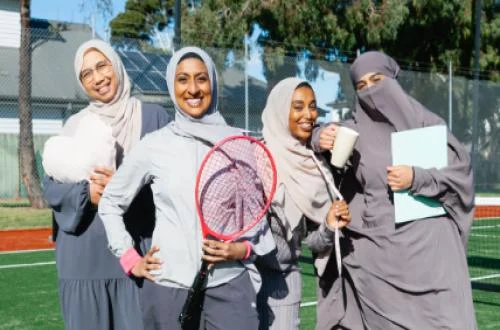
The complexities of Muslim representation in Western media have long been a subject of debate. Historically, many portrayals have leaned towards sensationalism, often associating Islam with extremism and terrorism. "Salma’s Season" consciously endeavors to counter these prevailing narratives by presenting a more authentic and varied depiction of Muslim life. The series showcases a spectrum of religious observance, with characters who wear the hijab, the niqab, or neither, emphasizing that adherence to Islamic faith is not monolithic. This visual diversity challenges the monolithic stereotypes often perpetuated by Western media outlets.
Yanuardi Syukur, Chairman of the Australia Indonesia Muslim Exchange Program Alumni Forum, who also participated in the discussion, lauded the series for its portrayal of diversity within the Australian Muslim community. He noted that Australia is home to a vibrant mosaic of Muslim populations, with individuals originating from diverse backgrounds such as Lebanon, Africa, and Pakistan, among many others. These diasporic communities strive to build lives and find their place in a new land.
Syukur elaborated on how the series illustrates the adaptive strategies employed by these communities to navigate their new environment. The character of Zoya, for example, resorts to changing her name as a tactic to overcome employment barriers. "Then she changes her name. That is a form of adaptive strategy," Syukur remarked, highlighting the pragmatic approaches individuals take to integrate and succeed. This element of the series underscores the resilience and ingenuity of immigrants and minority groups in overcoming societal obstacles.
"Salma’s Season" is a six-episode web series, with each episode ranging from six to nine minutes in length. The series centers on Salma, a 45-year-old Australian-Pakistani woman who is pursuing her dream of playing tennis and competing in the Australian Open. The ensemble cast includes Faryaal Jabbar as Salma, with Seble Girma, Pudak Nayati, and Lyeba Khan portraying her friends Nur, Maryam, and Zoya, respectively. Bryan Hynes plays Salma’s tennis coach, Brod. The narrative arc promises to weave together personal aspirations with the broader themes of cultural identity and community integration.
The series is accessible to a global audience and is available for free viewing on the Vidly YouTube channel. This digital distribution strategy ensures wide reach, allowing the series to engage with viewers internationally and foster a broader understanding of Muslim experiences. The availability on a free platform also democratizes access to diverse storytelling, making it a valuable resource for educators, students, and the general public interested in intercultural dialogue.
The Growing Muslim Population in Australia: A Demographic Context
Understanding the context of "Salma’s Season" requires acknowledging the demographic shifts within Australia. While Islam is a minority religion, the Muslim population in Australia has seen steady growth over the past few decades. According to the Australian Bureau of Statistics, the 2021 Census reported that approximately 644,300 people identified as Muslim, representing about 2.6% of the total Australian population. This demographic growth signifies an increasingly diverse Australian society, making narratives that reflect this multiculturalism all the more pertinent.
The origins of this population are varied, reflecting a history of migration from numerous countries. Major origin countries for Australian Muslims include Pakistan, India, Bangladesh, Afghanistan, Lebanon, Egypt, Turkey, and various Southeast Asian nations. This rich diversity means that the "Muslim experience" in Australia is not uniform; it is shaped by national origin, cultural practices, levels of religious observance, and socioeconomic factors. "Salma’s Season" appears to tap into this complexity, showcasing different facets of Muslim identity rather than presenting a singular, generalized representation.
Challenges and Opportunities for Minority Groups
The challenges faced by Zoya in "Salma’s Season" are not isolated incidents but are part of a broader discourse on discrimination and inclusion in Western societies. Research from organizations like the Australian Human Rights Commission has consistently highlighted instances of racial and religious discrimination impacting employment opportunities for individuals from minority backgrounds. A 2017 study, for example, found that job applicants with names perceived as ethnically or religiously non-Anglo-Celtic were less likely to be shortlisted for interviews. This empirical data lends significant weight to the narrative presented in the series.
However, the series also points to the resilience and adaptability of minority communities. The "adaptive strategies" mentioned by Syukur are crucial for social mobility and integration. These can range from modifying personal presentation to actively engaging in community building and advocacy. The success of individuals like Salma, who pursues her sporting dreams, alongside the challenges faced by Zoya in her professional life, offers a balanced perspective on the opportunities and obstacles present.
The Role of Media in Shaping Perceptions
The power of media in shaping public perception cannot be overstated. The consistent portrayal of Muslims in a negative or stereotypical light by some Western media outlets has contributed to Islamophobia and prejudice. "Salma’s Season" emerges as a counter-narrative, utilizing comedy as a powerful tool for deconstruction. Humor can disarm audiences, making them more receptive to nuanced perspectives and fostering empathy. By presenting relatable characters and everyday situations, the series humanizes Muslims and challenges preconceived notions.
The initiative taken by Kauthar Abdulalim to create this series is part of a growing global trend of independent filmmakers and content creators from minority backgrounds producing their own narratives. This trend empowers communities to tell their own stories, on their own terms, bypassing traditional gatekeepers who may not accurately represent their experiences. The availability of platforms like YouTube further democratizes content creation and distribution, enabling these stories to reach a wider audience than ever before.
Future Implications and Broader Impact
The success and reception of "Salma’s Season" could have several implications. Firstly, it may encourage further production of diverse and authentic content that reflects the multicultural reality of countries like Australia. Secondly, it could contribute to a greater understanding and acceptance of Muslim communities, fostering a more inclusive society. By normalizing the presence and experiences of Muslims in everyday settings, the series can help to dismantle the "otherness" often attributed to minority groups.
The educational potential of the series is also significant. It can serve as a valuable resource for schools, universities, and community organizations seeking to promote intercultural understanding and critical media literacy. By sparking conversations about identity, discrimination, and adaptation, "Salma’s Season" offers a platform for dialogue and reflection.
In conclusion, "Salma’s Season" represents a significant step forward in the representation of Muslim lives in media. Through its comedic lens, it navigates the complexities of cultural identity, the realities of minority experiences, and the universal human desire for belonging and fulfillment. Its availability on a global digital platform ensures that its message of diversity, resilience, and humor can resonate with audiences worldwide, contributing to a more nuanced and empathetic understanding of Muslim communities in the West and beyond. The series, through its relatable characters and timely themes, is poised to be more than just entertainment; it is a cultural intervention that challenges stereotypes and celebrates the richness of human experience.