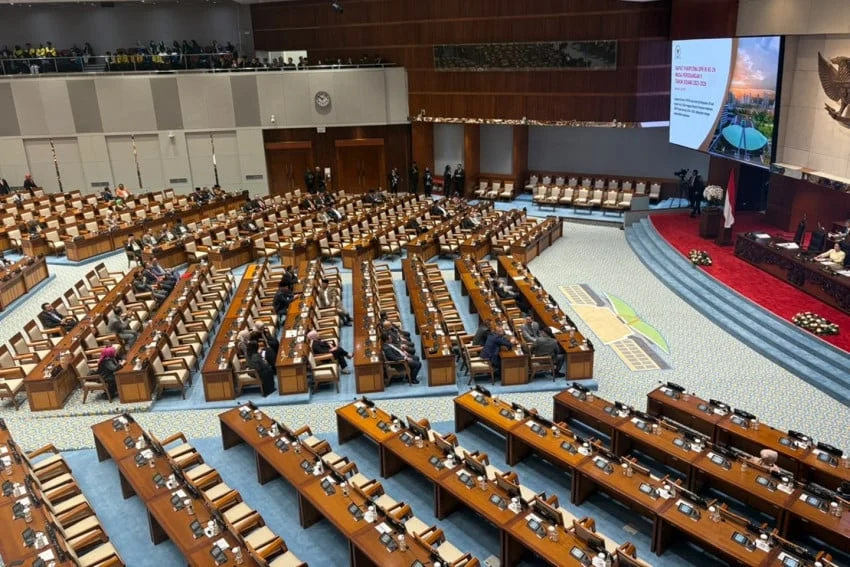
The Indonesian House of Representatives (DPR RI) has officially ratified the appointment of Wahidah Suaib as an interim member of the Ombudsman of the Republic of Indonesia for the 2026-2031 term. This strategic decision, finalized during a plenary session on Tuesday, July 21, 2026, serves as a formal mechanism to fill the vacancy left by Hery Susanto, who was recently removed from his post following a high-profile corruption investigation. The transition marks a critical moment for the nation’s primary public service oversight body as it seeks to restore institutional integrity and public confidence in the face of legal turmoil involving its former leadership.
Speaker of the House Puan Maharani, presiding over the session at the Parliamentary Complex in Senayan, Jakarta, confirmed that the appointment was based on a formal recommendation from the leadership of Commission II, which oversees home affairs and state apparatus. The selection of Wahidah Suaib was dictated by the established legal protocol for Interim Replacements (Pergantian Antar Waktu or PAW), which mandates that the next highest-ranking candidate from the original fit and proper test results be elevated to the position. According to the legislative records from the initial selection process for the 2026-2031 leadership cycle, Suaib held the tenth position, making her the direct successor to the seat vacated by Susanto.
The Legislative Process and Formal Ratification
The ratification process followed a swift but structured parliamentary timeline. On July 20, 2026, a consultative meeting was held between the leadership of Commission II and the House Deliberative Body (Bamus), acting as a substitute for a full Bamus meeting. During this session, the results of the discussion regarding the selection and determination of the interim replacement were finalized. The findings were then presented to the broader legislative body during the plenary session the following day.
During the session, Speaker Puan Maharani addressed the various factions within the DPR, seeking a consensus on the appointment. "In connection with this matter, the leadership of Commission II has submitted the results of the discussion on the selection and determination of the interim replacement member of the Ombudsman of the Republic of Indonesia for the 2026-2031 term," Puan stated before the assembly. Following a brief period of deliberation, the House reached a unanimous agreement, officially endorsing Wahidah Suaib to join the ranks of the Ombudsman’s leadership.
The appointment is not merely a personnel change but a legal necessity to ensure that the Ombudsman remains quorate and capable of performing its constitutional duties. Under Law No. 37 of 2008 concerning the Ombudsman of the Republic of Indonesia, the institution must maintain a full complement of members to effectively investigate allegations of maladministration by government agencies and public service providers.
The Downfall of Hery Susanto: A Crisis of Integrity
The vacancy in the Ombudsman’s office was the direct result of a corruption scandal that has sent shockwaves through Indonesia’s oversight community. Hery Susanto, who had been appointed to a leadership role for the 2026-2031 term, was indicted on charges of accepting bribes totaling IDR 4.8 billion. The allegations suggest that the funds were tied to the manipulation of public service assessments and the "clearing" of certain administrative disputes in favor of private interests.
Despite the gravity of the charges and the evidence presented by prosecutors, Susanto has maintained his innocence. In his defense statements, he has categorically denied receiving any illicit payments, claiming that the accusations are politically motivated or based on a misunderstanding of the institution’s internal processes. However, the legal proceedings and the subsequent decision by the DPR to move forward with a replacement indicate a significant loss of political and institutional support.
The inclusion of a high-ranking oversight official in a bribery case presents a profound paradox for the Indonesian state. The Ombudsman is designed to be the "watchdog of the watchdogs," ensuring that every other government entity operates with transparency and fairness. When the leadership of such an institution is compromised, it threatens the very foundation of public trust in the state’s ability to police itself.
Profile of Wahidah Suaib: A Seasoned Public Servant
Wahidah Suaib enters the Ombudsman’s office with a formidable reputation in the realm of public oversight and governance. She is perhaps best known for her previous tenure as a member of the General Elections Supervisory Agency (Bawaslu) for the 2008-2012 period. During her time at Bawaslu, Suaib was recognized for her firm stance on electoral integrity and her efforts to modernize the monitoring of political campaigns.
Her background as an activist and a public official has consistently focused on the principles of accountability. Observers suggest that her appointment is a strategic move by the DPR to inject a sense of stability and ethical rigor into the Ombudsman’s office. Unlike an outside political appointee, Suaib’s familiarity with the intricacies of Indonesian bureaucracy and her proven track record in oversight bodies make her a "safe" and highly qualified choice to navigate the current institutional crisis.
Suaib’s selection from the original 2026 candidate list also underscores the importance of the "fit and proper" process. While she was not in the top nine during the initial selection, her high ranking among dozens of applicants signifies that she had already undergone rigorous vetting by both a selection committee (Pansel) and the legislature.
The Ombudsman’s Mandate and the 2026-2031 Outlook
The Ombudsman of the Republic of Indonesia holds a unique and powerful position in the country’s democratic architecture. It is an independent state institution, free from the influence of the executive, legislative, or judicial branches. Its primary mission is to receive, investigate, and resolve complaints from citizens regarding maladministration in the provision of public services.
For the 2026-2031 term, the Ombudsman faces an uphill battle. The institution is tasked with overseeing the digital transformation of government services, ensuring that the transition to "E-Government" does not leave marginalized populations behind or create new avenues for corruption. Furthermore, the Ombudsman is responsible for monitoring the quality of healthcare, education, and land administration—sectors that historically generate the highest volume of public complaints.
The appointment of the 2026-2031 cohort was initially seen as a fresh start for the agency. The list of members for this period includes:
- Wahidah Suaib (Interim Replacement)
- [Other members of the 2026-2031 term as per official records]
With Suaib now officially part of the leadership, the body is expected to prioritize internal reform. This includes strengthening the "Code of Ethics" for Ombudsman members and staff to prevent a recurrence of the Susanto case. There is also a growing call from civil society for the Ombudsman to be more proactive in its investigations, rather than merely reactive to citizen complaints.
Chronology of the Replacement Process
To understand the context of this appointment, it is necessary to look at the timeline of events leading up to the July 21 plenary session:
- Early 2026: The selection process for the 2026-2031 Ombudsman members begins. A government-appointed Selection Committee (Pansel) vets hundreds of candidates, narrowing the field down to 18 names submitted to the President and subsequently the DPR.
- March 2026: The DPR Commission II conducts fit and proper tests. Hery Susanto is selected as one of the top candidates, while Wahidah Suaib is ranked 10th (the first alternate).
- May 2026: Allegations of bribery against Hery Susanto surface following an investigation by the Corruption Eradication Commission (KPK).
- June 2026: Hery Susanto is formally indicted. The DPR begins the legal review process to determine his status and the necessity of an interim replacement.
- July 20, 2026: Commission II meets with the House Deliberative Body to finalize the selection of Wahidah Suaib based on her ranking in the initial fit and proper test.
- July 21, 2026: The DPR Plenary Session officially ratifies Wahidah Suaib as the replacement member.
Institutional Implications and Public Response
The replacement of a high-ranking official due to corruption is a double-edged sword for the Indonesian government. On one hand, it demonstrates that the system of checks and balances is functioning—that no one, not even an oversight official, is above the law. On the other hand, it highlights systemic vulnerabilities that allow such individuals to reach high office in the first place.
Civil society organizations, such as Indonesia Corruption Watch (ICW), have called for a more thorough vetting process in future appointments. Analysts argue that while the PAW mechanism is legally sound, the "fit and proper" test must evolve to include deeper financial auditing and background checks of candidates.
"The appointment of Wahidah Suaib is a necessary step to keep the Ombudsman functional, but the institution’s credibility has taken a hit," says a Jakarta-based political analyst. "Suaib’s first 100 days will be crucial. She needs to demonstrate that the Ombudsman is still a fierce advocate for the people and that it has the internal fortitude to purge itself of unethical behavior."
The DPR’s swift action in this matter suggests a desire to move past the scandal as quickly as possible. By adhering strictly to the numerical ranking of the previous selection process, the legislature avoided a lengthy and potentially contentious new selection cycle, which could have left the Ombudsman understaffed for months.
Conclusion: A Path Toward Restoration
As Wahidah Suaib prepares to take her oath of office, the focus shifts from the scandal of the past to the responsibilities of the future. The Ombudsman of the Republic of Indonesia remains a vital pillar of the nation’s democratic health. In an era where public dissatisfaction with government bureaucracy can lead to social instability, the role of a fair and effective mediator is more important than ever.
The 2026-2031 term will likely be defined by how well the new leadership team can distance itself from the shadow of the Susanto case. With Suaib’s experience and the institutional support of the DPR, there is a cautious optimism that the Ombudsman can return to its core mission: protecting the rights of every Indonesian citizen against the excesses and errors of the state.
The formal ratification by the House of Representatives marks the end of a turbulent chapter and the beginning of a period of institutional recovery. For the public, the hope is that this transition will lead to a more transparent, accountable, and resilient Ombudsman, capable of fulfilling its promise as the ultimate guardian of public service integrity in Indonesia.