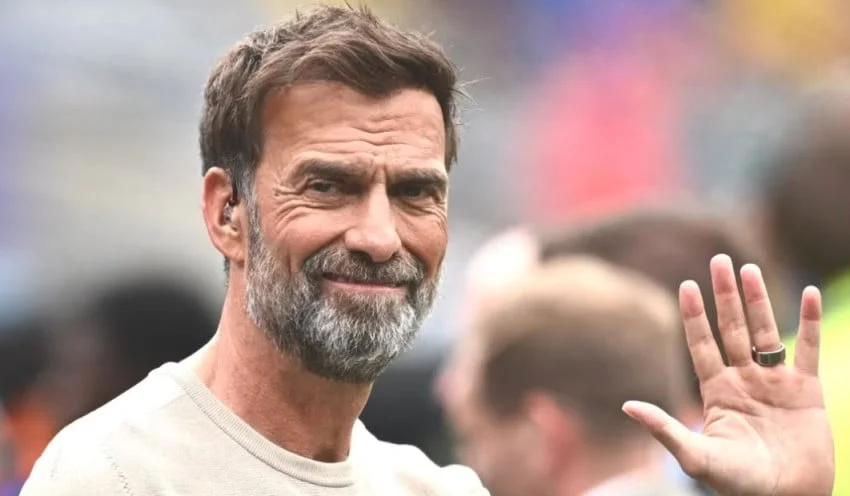
The German Football Association (DFB) is reportedly on the verge of finalizing an agreement with Juergen Klopp to become the new head coach of the German National Team, marking a significant turning point for a squad seeking to reclaim its status as a global football powerhouse. The 59-year-old former Liverpool manager is widely expected to succeed Julian Nagelsmann, whose tenure came to an abrupt and disappointing end following Germany’s dramatic exit from the 2026 FIFA World Cup. The reported appointment concludes months of intense speculation and signals the DFB’s commitment to a long-term rebuilding project aimed at the 2030 World Cup.
The vacancy at the helm of Die Mannschaft emerged under distressing circumstances for German football fans. Despite high expectations, the national team suffered a shocking defeat to Paraguay in the Round of 32 at the 2026 World Cup, losing in a tense penalty shootout. The early exit was viewed as a systemic failure, leading to Nagelsmann’s departure and leaving the DFB in urgent need of a transformative figure capable of restoring national pride and tactical discipline. Klopp, who has been the DFB’s primary target for several years, appears ready to step into the role after a brief hiatus from the touchline.
The Chronology of Klopp’s Transition to International Management
Juergen Klopp’s journey to the German national team seat has been a carefully observed narrative since his departure from Anfield in May 2024. After nine legendary years at Liverpool FC, where he secured every major trophy available—including the 2019 UEFA Champions League and the 2020 Premier League title—Klopp cited exhaustion and the need for a sabbatical. His exit from club football was seen as the end of an era, but many analysts predicted that the allure of the national team would eventually draw him back into the sport.
Following a period of rest, Klopp surprised the football world in early 2025 by accepting a corporate role as the Head of Global Soccer for Red Bull. In this capacity, he oversaw the strategic direction of Red Bull’s international network of clubs, including RB Leipzig, Red Bull Salzburg, and New York Red Bulls. While the role allowed him to remain involved in football without the daily pressures of the dugout, it was widely believed that a "break clause" existed in his contract specifically for the German National Team job. The failure of the 2026 World Cup campaign accelerated this timeline, prompting the DFB to initiate formal negotiations with Klopp and Red Bull to facilitate his return to active coaching.
Financial Terms and Contractual Details
According to sources close to the negotiations, Klopp is set to sign a four-year contract that will keep him at the helm through the 2030 FIFA World Cup. The financial structure of the deal reflects a significant shift in Klopp’s earning potential, though he remains among the elite earners in the international coaching circuit. Klopp is expected to earn an annual salary of approximately €7 million (roughly Rp133 billion).
While €7 million is a substantial figure for a national team coach, it represents a steep decrease from the wages he commanded during his final years in the Premier League. At Liverpool, Klopp’s annual compensation was estimated at £15 million (approximately Rp330 billion), more than double what he is projected to earn with the DFB. This willingness to accept a lower salary is interpreted by many as a testament to Klopp’s desire to serve his home country and his passion for the project rather than financial gain. For the DFB, securing a coach of Klopp’s caliber for €7 million is seen as a strategic victory, especially given the financial constraints and the need to invest in youth development and infrastructure elsewhere.
The Post-2026 World Cup Landscape
The context of Klopp’s arrival is defined by the "Paraguay Disaster" of 2026. Under Julian Nagelsmann, Germany had shown flashes of brilliance but lacked the defensive resilience and clinical finishing required in the knockout stages of major tournaments. The Round of 32 loss to Paraguay was particularly painful, as it marked another early exit for a nation that once reached at least the semi-finals of almost every tournament it entered between 2006 and 2016.
The DFB leadership, led by President Bernd Neuendorf and Sporting Director Rudi Völler, reportedly felt that the team required a "culture shock"—a manager who could bridge the gap between tactical sophistication and emotional intensity. Klopp’s signature "Gegenpressing" style and his ability to galvanize both players and supporters made him the unanimous choice for the board. The objective for Klopp is clear: revitalize a squad that possesses world-class talent like Jamal Musiala and Florian Wirtz but has struggled with consistency on the biggest stage.
Strategic Implications and Tactical Evolution
The appointment of Klopp suggests a shift toward a more high-octane, transition-based style of play. While Nagelsmann focused on complex positional play and fluid formations, Klopp is expected to implement a more direct and aggressive approach. Analysts suggest that Klopp’s experience in managing high-profile stars and his ability to build a cohesive "club-like" atmosphere within a national team setting will be his greatest assets.
One of the primary challenges Klopp will face is the limited time available for training in the international calendar. Unlike the daily sessions at Melwood or Kirkby, Klopp will only have his players for short international breaks. However, his tenure at Red Bull has likely provided him with a broader view of player scouting and data-driven performance metrics, which will be vital in selecting the right personnel for his demanding system.
Furthermore, Klopp’s arrival is expected to have a massive commercial impact. The "Klopp Brand" is one of the most marketable in sports, and his presence is likely to attract new sponsors and increase viewership for Die Mannschaft, which had seen a slight decline in domestic popularity following recent tournament failures.
Expected Reactions from the Football Community
While the DFB has yet to release an official statement, the reaction from the German football community has been overwhelmingly positive. Former players and pundits have voiced their support for the move. Lothar Matthäus, Germany’s most-capped player, previously noted that Klopp is the "perfect solution" for a team lacking an identity.
In England, Liverpool supporters continue to hold Klopp in the highest regard, and his move to the international stage is seen by many as a logical next step that avoids him coaching a rival club. Within the current German squad, there is reported excitement about the prospect of working under a manager who has coached some of the best players in the world to European and domestic glory.
The Road to 2030: A Four-Year Vision
The four-year contract underscores the DFB’s desire for stability. Klopp’s mission is not merely to win the next European Championship but to build a foundation that culminates in a deep run at the 2030 World Cup. This long-term vision includes:
- Integrating the Next Generation: Ensuring that the transition from aging veterans to the "golden generation" of Musiala, Wirtz, and others is seamless.
- Defensive Stabilization: Addressing the defensive lapses that haunted the Nagelsmann and Flick eras.
- Restoring the "Tournament Team" Mentality: Re-establishing Germany’s reputation as a team that thrives under the pressure of knockout football.
- Public Re-engagement: Reconnecting the national team with a fanbase that has grown disillusioned after three consecutive disappointing World Cup cycles (2018, 2022, and 2026).
Conclusion
Juergen Klopp’s imminent appointment as the head coach of the German National Team is perhaps the most significant managerial move in international football in the last decade. By stepping away from the lucrative world of club football and the strategic comforts of his Red Bull role, Klopp is taking on the ultimate challenge of his career: returning the four-time world champions to the pinnacle of the sport.
As the DFB prepares the official announcement, the focus shifts to how quickly Klopp can implement his philosophy and whether his infectious energy can heal the wounds of the 2026 World Cup exit. With a four-year mandate and the backing of an entire nation, the Klopp era in German football promises to be a period of intense transformation and high expectations. The world will be watching to see if the "Normal One" can produce extraordinary results for his country.