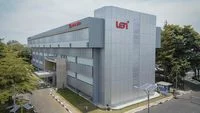
The Indonesian government has officially designated state-owned defense and electronics manufacturer PT Len Industri (Persero) as the primary executor and lead integrator for the National Electric Motorcycle, known domestically as Molinas (Motor Listrik Nasional). This strategic assignment was formalized through an official directive issued by the Minister of State Secretariat, bearing the reference number B-15/M/SDK/KI.00/08/2026, addressed to the company’s president director.
The appointment marks a significant milestone in Indonesia’s ongoing journey toward achieving comprehensive automotive industrial self-reliance and accelerating the downstream processing of domestic critical minerals. According to the foundational document, the decision stems directly from a presidential directive issued during a cabinet limited meeting held on July 14, 2026. During the session, the President emphasized the critical need for a centralized state-backed entity to spearhead the electric vehicle manufacturing ecosystem, steering the nation away from foreign dependency and positioning local enterprises at the forefront of the green mobility transition.
The assignment letter, officially dated August 12, 2026, and bearing the signature of Minister of State Secretariat Prasetyo Hadi, outlines explicit operational mandates for PT Len Industri. The company is charged with executing the expansive Molinas program through structured, synchronized coordination across multiple government ministries and state agencies. Furthermore, the directive mandates that PT Len Industri submit comprehensive, regular progress reports directly to the President via the Ministry of State Secretariat, ensuring strict ministerial oversight and accountability as the project scales up.
Strategic Architecture and the Lead Integrator Role
Detailing the structural framework of the appointment, Setia Diarta, the Director General of Metal, Machinery, Transport Equipment, and Electronics (ILMATE) at the Ministry of Industry, provided a comprehensive overview during a working meeting with House of Representatives (DPR) Commission VII on Thursday, September 10, 2026. Diarta clarified that PT Len Industri’s core responsibility extends far beyond simple assembly; the firm will act as the undisputed lead integrator for the entire Molinas national ecosystem.
"PT Len will ultimately serve as the lead integrator of the National Electric Motorcycle program," Diarta stated before lawmakers.
Official presentation materials unveiled during the parliamentary hearing illustrate a deeply collaborative ecosystem operating under the broader oversight of Danantara, Indonesia’s newly empowered sovereign wealth and investment management body. Within this collaborative matrix, PT Len Industri’s operational footprint covers several critical pillars, including advanced vehicle design, comprehensive research and development (R&D), large-scale manufacturing, assembly operations, and the rollout of dedicated public charging infrastructure.
The broader industrial roadmap relies on a synergistic division of labor among various state-owned enterprises (SOEs) and strategic partners. Battery production and supply chain integration will be spearheaded by Indonesia Battery Corporation (IBC), alongside technological integration involving established global battery giants such as CATL, whose production facilities in Karawang, West Java, have already reached completion. Meanwhile, national distribution networks, localized service workshops, and after-sales maintenance will heavily involve the Koperasi Merah Putih and synergistic SOE logistics networks. Financial orchestration, capital allocation, and infrastructure funding will be coordinated through PT Sarana Multi Infrastruktur (SMI).
"This is the comprehensive Molinas ecosystem, and almost all of it will involve Danantara in the operational process," Diarta elaborated. "While R&D and integration will be led by PT Len, the battery component will involve CATIB and CATL facilities currently established in Karawang."
Chronology of the Molinas Initiative
The formalization of PT Len Industri’s mandate is the culmination of a multi-year policy evolution aimed at carving out a distinct Indonesian electric vehicle identity. The concept of a national electric vehicle first gained serious political traction in the early 2020s, driven by global net-zero emission commitments, soaring domestic fuel subsidies, and Indonesia’s abundant reserves of nickel—a critical raw material for lithium-ion batteries.
Initial years of the initiative faced hurdles regarding cross-ministerial coordination, intellectual property development, and the absence of a unified manufacturing champion. Private sector initiatives grew organically, but a cohesive state-backed umbrella was deemed necessary to achieve economies of scale and ensure national energy security. The turning point arrived in mid-2026, when a cabinet-level evaluation streamlined state resources under the Danantara framework. The July 14, 2026, limited cabinet meeting served as the definitive crucible, culminating in the formal August 12 directive and its subsequent public disclosure to the legislature in September 2026.
PT Len Industri’s Existing Capabilities and Technological Readiness
While the formal mandate significantly expands PT Len Industri’s institutional responsibilities, the company is not entering the electric vehicle arena empty-handed. The state-owned enterprise has already made measurable strides in indigenous electric vehicle engineering. A prime example of its technological capability is the development of the Electrical Bike Sprint, an advanced electric trail motorcycle engineered, tested, and assembled domestically.
The Sprint model is equipped with a robust 3,000-watt electric motor designed to handle rugged terrains and demanding operational environments. Performance metrics indicate that the motorcycle can achieve a maximum cruising range of up to 60 kilometers on a single charge while maintaining top speeds of up to 80 kilometers per hour. This localized platform serves as a technological proof-of-concept for PT Len Industri, demonstrating that domestic entities possess the engineering acumen required to conceptualize, prototype, and validate complex electric powertrain systems.
Broader Economic Implications and Industrial Impact
The consolidation of the Molinas program under PT Len Industri carries profound implications for Indonesia’s industrial landscape, macroeconomic stability, and technological sovereignty. Economically, the initiative aligns with the government’s aggressive push toward downstream mineral processing. By transforming raw nickel and other minerals domestically into high-value battery cells and fully assembled electric motorcycles, Indonesia aims to capture a significantly larger share of the global EV supply chain value.
Furthermore, the involvement of grassroots networks such as Koperasi Merah Putih in distribution and after-sales service indicates an intentional strategy to distribute economic benefits down to regional and cooperative levels. This ensures that the green transition is not confined to major urban industrial centers but generates employment, technical training, and entrepreneurial opportunities across secondary and tertiary markets.
From a regulatory and fiscal perspective, the requirement for regular reporting to the President via the Ministry of State Secretariat underscores the high-stakes nature of the project. The government is acutely aware of past missteps in national industrial policy and is determined to maintain strict milestones, financial transparency, and operational efficiency.
Challenges Ahead for the National Program
Despite the optimistic outlook presented to the legislature, industry analysts point out several formidable challenges that PT Len Industri and its partners must navigate. Scaling up from prototype vehicles like the Electrical Bike Sprint to mass-market commercial production requires immense capital expenditure, robust supply chain resilience, and rigorous quality control standards to compete with established foreign imports, particularly from East Asian competitors.
Additionally, consumer acceptance will depend heavily on pricing competitiveness, the density and reliability of charging infrastructure, and the residual resale value of domestic electric motorcycles. While the involvement of PT Sarana Multi Infrastruktur and Danantara provides a strong financial cushion, establishing a nationwide network of service stations and battery-swapping hubs will require seamless coordination among disparate entities.
Conclusion
The appointment of PT Len Industri as the lead integrator for the Molinas program represents a decisive step in Indonesia’s industrial policy. By leveraging state-owned synergy, aligning with sovereign investment frameworks like Danantara, and utilizing domestic engineering breakthroughs, the nation is laying the groundwork for a self-sustaining green automotive sector. As PT Len Industri begins executing its multi-faceted mandate, the eyes of policymakers, investors, and consumers remain fixed on how effectively this state-backed blueprint can translate into tangible, globally competitive electric mobility on Indonesian streets.