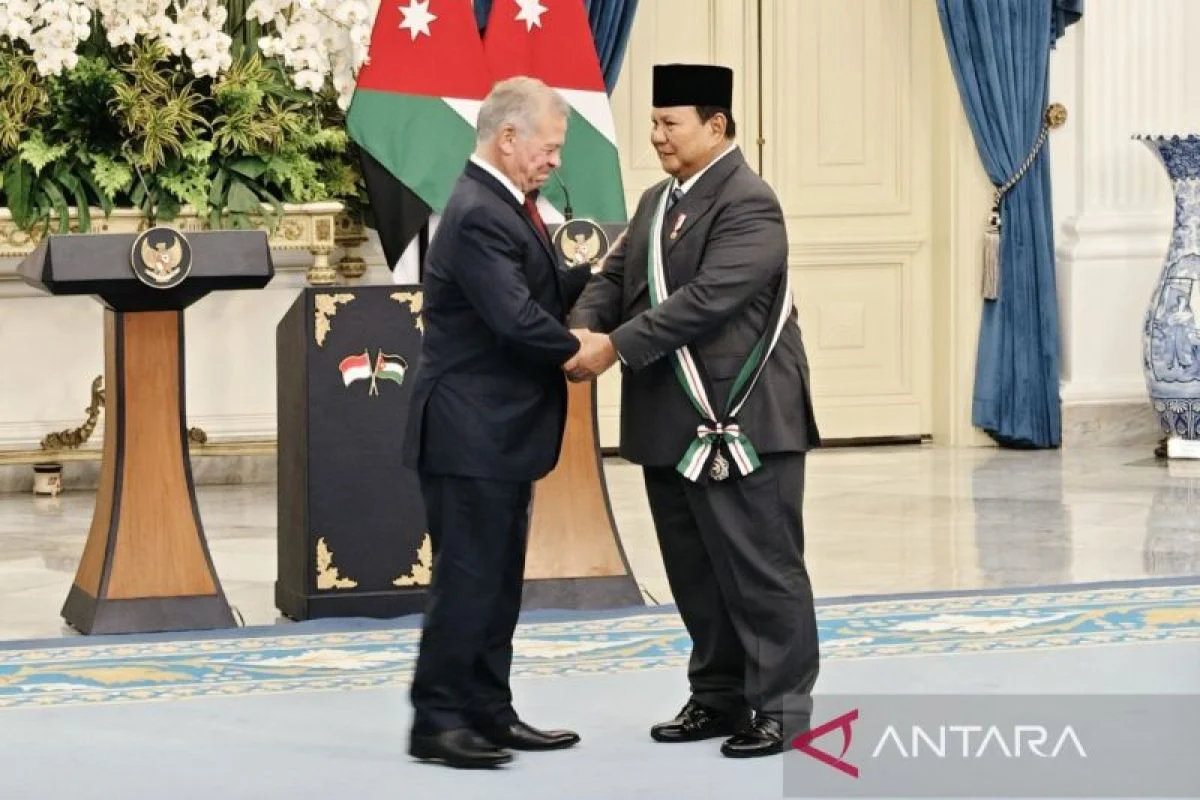
King Abdullah II bin Al-Hussein of the Hashemite Kingdom of Jordan arrived in Indonesia on Friday afternoon for a pivotal state visit, marking a significant moment in the diplomatic relations between the two nations. The monarch’s visit is poised to strengthen strategic partnerships, foster economic cooperation, and underscore a unique, decades-long personal friendship with Indonesian President-elect Prabowo Subianto. This visit forms a crucial leg of King Abdullah II’s broader diplomatic tour across several key Asian nations, including Japan, Vietnam, Singapore, and Pakistan, signaling Jordan’s deepening engagement with the Indo-Pacific region.
A Strategic Diplomatic Engagement
The official itinerary for King Abdullah II’s visit to Jakarta includes high-level meetings with President-elect Prabowo Subianto, where discussions are expected to cover a wide array of bilateral and regional issues. A key highlight of the visit will be the witnessing of the signing of several bilateral Memoranda of Understanding (MoUs), signifying concrete steps towards enhanced cooperation in various sectors. These agreements are anticipated to span areas such as trade, investment, defense, and potentially agriculture, reflecting both countries’ aspirations for mutual growth and stability.
Further enriching the economic dimension of the visit, King Abdullah II is scheduled to meet with representatives from Danantara Indonesia. While the specifics of this meeting remain under wraps, initial indications suggest a focus on potential collaborations in the phosphate industry, a sector where Jordan holds significant global prominence. Jordan is one of the world’s leading exporters of phosphate and its derivatives, crucial raw materials for fertilizers. Indonesia, with its vast agricultural sector and growing industrial needs, presents a natural partner for such an endeavor. A partnership in this area could ensure a stable supply chain for Indonesia while offering Jordan a strategic market in Southeast Asia. This economic dialogue is expected to open new avenues for direct investment and technology transfer, fostering a more robust bilateral trade relationship that extends beyond traditional goods.
King Abdullah II’s Broader Asian Diplomatic Offensive
The Indonesian stop is part of King Abdullah II’s meticulously planned diplomatic offensive across Asia, a region increasingly vital to Jordan’s economic diversification and strategic foreign policy objectives. His itinerary, which includes powerhouses like Japan and emerging economies such as Vietnam and Singapore, underscores Jordan’s commitment to forging new alliances and reinforcing existing ones beyond its traditional Western and Middle Eastern partners. This broader tour aims to attract foreign investment, explore new trade routes, and garner support for Jordan’s positions on regional issues, particularly the ongoing conflicts and humanitarian crises in the Middle East. By engaging with these dynamic Asian economies, Jordan seeks to bolster its economic resilience and enhance its diplomatic leverage on the global stage.
Deepening Bilateral Ties: A Chronology of Engagement
The current visit follows President-elect Prabowo Subianto’s own official trip to Jordan on April 14, 2025, during which he held a private, one-on-one meeting with King Abdullah II at the Al Husseiniya Palace in Amman. That meeting, held on the second day of Prabowo’s visit, was described as exceptionally warm and productive, laying the groundwork for the reciprocal visit by the Jordanian monarch. A memorable moment from that earlier encounter, widely reported and symbolizing the depth of their personal bond, saw King Abdullah II personally driving President-elect Prabowo to his hotel in downtown Amman. This gesture, unconventional for a head of state, highlighted the extraordinary nature of their relationship.
The Unbreakable Bond: A Friendship Forged in Military Rigor
The unique personal chemistry between King Abdullah II and President-elect Prabowo Subianto is not a recent development but rather a friendship that has spanned decades, rooted in shared experiences and mutual respect since their younger years. Both leaders share a distinguished military background, having both graduated from the prestigious United States Army Ranger School at Fort Benning, Georgia. This elite institution is renowned for its rigorous training, designed to develop leadership, tactical proficiency, and mental fortitude under extreme pressure. The shared experience of enduring such demanding training often creates an indelible bond among its alumni, fostering a sense of camaraderie and trust that transcends national borders.
Their paths first officially crossed on December 4, 1995, during the inauguration ceremony of Prabowo Subianto as the Commander General (Danjen) of the Indonesian Army’s Special Forces Command (Kopassus). At that time, both men were rising stars in their respective nations’ special forces. Prabowo’s command of Kopassus, Indonesia’s elite special operations unit, mirrored King Abdullah II’s own leadership role as the Commander of the Jordanian Special Forces in 1994. Both leaders were instrumental in modernizing and enhancing the capabilities of their respective special operations units, instilling in them a strong sense of discipline, strategic thinking, and operational excellence. This parallel trajectory in their military careers further solidified their mutual understanding and admiration.
A Refuge in Exile: Jordan’s Role in Prabowo’s Life
The depth of their friendship was profoundly tested and proven during a challenging period in Prabowo’s life. Following political upheaval in Indonesia in 1998, Prabowo left the country and sought refuge abroad. It was in Jordan that he found a welcoming and honorable sanctuary. Reports from that period indicate that Prabowo was not only received with respect but was even extended an offer of Jordanian citizenship, a testament to the high regard in which he was held by the Jordanian leadership, particularly King Abdullah II. Despite this generous offer, Prabowo ultimately chose to retain his Indonesian citizenship, demonstrating his unwavering commitment to his homeland, even in exile. This period in Jordan undoubtedly strengthened the personal bond between the two men, transforming a professional acquaintance into a deep and enduring friendship based on loyalty and support.
From Commanders to Heads of State: A Shared Destiny
Their paths converged again in 2014 when King Abdullah II made a state visit to Indonesia, allowing the two friends to reconnect. At that time, Prabowo was already a prominent political figure in Indonesia, having contested the presidential election. Fast forward to the present, both men now occupy the highest offices in their respective nations. King Abdullah II ascended to the throne as the King of Jordan in 1999, continuing the Hashemite dynasty’s long legacy of leadership. Prabowo Subianto, after a distinguished career in military and politics, was inaugurated as the President of Indonesia on October 20, 2024, following a decisive electoral victory. Their shared journey from elite military commanders to heads of state adds a unique dimension to the diplomatic relationship between Indonesia and Jordan, suggesting a foundation of trust and understanding rarely seen between national leaders.
Implications for Bilateral and Regional Cooperation
The personal rapport between King Abdullah II and President-elect Prabowo Subianto is expected to significantly enhance bilateral relations between Indonesia and Jordan. This unique dynamic can facilitate more direct and candid communication, potentially accelerating decision-making processes and fostering a more robust framework for cooperation. Beyond economic and defense ties, the two leaders share common interests in regional stability and counter-terrorism efforts. Jordan, a key player in the Middle East, is deeply invested in promoting peace and addressing humanitarian crises, particularly the Israeli-Palestinian conflict and the situation in Gaza. Indonesia, as the world’s most populous Muslim-majority nation and a steadfast advocate for Palestinian rights, aligns closely with Jordan’s stance on these critical issues.
During Prabowo’s visit to Jordan, discussions reportedly touched upon the humanitarian crisis in Gaza. The Indonesian Foreign Minister has indicated ongoing coordination regarding plans for sending Indonesian troops to Gaza for humanitarian and peacekeeping missions. Jordan, sharing a border with the West Bank and deeply impacted by the conflict, could play a crucial role in facilitating such efforts, given its diplomatic channels and logistical infrastructure in the region. The personal trust between the two leaders could streamline coordination and decision-making on complex regional matters, allowing for a more cohesive approach to global challenges.
Furthermore, King Abdullah II has publicly expressed his admiration for President-elect Prabowo, noting that Prabowo is leading Indonesia "in a very good direction." Such statements, coming from a respected global leader, not only bolster Prabowo’s international standing but also underscore the potential for a strengthened strategic partnership between their nations. This mutual respect and confidence could translate into increased collaboration in various international forums, including the United Nations and the Organisation of Islamic Cooperation (OIC), where both countries advocate for multilateralism and peaceful resolutions to conflicts.
Looking Ahead: A New Era of Partnership
The state visit of King Abdullah II to Indonesia is more than a routine diplomatic engagement; it represents the culmination of a long-standing personal friendship that has now ascended to the highest levels of statecraft. The convergence of their leadership at this critical juncture for both nations and the wider global community offers unprecedented opportunities for deeper collaboration. From boosting economic ties through ventures like phosphate cooperation with Danantara Indonesia, to coordinating efforts on critical geopolitical issues such as the humanitarian situation in Gaza, the visit is poised to usher in a new era of robust partnership. The shared values of leadership, resilience, and a commitment to their respective nations’ prosperity, deeply rooted in their military backgrounds and personal history, will undoubtedly serve as a powerful catalyst for a stronger, more strategic relationship between Indonesia and the Hashemite Kingdom of Jordan.