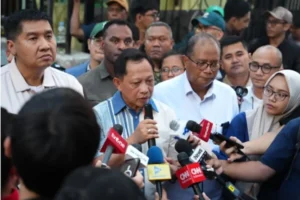
The Corruption Eradication Commission (KPK) has officially announced the designation of three suspects following a comprehensive sting operation (OTT) conducted in West Lombok Regency, West Nusa Tenggara (NTB) Province. Out of 20 individuals initially apprehended during the operation, the KPK identified the trio as central figures in an alleged multi-layered corruption scheme involving conflicts of interest in procurement, bribery, and illicit gratuities within the West Lombok Regency administration.
The primary suspects named by the anti-graft body are Lalu Ahmad Zaini, the incumbent Regent of West Lombok, who was slated to serve for the 2025-2030 period; Sudirman, the President Director of PT Air Minum Giri Menang (a regional water utility company); and Alvonsus Gani, the President Director of PT Meconel Sistim Instrument (MSI). The arrests and subsequent designation of suspects underscore the KPK’s unwavering commitment to rooting out corruption at all levels of government, particularly in regional administrations where such practices often undermine public service delivery and local development.
During a press conference held at the KPK’s Red and White Building in Jakarta on Tuesday, July 21, Achmad Taufik Husein, the acting Director of Investigation for the KPK, stated, "Based on valid preliminary evidence, the KPK has elevated this case to the investigation stage and designated three individuals as suspects." He further noted that the suspects were undergoing intensive examination and would be detained for the initial 20-day period as the investigation progresses. This significant development sends a strong signal about the KPK’s continued vigilance against corruption, even as it targets high-ranking regional officials.
The Allegations: A Web of Conflicts of Interest
The intricate corruption scheme, as meticulously detailed by Achmad Taufik Husein, reportedly originated from public complaints concerning alleged corrupt practices within the West Lombok Regency administration. These complaints prompted the KPK to launch a preliminary investigation that ultimately led to the sting operation.
At the heart of the conflict of interest allegations is Regent Lalu Ahmad Zaini, who is accused of leveraging his authority to manipulate procurement processes. He allegedly instructed Lalu Ratnawi, the Head of the West Lombok Public Works, Spatial Planning, and Residential Areas Agency (PUPRPKP), to facilitate Sudirman, the President Director of PT Air Minum Giri Menang, in securing various project packages within the PUPRPKP agency for the 2025-2026 fiscal years.
Sudirman, in turn, is accused of employing CV Dyas Karya Konstruksi (DKK), a company he owns, as a "pool bucket" for these projects. This modus operandi involved Sudirman "borrowing the flags" of several other vendors. This tactic served to obscure CV DKK’s direct involvement and prevent its administrative record from appearing as the official project winner within the PUPRPKP agency, thereby concealing the glaring conflict of interest from public scrutiny.
Further exacerbating the manipulation, the Procurement of Goods and Services (PBJ) committee allegedly introduced a requirement for "support letters" from specific suppliers or regarding the ownership of certain equipment for prospective vendors. This seemingly innocuous requirement is suspected to have been a deliberate instrument designed to create artificial barriers, effectively disadvantaging other legitimate bidders and paving the way for Sudirman’s pre-selected companies.
Through this elaborate scheme, a total of Rp17.9 billion (approximately USD 1.2 million, assuming an exchange rate of Rp15,000/USD) worth of project packages were awarded to these pre-determined vendors, either through rigged tenders or direct appointments. These projects included:
- Rehabilitation of Gerung City Park (Phase I, FY 2025): Rp2.3 billion
- Rehabilitation of Gerung City Park (Phase II, FY 2026): Rp4.3 billion
- Construction of an Office Building (FY 2025): Rp2.4 billion
- Renovation of the West Lombok Regent’s Office: Rp1.7 billion
- Eight project packages within the PUPRPKP Agency (Direct Appointment, FY 2025): Rp3.4 billion
- Four project packages within the General Affairs Division (Direct Appointment, FY 2025): Rp2 billion
- Sixteen project packages within PT Air Minum Giri Menang (Regional Water Utility, FY 2025): Rp1.8 billion
Despite these varied awardees, the KPK revealed that the actual execution of these projects was largely taken over by CV DKK, which then sub-contracted portions to other entities while retaining full operational control. From these Rp17.9 billion projects, Sudirman allegedly provided a 3% "fee" to the nominal vendors whose names were borrowed, while personally pocketing approximately Rp10.6 billion in profits through CV DKK.
In addition to these projects, Sudirman, through CV DKK, is also accused of receiving an additional Rp31.1 billion related to procurement activities at the Regional Development Planning Agency (Bappeda) and the Youth and Sports Agency (Dispora) of West Lombok Regency. The KPK’s investigators are committed to further scrutinizing these substantial illicit receipts. Crucially, a significant portion of these ill-gotten gains—specifically Rp10.8 billion from the total Rp41.7 billion received by Sudirman via CV DKK—was allegedly funneled directly to Regent Lalu Ahmad Zaini.
Bribery and Illicit Gifts: The Price of Influence
Beyond the complex web of procurement fraud, Regent Lalu Ahmad Zaini faces separate allegations of receiving bribes, goods, and facilities from Alvonsus Gani, the President Director of PT Meconel Sistim Instrument (MSI). PT MSI served as a vendor for PT Air Minum Giri Menang, the regional water utility company led by Sudirman.
Between 2024 and 2026, PT MSI, acting through Sudirman and allegedly under the direct orders of Regent Lalu Ahmad, secured several projects related to clean water management in West Lombok Regency, collectively valued at Rp27.1 billion. In exchange for these lucrative contracts, PT MSI is accused of systematically providing Lalu Ahmad with a stream of benefits, including luxury goods, travel accommodations, and substantial cash payments, totaling over Rp1.6 billion.
The list of alleged bribes is extensive and indicative of a pattern of systematic illicit enrichment:
- One unit of a Toyota Alphard luxury car, valued at Rp1.2 billion.
- One pair of Hermes branded shoes, valued at Rp19 million.
- Accommodation for numerous round-trip journeys between Lombok and Jakarta (LOP-JKT).
- Cash payments amounting to at least Rp380 million.
- One unit of an iPhone 17 Pro mobile phone, valued at Rp26 million.
- One sacrificial cow (for Eid al-Adha), valued at Rp17 million.
These details paint a picture of a regional leader using his position to extract personal wealth through various channels, blurring the lines between public service and private gain.
Gratification: The Culture of Illegal Payments
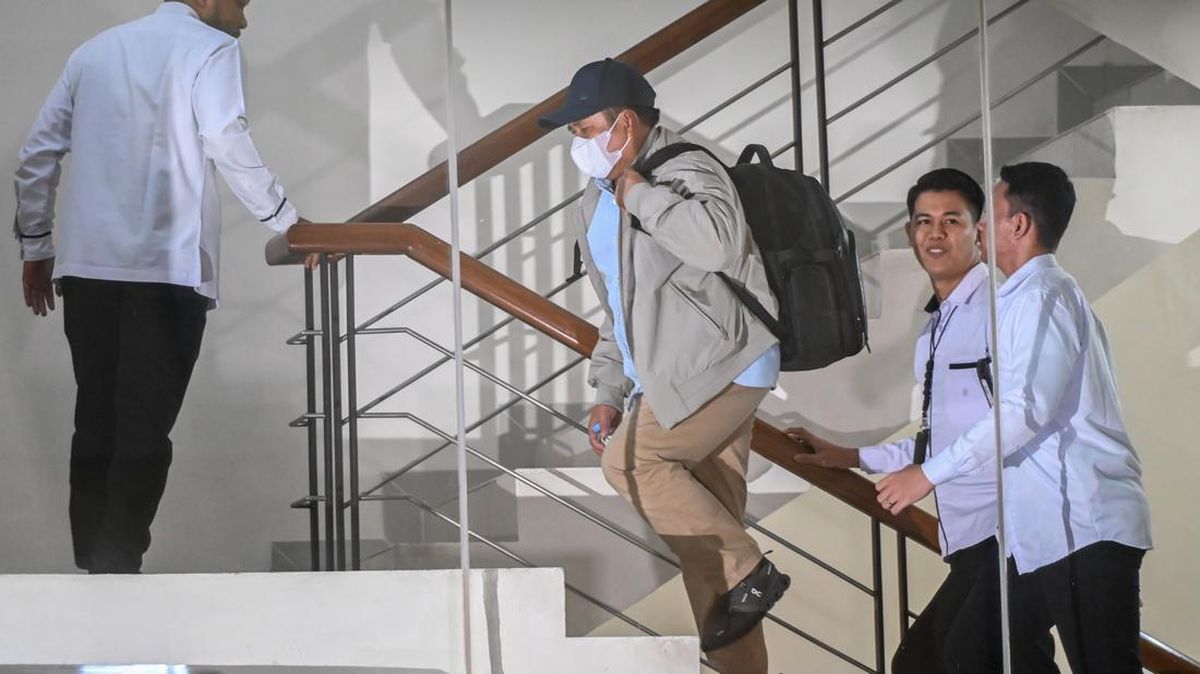
The KPK’s investigation also uncovered evidence of other illicit receipts, categorized as gratification, involving both Sudirman and Lalu Ahmad. This aspect of the case highlights a pervasive culture of illegal payments, often disguised as traditional offerings or operational funds.
In 2025, leading up to the Eid festivities, Regent Lalu Ahmad allegedly requested a collection of funds ranging from Rp500 million to Rp750 million. In the same year, Sudirman reportedly sought the assistance of Lalu Ratnawi, the Head of PUPRPKP, to gather "fees" from various Public Works projects specifically for the Regent’s benefit. These collected funds were then allegedly delivered to Lalu Ahmad in cash by Sudirman.
Further incidents of gratification include:
- In March 2026, Sudirman allegedly received Rp250 million in cash.
- In April 2026, also preceding Eid, the Head of PUPRPKP, through his driver, reportedly delivered Rp100 million to Sudirman.
The KPK suspects that a significant portion of the money received by Lalu Ahmad Zaini was subsequently used for the acquisition of land assets, suggesting an attempt to launder or conceal the illicit proceeds. Additionally, both Lalu Ahmad and Sudirman are alleged to have placed Rp2.25 billion in RS SSM (Sisa Sentra Medika Hospital) under the guise of "share purchases" or "regent’s operational funds," a maneuver that further raises suspicions of financial impropriety and attempts to obscure the true nature of these transactions.
Achmad Taufik Husein affirmed that KPK investigators would continue to thoroughly investigate the flow and sources of these funds, as well as the potential involvement of other parties in this expansive corruption scheme.
KPK’s Mandate and Broader Context of Corruption in Indonesia
This case in West Lombok serves as a stark reminder of the persistent challenges Indonesia faces in combating corruption, particularly at the regional level. The KPK, established in 2002, plays a critical role as the nation’s primary anti-graft agency, tasked with investigating and prosecuting corruption offenses, fostering public education, and implementing prevention programs. Its independence and authority allow it to tackle complex cases involving high-ranking officials, often operating outside the immediate influence of local political structures.
Regional administrations, such as regencies and municipalities, are frequently identified as hotspots for corruption due to the substantial public funds managed for development projects, infrastructure, and public services. The "regent-businessman" nexus, where local leaders collude with private entities for personal gain, is a recurring pattern in many KPK cases. This scheme often involves manipulating procurement processes, as seen in the West Lombok case, where competitive bidding is subverted to favor specific companies in exchange for bribes or kickbacks.
Types of corruption alleged in this case—conflict of interest, bribery, and gratification—are common offenses. A conflict of interest arises when an official uses their public position for private benefit, directly or indirectly. Bribery involves offering or receiving something of value in exchange for influencing an official action. Gratification refers to receiving gifts or benefits in connection with one’s official position, often without a clear quid pro quo, but still considered illegal if unreported or unsolicited. These acts collectively erode public trust, distort market competition, and divert funds meant for public welfare, impacting the quality of infrastructure, education, healthcare, and other essential services.
West Lombok, a region known for its natural beauty and growing tourism sector, relies heavily on transparent and efficient governance to attract investment and improve the lives of its citizens. Allegations of such widespread corruption threaten to undermine these efforts, discouraging legitimate businesses and eroding confidence in local institutions.
Implications for West Lombok and Public Trust
The arrest of an incumbent regent on corruption charges has profound implications for West Lombok. Immediately, it creates a leadership vacuum and administrative instability. While interim measures will be put in place, the disruption to governance and the implementation of development programs is inevitable. Furthermore, the fact that Lalu Ahmad Zaini was designated as Regent for the 2025-2030 period adds another layer of complexity, raising questions about the legitimacy of future electoral processes and public confidence in elected officials.
The alleged diversion of tens of billions of rupiah from public projects, ranging from city park rehabilitation to clean water management, means that vital services and infrastructure improvements for the people of West Lombok have been compromised. The quality of these projects, if executed under corrupt pretenses, is often substandard, leading to long-term costs and inefficiencies for the community. The alleged investment of illicit funds into land assets and a hospital through dubious means further illustrates the direct impact on public resources and economic fairness.
Public trust, once broken, is difficult to restore. Cases like this can foster cynicism among citizens, making them less likely to engage with local government or believe in the integrity of public institutions. It also highlights the critical need for strengthened internal oversight mechanisms, transparent procurement systems, and robust ethics codes within regional administrations. The involvement of a regional water utility company (PT Air Minum Giri Menang) underscores how essential public services can become targets for corrupt schemes, directly affecting the daily lives of residents.
Future Steps and Judicial Proceedings
With the suspects now officially named and under detention, the KPK will proceed with its comprehensive investigation. This will involve gathering additional evidence, interviewing more witnesses, and meticulously tracing the financial flows to identify all assets acquired through corrupt means. The legal process will then move towards the filing of charges, followed by a trial in the Corruption Court. If convicted, the suspects face severe penalties, including lengthy prison sentences, substantial fines, and the forfeiture of ill-gotten assets.
The KPK’s continued pursuit of high-profile corruption cases, particularly those involving regional heads, reinforces its role as a crucial pillar in Indonesia’s fight against graft. This case serves as a powerful deterrent and a testament to the commission’s resolve to ensure accountability, promote good governance, and protect public funds for the benefit of all Indonesians. The outcome of this investigation and subsequent legal proceedings will undoubtedly set an important precedent for future anti-corruption efforts in West Nusa Tenggara and across the archipelago.