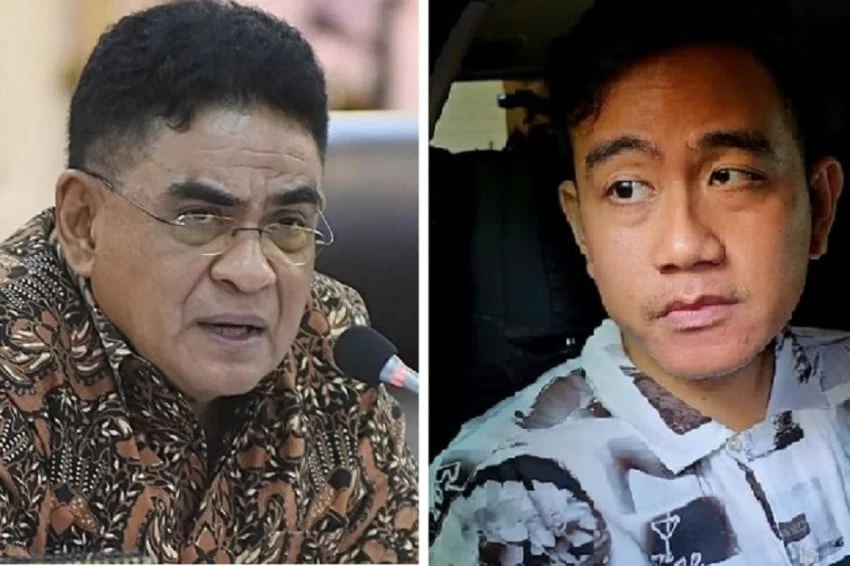
JAKARTA — Political tension in Indonesia has escalated significantly following a decisive ruling by the Supreme Court (Mahkamah Agung or MA) regarding the educational credentials of Vice President Gibran Rakabuming Raka. The highest court in the judicial branch invalidated the official certificate of equivalence (surat keterangan penyetaraan) for Gibran’s high school diploma, triggering immediate political fallout. In response to the development, the Indonesian Democratic Party of Struggle (PDI-P) has renewed its calls for the Vice President to voluntarily step down from his high-ranking office to preserve national stability and allow the government to refocus its attention on pressing public welfare issues.
The controversy centers on the legal validity of Gibran Rakabuming Raka’s secondary education credentials, which have faced persistent public scrutiny and legal challenges since before he assumed the vice-presidential office. Critics and political opponents have repeatedly questioned the authenticity and equivalence of his high school education obtained abroad, leading to a protracted series of administrative and judicial challenges. The recent Supreme Court verdict marks a critical legal turning point, shifting the debate from political rhetoric to formal judicial invalidation.
Calls for Resignation Reiterate Previous Demands
Andreas Hugo Pareira, a prominent Chairman of the Central Executive Board (DPP) of PDI-P and Vice Chairman of Commission XIII of the House of Representatives (DPR), was among the first senior politicians to voice a formal response following the Supreme Court’s decision. Speaking to reporters, Pareira stated that the latest judicial ruling reinforces earlier suspicions that have surrounded the Vice President’s qualifications since the initial evidentiary hearings at the Constitutional Court (Mahkamah Konstitusi or MK).
"Ever since the Constitutional Court proceedings, I have stated that it would be much better for GRR (Gibran Rakabuming Raka) to resign," Pareira remarked. He emphasized that stepping down would serve as a pragmatic resolution to a deeply polarizing controversy, allowing the nation to close the chapter on administrative eligibility disputes and redirect its energy toward addressing urgent socio-economic challenges faced by ordinary citizens.
According to Pareira, the evidentiary phase at the Constitutional Court provided early indicators that the documentation supporting Gibran’s educational background lacked the necessary legal robustness. He argued that the Supreme Court’s formal invalidation of the equivalence certificate confirms these long-standing doubts, making the current political impasse increasingly untenable for the executive branch.
Chronology of the Educational Eligibility Controversy
The legal and political saga surrounding Vice President Gibran Rakabuming Raka’s high school diploma equivalence has unfolded through a complex series of administrative reviews, electoral petitions, and judicial challenges. Understanding the trajectory of this controversy requires examining the key milestones that have defined the dispute:
-
Pre-Election Scrutiny (Late 2023 – Early 2024): As the presidential election cycle gained momentum, questions regarding the educational backgrounds of candidates emerged across various public platforms. Observers and legal activists scrutinized the documents submitted by Gibran to the General Elections Commission (KPU), pointing toward discrepancies or unconventional administrative pathways regarding his secondary schooling completed overseas.
-
Constitutional Court Challenge (2024): During post-election dispute hearings at the Constitutional Court, petitioners raised issues concerning candidate eligibility requirements, including formal educational qualifications. Although the court focused primarily on constitutional interpretations and electoral law compliance, the hearings brought the issue of educational verification into the national spotlight, prompting detailed scrutiny from legal experts and opposition lawmakers.
-
Administrative and Judicial Escalation (2025): Civil society groups and legal coalitions pursued administrative litigation to challenge the validity of the certificates issued by the Ministry of Education, Culture, Research, and Technology regarding foreign school equivalencies. These efforts moved through the administrative court system before ultimately reaching the Supreme Court.
-
Supreme Court Final Ruling (Late October 2026): The Supreme Court formally issued a verdict declaring the certificate of equivalence for Gibran’s high school diploma invalid. The decision stripped the administrative document of its legal standing, setting off immediate political reactions from political parties, legal analysts, and civil society organizations.
Broader Political Reactions and Institutional Implications
The Supreme Court’s decision has generated diverse reactions across the political spectrum, illustrating the deep divisions within Indonesia’s legislative and executive bodies. While opposition figures like those within PDI-P have seized the moment to demand accountability and resignation, representatives from supporting coalition parties have adopted a more cautious or dismissive stance regarding the ruling’s immediate political consequences.
Prominent figures such as Mahfud MD, a former Coordinating Minister for Political, Legal, and Security Affairs and a respected constitutional law expert, have weighed in on the broader implications of the ruling. Mahfud noted that while the judicial branch has made its definitive ruling on the administrative validity of the certificate, the subsequent steps remain firmly within the domain of political calculation. "It is up to the political actors to decide which path to take," Mahfud observed, highlighting the tension between strict legal interpretations and pragmatic political maneuvering.
Legal analysts point out that the invalidation of an educational equivalence certificate for a high-ranking state official introduces unprecedented legal questions regarding administrative compliance and constitutional office holding. While Indonesia’s electoral laws and the 1945 Constitution outline specific requirements for presidential and vice-presidential candidates, the retrospective invalidation of qualifying documents by a supreme judicial body creates a complex constitutional gray area.
Potential Economic and Governance Ramifications
As the political debate intensifies, economic observers and governance experts have expressed concern over the potential distractions this controversy poses for the national administration. At a time when Indonesia faces complex global economic headwinds, domestic inflation management, and large-scale infrastructure development goals, prolonged political instability could undermine investor confidence and administrative efficiency.
Furthermore, the ongoing dispute underscores persistent vulnerabilities in how state institutions verify the credentials of candidates seeking high public office. Critics argue that stricter, more transparent vetting processes during the initial candidate registration phases by the General Elections Commission (KPU) could prevent prolonged post-election crises of legitimacy. Conversely, defenders of the administration maintain that the electoral processes adhered strictly to the prevailing legal framework at the time of candidate registration and certification.
Path Forward and Future Outlook
With the Supreme Court’s decision now finalized, attention turns to how the executive branch, the House of Representatives, and political parties will navigate the fallout. While calls for resignation from opposition parties like PDI-P exert political pressure, actual removal from office under Indonesian constitutional law requires specific mechanisms, such as impeachment procedures initiated through the DPR and adjudicated by the Constitutional Court on grounds of treason, corruption, bribery, other severe criminal offenses, or moral turpitude—none of which directly align with a civil administrative dispute over educational equivalence without further legal escalation.
Nevertheless, the political cost of the ruling continues to accumulate for the administration. As public discourse remains dominated by debates over educational credentials and institutional integrity, the imperative for transparent governance and rigorous legal compliance remains a central theme in contemporary Indonesian politics. The coming weeks will likely determine whether the executive branch can successfully compartmentalize the legal controversy and maintain policy momentum, or if the demands for political accountability will fundamentally alter the stability of the ruling coalition.