TANGERANG — In a concerted humanitarian effort aimed at alleviating the distress of vulnerable communities and internal personnel, the Ministry of Immigration and Corrections (Kemenimipas) has officially launched a nationwide distribution of social assistance. The initiative, branded under the banner of "Imipas Peduli," directly targets populations severely impacted by ongoing forest and land fires, commonly known in Indonesia as kebakaran hutan dan lahan (karhutla), alongside prolonged seasonal droughts plaguing several regions.
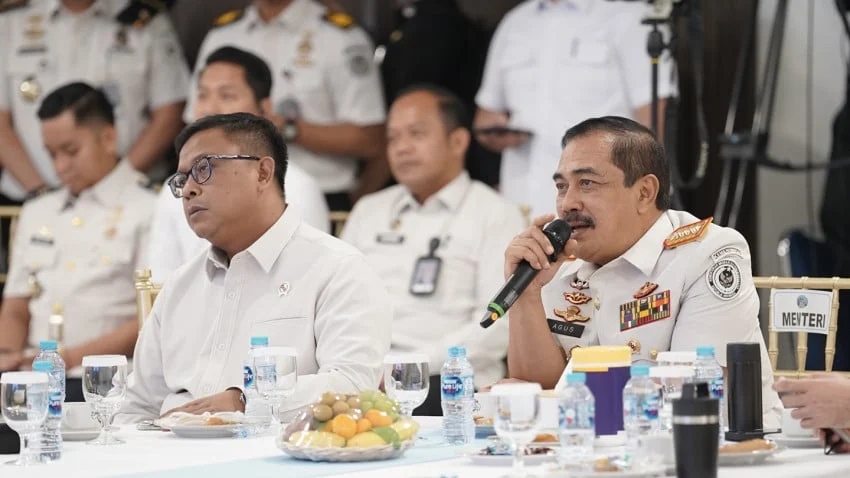
The announcement and subsequent rollout of the assistance program were formally inaugurated during the Kick Off Ceremony commemorating the 2nd Anniversary of the ministry’s institutional formation. The event took place at the Auditorium of the Politeknik Imigrasi dan Pemasyarakatan (Poltekimipas) in Tangerang, drawing key ministry officials, stakeholders, and institutional representatives. Led by Minister of Immigration and Corrections Agus Andrianto, the ministry mobilized resources to address both immediate health crises caused by toxic smoke haze and acute water scarcity affecting agricultural and residential zones.
Targeted Relief Strategy: Tailored Interventions for Diverse Crises
The nationwide relief operation has been structured to address the specific environmental challenges confronting different provinces. Rather than applying a blanket approach, Kemenimipas deployed tailored assistance packages that correspond directly to the localized needs reported by regional disaster management teams and ministry field offices.
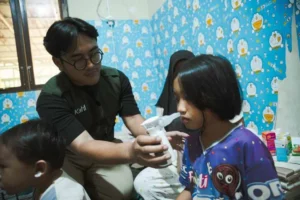
In regions paralyzed by environmental smoke—specifically Central Kalimantan and East Kalimantan—the primary hazard stems from widespread karhutla. The resulting thick smog has significantly impaired regional air quality, triggering a surge in acute respiratory infections and disrupting daily economic and educational activities. To mitigate these health risks, the ministry distributed thousands of specialized medical masks, essential pharmaceuticals, and financial compensation packages. These provisions were specifically allocated to support affected ministry employees and their immediate families whose livelihoods and health have been compromised by the hazardous atmospheric conditions.
Simultaneously, a separate crisis unfolded on the island of Java, where prolonged meteorological droughts severely depleted local water reservoirs, agricultural wells, and municipal supply chains. In response, Kemenimipas coordinated a massive logistical operation to transport potable water to drought-stricken districts. Official deployment records indicate that 150 tanker trucks of clean water were dispatched to the Special Region of Yogyakarta (DIY), while an even larger allotment of 200 tanker trucks was directed toward critical zones in Central Java.
Furthermore, the intervention in Central Java extended beyond liquid water distribution. The ministry delivered 200 comprehensive staple food packages (sembako) designed to sustain vulnerable households experiencing food insecurity due to agricultural failures. These packages were split evenly, with 100 sets distributed to families in Cilacap and another 100 sets allocated to residents in Blora. Recognizing that tanker trucks offer only a temporary fix to chronic water shortages, the ministry also initiated infrastructural projects, funding the construction of deep borehole wells (sumur bor) in Blora to establish a sustainable, long-term groundwater supply for the local population.
Background and Context: Environmental Pressures and Institutional Response
The timing of the Imipas Peduli rollout aligns with a recurring environmental vulnerability matrix that regularly challenges Indonesian disaster mitigation frameworks. Forest and land fires, exacerbated by prolonged dry seasons and climatic anomalies such as El Niño, frequently devastate carbon-rich peatlands in Sumatra and Kalimantan. The ecological damage generates transboundary haze, posing severe public health hazards and straining regional healthcare systems.
Concurrently, vast sectors of Java experience acute meteorological droughts that paralyze rural economies dependent on rain-fed agriculture. Water tables drop significantly, leaving rural communities reliant on external aid for basic hydration and sanitation needs.
Within this broader socio-environmental landscape, government agencies like Kemenimipas have increasingly integrated corporate social responsibility and humanitarian outreach into their institutional mandates. The decision to anchor the relief drive to the 2nd Anniversary of the ministry underscores a strategic effort to institutionalize public service beyond traditional administrative boundaries, ensuring that civil servants and the communities surrounding correctional and immigration facilities receive direct institutional backing during national crises.
Chronology of the 2026 Institutional Rollout
The execution of the Imipas Peduli program followed a meticulously planned administrative and logistical timeline leading up to the official launch event in late October 2026:
- Early to Mid-October 2026: Regional offices across Kalimantan, Yogyakarta, and Central Java submitted comprehensive damage assessments and resource requirement logs to the central Kemenimipas headquarters in Jakarta. Data collection focused on identifying ministry personnel affected by respiratory ailments from karhutla haze and mapping out villages experiencing critical water deficits.
- Mid-October 2026: Central logistics committees procured necessary relief materials, including medical supplies, staple food items, and contracts for water tanker fleets and deep well drilling equipment.
- October 28, 2026: Minister Agus Andrianto officially led the Kick Off Ceremony for the 2nd Anniversary of Kemenimipas at the Poltekimipas Auditorium in Tangerang. During the plenary session, the formal deployment of the relief convoys to Kalimantan, Yogyakarta, and Central Java was authorized and broadcast to regional units.
- Late October to November 2026: Regional field teams executed the physical distribution of the aid packages, handing out masks and medicine in Borneo while coordinating municipal water drops in Java alongside local disaster mitigation agencies (BPBD).
Official Statements and Leadership Perspective
Addressing ministry officials, academic cadets, and invited guests during the anniversary kick-off in Tangerang, Minister Agus Andrianto emphasized the moral and operational imperative of state institutions stepping up during humanitarian emergencies. He noted that the ministry’s responsibilities extend far beyond managing immigration checkpoints and correctional facilities; they encompass a fundamental duty to safeguard the welfare of the broader public and internal personnel who form the backbone of the institution.
"The challenges we face as a nation—ranging from environmental degradation and forest fires to the harsh realities of prolonged droughts—require a unified, responsive posture from every pillar of government," Minister Agus stated during his address. "Through the Imipas Peduli initiative, we strive to ensure that our personnel and our fellow citizens in disaster-hit regions do not bear these burdens alone. Relief must be tangible, timely, and directly responsive to what the ground is telling us."
While formal statements from regional governors in Central Kalimantan, Yogyakarta, and Central Java are pending comprehensive post-distribution evaluations, local civil society organizations and municipal disaster response units have welcomed the intervention. Local officials in Blora and Cilacap noted that the combination of immediate food aid and permanent infrastructure, such as the newly funded deep wells, provides a vital buffer against the compounding economic pressures of the dry season.
Fact-Based Analysis of Implications and Future Outlook
The large-scale deployment of resources by Kemenimipas carries several important implications for public administration, inter-agency coordination, and climate resilience in Indonesia:
- Decentralized Responsiveness: By tailoring assistance—delivering respiratory health supplies to fire-affected Borneo and hydrological relief to drought-stricken Java—the ministry demonstrated a nuanced understanding of regional crisis differentiation. This targeted methodology minimizes resource waste and maximizes logistical efficiency.
- Infrastructure Investment vs. Emergency Aid: The inclusion of deep borehole construction in Blora highlights a critical shift from purely reactive relief to proactive, sustainable development. Emergency water trucking addresses the immediate threat of dehydration, but deep wells offer structural resilience against future dry spells. Analysts suggest that scaling up permanent water infrastructure will be essential as climate change exacerbates weather volatility.
- Internal Morale and Workforce Welfare: By explicitly including ministry employees and their families among the aid beneficiaries, Kemenimipas reinforces institutional loyalty and resilience. Public servants operating in high-risk environmental zones are better positioned to maintain administrative continuity when their personal safety and domestic welfare are supported by their employer.
- Inter-Agency Synergy: The success of the Imipas Peduli rollout relies heavily on seamless coordination with local disaster agencies (Badan Penanggulangan Bencana Daerah), local governments, and community leaders. Moving forward, the efficacy of such programs will depend on the continued integration of ministerial resources into the broader national disaster response framework.
As Kemenimipas advances into its second year of operations under its current configuration, the expansion of humanitarian outreach programs like Imipas Peduli signals a growing trend of developmental and social welfare integration within traditionally security- and administrative-focused ministries. Observers will closely monitor the long-term performance of the newly established infrastructure projects, such as the borehole wells in Central Java, to determine their viability as permanent solutions to recurring regional droughts.