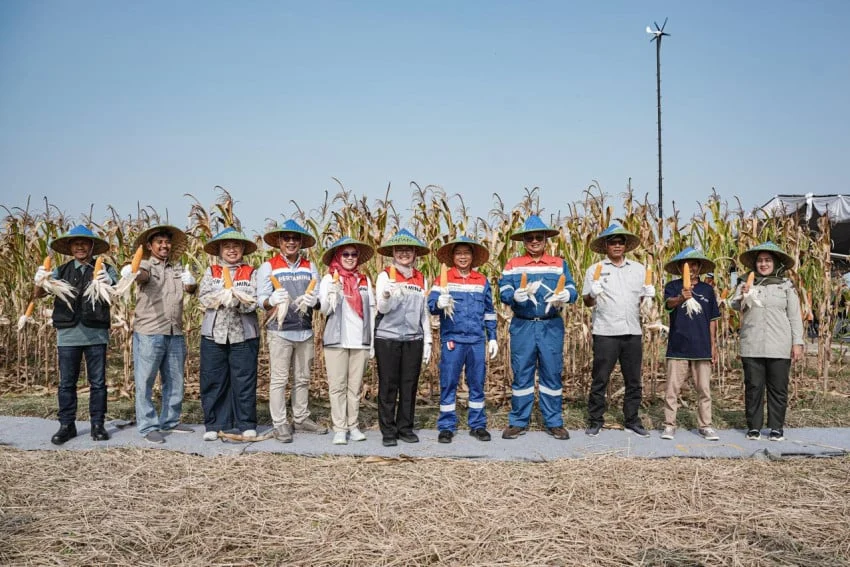
PT Pertamina Patra Niaga has officially intensified its commitment to sustainable rural development by spearheading the adoption of renewable energy technologies to bolster agricultural productivity in Kalijaran, Cilacap, Central Java. Through its corporate social and environmental responsibility (TJSL) initiative, known as the Masyarakat Pengelola Pertanian Berkelanjutan (MAPAN) program, the company is systematically integrating clean energy solutions into the local agricultural value chain, spanning from upstream cultivation to downstream food processing. This initiative represents a strategic shift in how state-owned enterprises engage with rural economies, moving beyond simple charity toward the creation of self-sustaining ecosystems powered by solar and wind energy.
The MAPAN program serves as a multi-faceted response to the complex challenges currently facing Indonesia’s agrarian sector. Among these, the most pressing issues identified in the Cilacap region include chronic irrigation inefficiencies, a lack of technological modernization in farming practices, insufficient business diversification, and the mounting threat of climate change, which has made traditional rainfall-dependent farming increasingly unpredictable. By providing a reliable, climate-resilient energy source, Pertamina Patra Niaga aims to stabilize local agricultural output while simultaneously lowering operational costs for farmers who have historically relied on expensive and polluting fossil fuel-based machinery.
The Technological Framework of the MAPAN Program
At the heart of the MAPAN initiative is a sophisticated hybrid energy system designed to provide consistent power for irrigation. The system leverages a combination of Pembangkit Listrik Tenaga Surya (PLTS) or solar power, and Pembangkit Listrik Tenaga Bayu (PLTB) or wind energy. This hybrid approach is particularly strategic for the coastal and rural geography of Cilacap, where solar intensity and wind patterns can complement each other to ensure a reliable energy supply throughout the year.
Technical data provided by the project indicates that the current installation boasts a total capacity of 15,250 Wp. This capacity is sufficient to power high-efficiency pumps that generate a consistent average debit of 150,000 liters of water per day. This automated irrigation capacity has transformed the local farming landscape, enabling farmers to extend their cultivation cycles even during the dry season, a feat previously impossible without significant capital expenditure on diesel fuel.
The environmental implications of this project are equally significant. By replacing diesel-powered pumps with renewable energy, the program effectively prevents the emission of approximately 2,860 kilograms of CO2 equivalent (CO2e) annually. Furthermore, the economic relief for the local farming community is measurable; farmers have reported savings of up to Rp9 million in operational costs per two planting cycles. This direct injection of savings into the household economy provides the capital necessary for further diversification, such as investing in livestock or processing equipment.
Integrating the Upstream-Downstream Value Chain
The philosophy behind the MAPAN program is built upon the concept of a circular economy. Pertamina Patra Niaga has facilitated an integrated approach that maximizes every output of the agricultural process. In this model, the production of rice is merely the starting point. The program assists the community in managing the entire life cycle of their harvest:
- Upstream Production: High-efficiency irrigation powered by renewables allows for consistent crop yields.
- Milling and Processing: The program has invested in infrastructure to convert raw grain into high-quality rice locally, capturing more value for the farmers rather than selling raw commodity to external middlemen.
- By-product Valorization: Agricultural waste is repurposed. Rice husks and bran (dedak) are utilized as feed for livestock, particularly ducks, and converted into organic fertilizer.
- Diversification: The program supports the creation of value-added products, including snack production (such as chips), salted egg production, and the development of fortified rice-based food for infant nutrition (MPASI), ensuring local food security and economic resilience.
This systemic integration ensures that the benefits of the MAPAN program are felt at every level of the village economy, effectively mitigating the risks of market volatility that often plague small-scale agricultural ventures.
Official Perspectives and Strategic Objectives
Speaking on the initiative, VP Community Involvement Development of Pertamina Patra Niaga, Dian Hapsari Firasati, emphasized that the program is not merely a technological installation, but a long-term commitment to community empowerment. "We want the utilization of renewable energy to provide real and sustainable benefits for the community," she stated. "In Kalijaran, we have integrated renewable energy with the specific needs of the agricultural sector, covering everything from irrigation and food production to waste management and business expansion."
The strategic importance of this initiative aligns with Indonesia’s broader national energy transition targets. By decentralizing energy production through small-scale renewable installations, Pertamina Patra Niaga is demonstrating a scalable model for rural electrification that can be replicated in other agricultural hubs across the archipelago. The project serves as a pilot for how state-owned enterprises can contribute to the "Green Economy" transition while simultaneously addressing the socio-economic disparities between urban and rural centers.
Chronology and Development Timeline
The development of the MAPAN program followed a rigorous assessment phase that identified the vulnerabilities of the Kalijaran community. The project began with a feasibility study focused on energy load requirements for irrigation and the viability of local weather patterns for hybrid energy generation.
Following the initial infrastructure rollout, which included the construction of the hybrid energy station, the program transitioned into the capacity-building phase. This phase involved training local farmers in the maintenance of renewable energy equipment and the management of a cooperative business structure. The integration of downstream processing—such as the production of MPASI and snacks—was introduced in the latter stages to ensure that the community could derive consistent revenue outside of the traditional harvesting season. As of late 2026, the program has entered a monitoring and optimization phase, where data on yield, energy efficiency, and household income are being tracked to refine the model for potential expansion to neighboring districts.
Broader Implications for National Agriculture
The success of the MAPAN program in Cilacap carries significant implications for the national agricultural policy. As Indonesia navigates the dual challenges of climate change and food security, the reliance on high-carbon, centralized energy grids becomes increasingly problematic for rural farming communities. The transition toward localized, renewable-powered irrigation systems offers a path toward climate resilience.
Furthermore, the economic impact of reduced diesel dependency cannot be overstated. With energy prices fluctuating globally, providing farmers with a "fixed-cost" energy source (as maintenance costs for solar/wind are significantly lower than fuel costs) allows for better financial planning and investment. If scaled, this model could drastically reduce the fiscal burden of energy subsidies for the agricultural sector while simultaneously contributing to the national target of reducing greenhouse gas emissions.
The integration of the value chain, as demonstrated in Kalijaran, also addresses a critical failure in many rural development programs: the lack of downstream capability. By enabling the local community to process their own waste into fertilizer and their own grain into retail-ready products, the program creates a more resilient economic base. It transforms the role of the farmer from a simple producer of raw materials to a stakeholder in a multi-faceted agro-industrial business.
Conclusion and Future Outlook
The Pertamina Patra Niaga MAPAN program in Cilacap stands as a blueprint for the future of rural development in Indonesia. By effectively bridging the gap between cutting-edge renewable technology and traditional farming practices, the initiative provides a robust solution to the challenges of modern agriculture.
The project’s success is not measured solely in megawatts of electricity generated or liters of water pumped, but in the sustainable growth of the Kalijaran community. As the program continues to mature, its ability to serve as a model for other rural regions will be a critical metric for its long-term success. With the ongoing support of Pertamina Patra Niaga, the farmers of Kalijaran are not only adapting to the changing climate but are actively leading the way toward a more sustainable and economically empowered future. The integration of renewable energy into the very soil of the region represents a transformative step forward, proving that when energy innovation is placed in the hands of the community, the results extend far beyond the farm gate.