Jakarta, Indonesia – Her Majesty Queen Máxima of the Netherlands has successfully concluded a impactful five-day working visit to Indonesia, spanning from Monday, November 24, to Thursday, November 27, 2025. This significant engagement saw the Queen not in her capacity as the Dutch monarch, but as the United Nations Secretary-General’s Special Advocate (UNSGSA) for Inclusive Finance for Development, a role she has passionately championed for over a decade. Her mission underscored the critical importance of financial health and inclusive financial systems as cornerstones for sustainable development and poverty reduction, particularly in emerging economies like Indonesia.
The comprehensive itinerary, meticulously designed to cover a spectrum of strategic meetings and on-the-ground activities, reflected the multifaceted nature of financial inclusion. Queen Máxima’s engagements traversed key regions, including the industrial heartland of Bekasi in West Java, the bustling metropolis of Jakarta, and the culturally rich cities of Solo and the regency of Sragen in Central Java. These visits provided a unique platform for high-level policy discussions, direct community interaction, and the observation of innovative local initiatives aimed at enhancing the financial resilience and well-being of the Indonesian populace.
The Enduring Mandate: Queen Máxima as UNSGSA
Since her appointment as UNSGSA in 2009, Queen Máxima has emerged as a globally recognized and influential voice for financial inclusion. In this independent capacity, she advises the Secretary-General and works worldwide to foster access to affordable, effective, and safe financial services for all, with a particular focus on the poor, women, and small and medium-sized enterprises (SMEs). Her advocacy spans a broad range of issues, from digital financial services and financial literacy to consumer protection and data infrastructure. The underlying premise of her work is that inclusive financial systems are not merely an economic goal but a fundamental enabler for achieving broader Sustainable Development Goals (SDGs), including poverty alleviation, gender equality, quality education, and decent work and economic growth.
Indonesia, a vast archipelago nation with a rapidly growing digital economy and a significant portion of its population still underserved by formal financial services, presents both immense opportunities and considerable challenges in the realm of financial inclusion. The nation’s commitment to advancing financial literacy and access, spearheaded by institutions like the Financial Services Authority (OJK), Bank Indonesia (BI), and the Ministry of Finance (Kemenkeu), aligns perfectly with the UNSGSA’s global agenda. Queen Máxima’s repeated visits, with this being her fifth to Indonesia, underscore the country’s strategic importance in the global financial inclusion landscape and her personal commitment to supporting its progress.
Indonesia’s Financial Inclusion Journey: Progress and Persistent Gaps
Indonesia has made notable strides in expanding financial access over the past decade. According to data from the Global Findex Database, the percentage of adults with an account at a financial institution or through a mobile money provider has increased significantly, reaching over 70% in recent years, up from approximately 20% in 2011. This progress has been largely driven by the proliferation of digital financial services, mobile banking, and government initiatives to expand access to microcredit and social assistance programs. The National Financial Inclusion Strategy (SNKI), launched in 2016, provides a comprehensive framework for these efforts, aiming for an 90% financial inclusion rate by 2024.
Despite this progress, significant disparities persist. Rural populations, women, and micro, small, and medium-sized enterprises (MSMEs) often face greater barriers to accessing formal financial services. Issues such as limited financial literacy, lack of identification documents, geographical remoteness, and perceived high risks for lenders continue to hinder full inclusion. MSMEs, which form the backbone of the Indonesian economy, frequently struggle to access formal credit, relying instead on informal and often more expensive sources. The COVID-19 pandemic further highlighted the vulnerability of those excluded from formal financial safety nets, underscoring the urgency of accelerating financial inclusion efforts. Queen Máxima’s visit served as a timely reinforcement of these national priorities, offering international expertise and renewed impetus to address the remaining gaps.
A Detailed Chronology of Strategic Engagements (November 24-27, 2025)
Monday, November 24, 2025: Arrival and Preparatory Consultations
Queen Máxima’s visit commenced with her arrival in Jakarta, where she likely engaged in initial preparatory briefings and consultations with UN country team representatives and key Indonesian stakeholders. While specific details of her arrival day are often kept private for security and logistical reasons, it marks the official start of her intensive working agenda focused on reviewing progress and identifying new opportunities for financial inclusion.
Tuesday, November 25, 2025: Central Java’s Economic Pulse – Sragen and Solo
The second day saw Queen Máxima travel to Central Java, a region renowned for its vibrant economic activity and rich cultural heritage. Her itinerary for the day was carefully curated to showcase both modern industrial practices and traditional craftsmanship, emphasizing the diverse contexts in which financial health plays a pivotal role.
Her first stop was a garment factory in Sragen Regency. This visit provided an opportunity to observe firsthand the financial health of factory workers, many of whom are women. Discussions likely revolved around the benefits of wage digitization, access to formal savings mechanisms, micro-insurance products, and small loans that can help workers manage their finances more effectively and build resilience against economic shocks. The factory setting offered a practical lens into how formal financial services can enhance worker welfare, boost productivity, and contribute to a more stable workforce.
Following this, Queen Máxima proceeded to the historic Kampung Batik Laweyan in Solo. This iconic batik village is a hub for traditional craft, predominantly run by women entrepreneurs and MSMEs. Here, the focus shifted to the unique financial challenges and opportunities faced by small-scale artisans. Conversations with local batik makers likely centered on access to working capital, digital payment solutions for sales and procurement, and financial literacy programs tailored to help them manage their businesses, expand markets, and secure their livelihoods in an increasingly digital economy. The visit underscored the cultural and economic significance of supporting these traditional industries through inclusive finance.
The day culminated with Queen Máxima attending a significant event hosted by Women’s World Banking at Pura Mangkunegaran in Solo. This forum brought together a diverse group of stakeholders, including young entrepreneurs, university students, and seasoned business owners. The discussions provided a dynamic platform for participants to share their experiences with various financial products and services, highlighting both successes and obstacles. Queen Máxima actively engaged in these conversations, gathering direct insights into the real-world impact of financial inclusion initiatives and the persistent needs of different demographic groups, particularly women and youth who are often at the forefront of financial innovation and entrepreneurial spirit. The event served as a powerful testament to the transformative potential of empowering women through financial access and education.
Wednesday, November 26, 2025: Jakarta and West Java – Policy, Innovation, and Community Impact
The third day commenced in Jakarta, where Queen Máxima engaged in high-level policy discussions before transitioning to West Java to witness ground-level financial innovations.
Her morning agenda included a roundtable discussion at the local United Nations office with various development organizations. This session served as a crucial platform for aligning strategies, sharing best practices, and fostering collaboration among international and local entities working on development issues in Indonesia. The discussions likely covered topics such as leveraging UN frameworks for financial inclusion, integrating financial health into broader development programs, and identifying synergies to maximize impact across different sectors.
Subsequently, Queen Máxima visited the International Finance Corporation (IFC), a member of the World Bank Group. The meeting focused on the critical role of the private sector in driving economic growth and enhancing financial health. Discussions likely explored innovative lending models, sustainable finance initiatives, and investments that contribute to economic development while promoting financial inclusion. The IFC’s expertise in mobilizing private capital for development projects, including those related to housing and infrastructure, would have been a central theme.
The afternoon took Queen Máxima to the Gran Harmoni Cibitung subsidized housing complex in Bekasi Regency, West Java. This visit highlighted a crucial aspect of financial inclusion: access to affordable housing for low- and middle-income communities. The complex is notable for its provision of low-emission homes, aligning financial inclusion with environmental sustainability goals. Queen Máxima personally visited a resident’s home, engaging in a candid conversation with the homeowner and interacting with representatives of first-time homebuyers within the complex. This direct engagement offered invaluable insights into the challenges faced by families in securing housing and the financial mechanisms that enable them to achieve homeownership.
A particularly innovative aspect observed at Gran Harmoni Cibitung was the "waste bank" initiative, which offers residents an alternative method to pay their home installments by depositing recyclable waste. Queen Máxima observed the operational process of the waste bank and witnessed the signing of home purchase agreements for dozens of prospective homeowners. This model, potentially supported by institutions like Bank Tabungan Negara (BTN) as referenced in previous reports, exemplifies how creative solutions can address multiple SDGs simultaneously – promoting financial inclusion, encouraging sustainable waste management, and facilitating access to housing. The initiative underscores the potential for integrated approaches to development challenges.
Later that afternoon, Queen Máxima visited Deloitte Indonesia, where she engaged with employers to discuss their role in promoting the financial health of their employees and clients. These conversations likely explored corporate wellness programs, financial literacy initiatives for staff, and how businesses can integrate financial health considerations into their service offerings and corporate social responsibility frameworks. This engagement highlighted the private sector’s growing recognition of employee financial well-being as a key driver of productivity and overall organizational health.
Thursday, November 27, 2025: High-Level Dialogues and Policy Shaping – Jakarta
The final day of Queen Máxima’s visit was dedicated to high-level policy dialogues in Jakarta, culminating in a meeting with the Head of State.
She began the day by participating in a crucial agenda focused on financial literacy, involving key Indonesian financial authorities: the Financial Services Authority (OJK), Bank Indonesia (BI), and the Ministry of Finance (Kemenkeu). This tripartite meeting likely addressed the progress of Indonesia’s National Financial Inclusion Strategy, discussed new policy initiatives to enhance financial literacy and consumer protection, and explored strategies to accelerate digital financial inclusion responsibly. The collaboration among these powerful institutions is vital for creating a robust and inclusive financial ecosystem, and the UNSGSA’s presence served to reinforce international best practices and foster greater coordination.
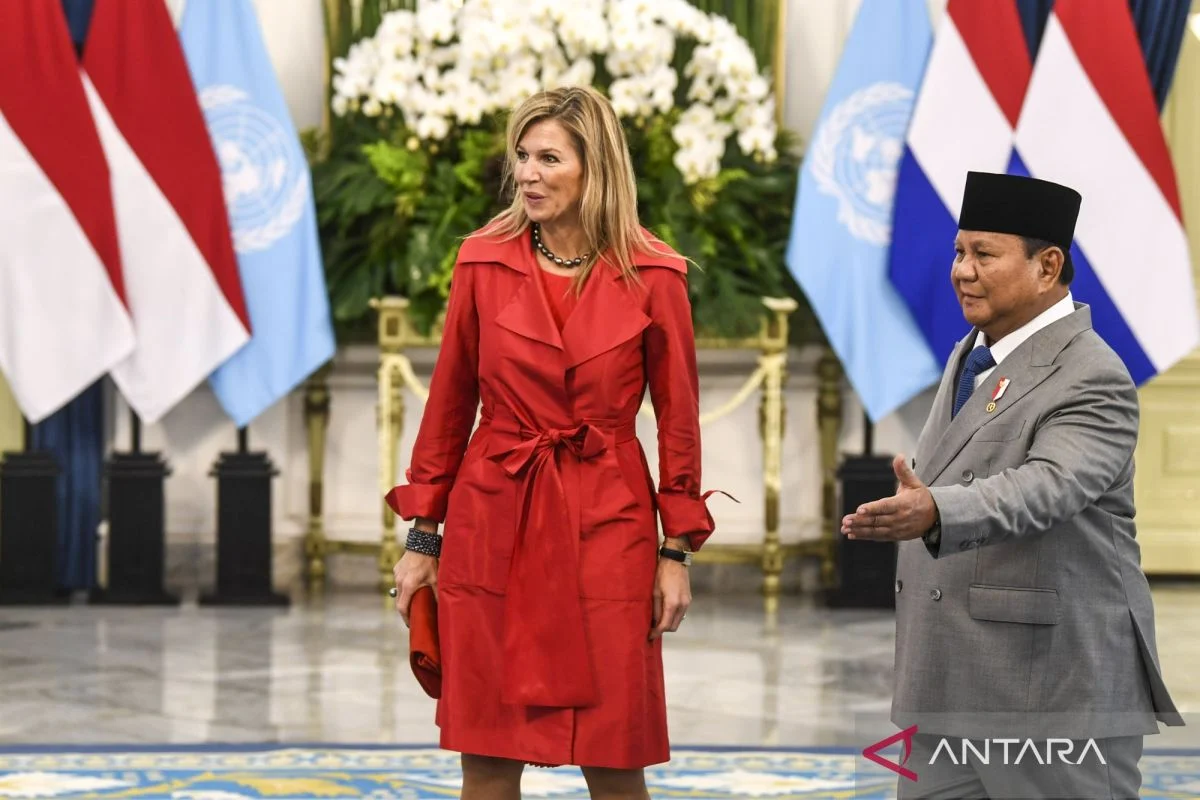
The pinnacle of her visit was a meeting with the President of the Republic of Indonesia, Prabowo Subianto, at the Merdeka Palace in Jakarta. This high-level encounter provided Queen Máxima with the opportunity to convey her findings, impressions, and recommendations derived from her extensive engagements across the country. The meeting, which included a private one-on-one discussion and a luncheon, was a significant diplomatic gesture, underscoring the strong bilateral ties between the Netherlands and Indonesia and the Indonesian government’s commitment to the financial inclusion agenda. Such presidential endorsement is crucial for translating policy recommendations into concrete action and sustaining momentum for national financial inclusion goals. Discussions likely touched upon Indonesia’s achievements, remaining challenges, and potential areas for enhanced cooperation with international partners.
Historical Context: Queen Máxima’s Enduring Engagement with Indonesia
Queen Máxima’s consistent engagement with Indonesia highlights a long-standing commitment to the nation’s development. This 2025 visit marks her fifth time in Indonesia in her capacity as UNSGSA, with previous visits occurring in 2012, 2016, and 2018. These recurrent trips demonstrate a sustained focus on monitoring progress, adapting strategies, and providing continuous support to Indonesia’s financial inclusion journey. Beyond her UNSGSA role, Queen Máxima also accompanied King Willem-Alexander during a state visit to Indonesia in 2020, further cementing the strong diplomatic and economic ties between the two countries.
Born on May 17, 1971, in Buenos Aires, Argentina, Máxima Zorreguieta Cerruti married Willem-Alexander in 2002 in Amsterdam, the Netherlands. Her background in international finance and her deep understanding of global development issues have made her an exceptionally effective advocate for financial inclusion, bringing both gravitas and practical insight to her UN role.
Broader Implications and Future Outlook
Queen Máxima’s visit carries significant implications for Indonesia’s financial inclusion landscape. Her high-profile advocacy not only draws international attention to the country’s efforts but also provides valuable external validation and encouragement for domestic initiatives. The detailed insights she gathered from diverse stakeholders – from garment factory workers and batik artisans to policymakers and corporate leaders – will inform future strategies and foster a more nuanced understanding of the challenges and opportunities within Indonesia.
The discussions with OJK, BI, and Kemenkeu are expected to reinforce national priorities, potentially leading to accelerated policy implementation in areas such as digital financial literacy, consumer protection, and responsible innovation in fintech. The emphasis on innovative solutions like the waste bank for housing payments could inspire similar integrated models that address multiple development challenges simultaneously. Furthermore, her engagement with the private sector, including the IFC and Deloitte, is likely to encourage greater private investment and corporate responsibility in advancing employee and client financial health.
Ultimately, Queen Máxima’s visit serves as a powerful reminder that financial inclusion is a dynamic and evolving field requiring continuous adaptation, multi-stakeholder collaboration, and sustained political will. While Indonesia has made remarkable progress, the journey towards truly universal and impactful financial health for all its citizens remains ongoing. The UNSGSA’s consistent support provides a crucial external anchor for these efforts, promising continued partnership and inspiration for Indonesia’s future economic resilience and prosperity.