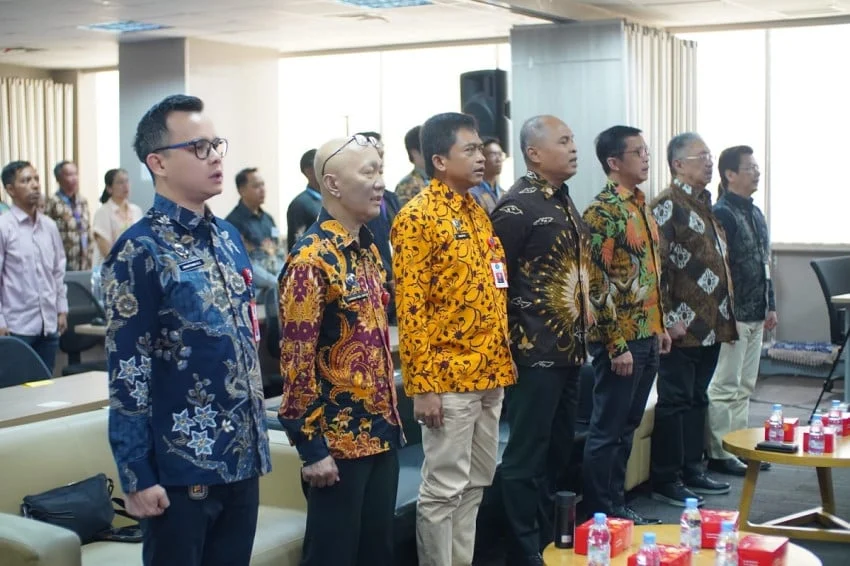
Swiss German University (SGU) reaffirmed its commitment to academic excellence and industrial relevance by hosting the SGU Master Orientation Day 2026 on Saturday, September 12, 2026. The event, which served as the formal induction for the new cohort of postgraduate students, featured a high-level public seminar with the Head of the National Cyber and Crypto Agency (BSSN), Lieutenant General (Ret.) Nugroho S. Budi. Conducted in a hybrid format, the session bridged the gap between theoretical academic knowledge and the urgent, real-world demands of the global cybersecurity landscape.
The integration of such a high-ranking official into an orientation program signals a strategic pivot for SGU. By aligning its Master’s curriculum with the national security agenda, the university seeks to ensure that its graduates are not merely technically proficient but are also cognizant of the geopolitical and structural risks inherent in digital transformation. As Indonesia accelerates its trajectory toward a fully digitized economy, the role of human capital in defending critical infrastructure has become a matter of national priority.
A Strategic Overview of the Cybersecurity Landscape
The public seminar served as a pivotal platform for dissecting the multifaceted threats facing modern organizations. Lieutenant General (Ret.) Nugroho S. Budi highlighted that the digital environment is no longer a peripheral concern for businesses and governments but the central arena for both economic growth and state-level competition.
The discussion spanned several critical domains, including the evolving nature of asymmetric warfare. In the contemporary era, cyber-attacks are increasingly used as tools of statecraft, capable of crippling public utilities, financial institutions, and communications networks without a single shot being fired. The Head of BSSN emphasized that the "battlefield" has shifted from kinetic, physical geography to the intangible, high-speed architecture of the internet.
Furthermore, the session touched upon the rise of emerging technologies. While Artificial Intelligence (AI) and Quantum Computing hold the potential to revolutionize industry efficiency, they simultaneously introduce unprecedented vulnerabilities. The discourse specifically addressed Post-Quantum Cryptography (PQC), a field that is rapidly becoming the next frontier in securing data against future computational threats. As quantum computers grow in power, current encryption standards face the risk of obsolescence, necessitating a proactive shift in how organizations protect sensitive information.
The Chronology of SGU’s Engagement with Industry Leaders
The orientation day was the culmination of months of meticulous planning by the SGU faculty and administrative teams. The university has consistently maintained a policy of "Industry-Integrated Education," a philosophy that requires regular touchpoints with national leaders, industry CEOs, and cybersecurity experts.
In the weeks leading up to the September 12 event, SGU facilitated a series of preparatory workshops for incoming master’s students. These sessions were designed to provide a foundational understanding of the current digital climate, ensuring that participants were intellectually equipped to engage with the keynote address from the BSSN leadership. The hybrid nature of the event allowed for a seamless integration of students based in the Greater Jakarta area and international students, reflecting the globalized nature of modern cybersecurity threats.
Historically, SGU has prioritized partnerships with both the public and private sectors. The presence of the BSSN leadership is a continuation of this tradition. By inviting government officials to lecture, the university fosters a culture of "applied intelligence," where students are encouraged to think about policy-making and regulatory frameworks alongside technical implementations.
Supporting Data and the Urgency of Digital Resilience
The urgency of the themes discussed at the SGU Master Orientation Day is supported by significant global and national data. According to recent reports from the World Economic Forum, cybersecurity failure is ranked among the top global risks in terms of impact and likelihood. In Indonesia, the surge in digitalization—fueled by the rapid adoption of e-commerce, digital banking, and government-to-citizen services—has inadvertently expanded the attack surface for cybercriminals.
Data from BSSN’s own monitoring centers has shown a consistent increase in malware distribution, phishing attempts, and ransomware attacks targeting Indonesian entities. The financial cost of these breaches is substantial, often leading to loss of consumer trust, operational downtime, and the compromise of sensitive state data.
Moreover, the "Human Capital Readiness" gap remains a primary concern for the nation. As AI-driven threats become more sophisticated, the demand for cybersecurity professionals who possess not only technical skill but also strategic foresight has skyrocketed. SGU’s Master’s program, as noted during the seminar, is intentionally designed to address this talent deficit. By incorporating modules on digital forensics, risk management, and regulatory compliance, the curriculum aims to produce graduates capable of assuming leadership roles within both the public and private sectors.
Perspectives on Institutional Synergy
The dialogue between SGU and BSSN represents a broader institutional synergy. When asked about the importance of such collaborations, university representatives emphasized that academic institutions serve as the primary "think tanks" for developing the next generation of defenders.
"The role of the university is not just to teach existing protocols, but to challenge students to innovate in the face of emerging threats," said a senior faculty member. "When we host leaders like the Head of BSSN, we are providing our students with a direct link to the front lines of the national interest. It transforms the classroom into a laboratory for strategic problem-solving."
Conversely, the involvement of state agencies in university forums indicates a growing recognition that national security is a shared responsibility. The government cannot effectively secure the digital ecosystem in a vacuum. It requires a robust pipeline of skilled professionals who are graduating from institutions like SGU, equipped with the latest knowledge in PQC, cloud security, and ethical hacking.
Broader Implications: Navigating the Future of Digital Governance
The implications of the topics raised during the orientation seminar extend far beyond the university campus. The discussion on AI and Quantum Computing serves as a warning for industry leaders: the status quo in digital security is unsustainable.
- Regulatory Adaptation: As the government pushes for more robust cybersecurity standards, companies will be forced to overhaul their internal infrastructure. Graduates from programs like those at SGU will be at the forefront of implementing these changes, acting as the bridge between BSSN’s regulatory vision and corporate reality.
- Economic Stability: The security of the digital economy is directly tied to the nation’s GDP growth. By fostering a high-level understanding of digital transformation and its associated risks, SGU is contributing to the long-term stability of Indonesia’s digital market.
- Global Competitiveness: As Indonesia continues to position itself as a key player in the ASEAN digital landscape, the ability to demonstrate a high standard of cyber-resilience will be a significant competitive advantage. International investors are increasingly wary of markets with weak cybersecurity frameworks. The training provided at the Master’s level is, therefore, a component of the nation’s soft power and economic diplomacy.
Looking Ahead: The Role of the 2026 Cohort
As the 2026 cohort begins their academic journey at SGU, they are tasked with a significant responsibility. The insights provided by the Head of BSSN regarding asymmetric warfare and digital threats have set a high bar for their research and project work. The students are expected to move beyond simple data protection and toward a holistic view of "Digital Sovereignty"—the concept that a nation must be able to control and secure its own digital destiny.
The hybrid format of the orientation served as a microcosm of the future of work. With distributed teams and remote operations becoming the norm, the ability to manage security in a decentralized environment is a skill that these students will hone throughout their tenure at SGU.
In conclusion, the SGU Master Orientation Day 2026 was more than a ceremonial welcome; it was a strategic mobilization of future leaders. By grounding the orientation in the realities of cybersecurity, digital transformation, and emerging technological threats, Swiss German University has signaled that its postgraduate programs are aligned with the highest stakes of the modern era. The partnership with BSSN underscores a collective determination to ensure that as Indonesia steps into the future, it does so with a secure, resilient, and highly capable digital infrastructure. As these students transition from the classroom to the boardroom and the cabinet, they will carry with them the mandate to defend not just data, but the integrity of the digital society itself.