
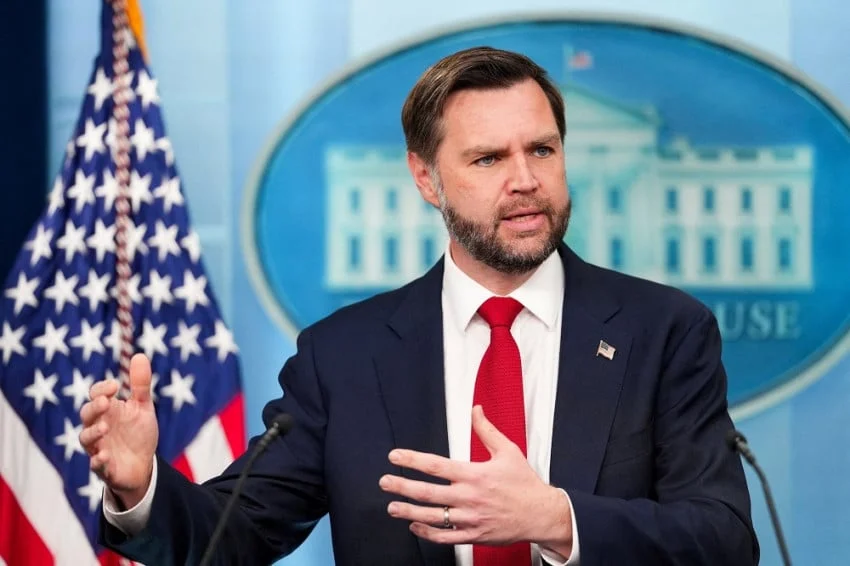
The political trajectory of Vice President JD Vance, once considered the heir apparent to the Trumpian movement within the Republican Party, has encountered significant turbulence following a catastrophic performance by the GOP in the recent midterm elections. As the dust settles on a cycle that saw the party lose control of key legislative bastions and governorships, the path toward a 2028 presidential run for Vance has transitioned from a perceived inevitability to a subject of intense skepticism among the party’s power brokers, high-dollar donors, and institutional allies.
Reports surfacing in the wake of the electoral debacle indicate that the Republican establishment is undergoing a profound reassessment of its leadership pipeline. With the party’s coalition showing signs of exhaustion and internal friction, the political capital once enjoyed by figures closely aligned with the Trump-Vance administration is evaporating. For Vance, who was long expected to leverage his vice presidency as a springboard to the Oval Office, the current climate presents a formidable, if not insurmountable, challenge to his long-term electoral viability.
The Anatomy of the Republican Midterm Collapse
The midterm elections served as a harsh referendum on the current state of the Republican Party. Not only did the GOP suffer a net loss of seven seats in the United States Senate—a blow that stripped the party of its ability to obstruct the current administration’s legislative and judicial agenda—but it also lost control of executive mansions in states previously considered "red wall" territory. The loss of the Ohio Senate seat, a seat once held by Vance himself, served as a symbolic and practical indictment of the party’s current electoral strategy.
Furthermore, the loss of gubernatorial races in Georgia and Texas has sent shockwaves through the Republican National Committee (RNC). These states, long regarded as the bedrock of conservative strength, shifted in ways that suggest a systemic issue with voter turnout and coalition maintenance. The data suggests that suburban voters, particularly women and independents, have increasingly distanced themselves from the populist rhetoric that characterized the Vance-Trump brand.
Chronology of a Diminishing Prospect
The erosion of Vance’s 2028 aspirations did not happen overnight, but rather accelerated in a compressed 48-hour window following the election results.
- Pre-Election Period: Speculation regarding a 2028 bid was rampant. Vance maintained a high public profile, participating in fundraisers and rallies, often signaling a continuity strategy.
- Election Night: As the results trickled in, the magnitude of the loss became apparent. Early projections suggested a "red wave" that never materialized, replaced by a "blue surge" in key battleground districts.
- T+24 Hours: Within a single day of the polling stations closing, the shift in donor sentiment was palpable. Senior fundraisers in financial hubs like New York and Chicago began fielding inquiries from major donors expressing deep concern regarding the party’s direction.
- The Current Phase: Six individuals with close ties to the Vice President have indicated that Vance is currently in a period of intense reflection. He has not made a formal decision, and those close to him suggest that the current political environment has rendered a 2028 candidacy a secondary concern compared to the urgent need to stabilize the party’s image.
Donor Exodus and the Search for Alternatives
The most immediate impact of the midterm disaster is the cooling of the financial engine that powers presidential campaigns. Donor classes in the Republican Party are historically pragmatic; they prioritize electability over ideological purity. The recent results have signaled that the "Trump-Vance" model—defined by intense base-mobilization rhetoric—may have reached its ceiling in a general election context.
Financial backers have begun looking toward alternative figures, most notably Florida Governor Ron DeSantis. The appeal of these alternatives lies in their ability to present a more disciplined, policy-focused approach that still resonates with the conservative base but may be more palatable to the broader electorate. Donors are explicitly voicing concerns that Vance is too inextricably linked to the policy failures and electoral losses of the current administration, making him a "tainted" candidate in the eyes of the moderate voters required to win a national election.
Geopolitical Friction: The Iran Factor
Adding to the complexity of the Vice President’s political woes is his attempt to contextualize the Republican defeat through the lens of international conflict, specifically the ongoing tensions and military engagements involving Iran. Vance has attempted to argue that the party’s focus on the geopolitical landscape, particularly the administration’s handling of Iranian aggression, was misunderstood or poorly communicated to the American public.
However, political analysts argue that this focus has backfired. While the base may be concerned about foreign policy, the electorate at large remains primarily focused on domestic issues: inflation, the cost of living, and healthcare. By leaning into an external narrative regarding Iran to explain internal electoral losses, Vance is being perceived by critics—and even some allies—as out of touch with the immediate concerns of the American working class. This perception creates a dangerous narrative that the administration is prioritizing global posturing over domestic stability, a sentiment that has historically been fatal to incumbent presidential aspirations.
Broader Implications for the GOP
The implications of Vance’s stalled momentum extend beyond his personal political career; they signal a potential pivot point for the Republican Party as a whole. The party is now forced to reconcile with the reality that its populist wing, while highly effective in primary elections, faces a significant "electability gap" in general elections.
- Identity Crisis: The party must decide whether to double down on the populist, Trump-Vance ideology or attempt a "return to the center" to reclaim suburban voters.
- Leadership Vacuum: With the potential withdrawal of Vance from the 2028 conversation, the field is wide open. This will likely lead to a splintering of the party into various factions, each vying for the mantle of the "true" conservative leader.
- Institutional Stability: The loss of major donors to alternative candidates or independent political action committees (PACs) could leave the official party apparatus struggling to fund future operations, potentially weakening its ability to compete in the next cycle.
Expert Analysis and Future Outlook
Political strategists observing the landscape suggest that Vance’s window for a successful presidential bid is closing. In American politics, momentum is a perishable commodity. By failing to secure a victory in the midterms—or at least mitigating the losses—Vance has lost the "winner’s aura" that is essential for a primary campaign.
"The party is looking for a reset," noted one veteran Republican operative who requested anonymity. "When you lose the House, the Senate, and key governorships, the internal review process is brutal. JD Vance is currently the face of that defeat. To move past this, the party will inevitably look for a fresh face who isn’t burdened by the baggage of this current cycle."
As Vance considers his next steps, the political reality remains unforgiving. His path forward requires not only a distancing from the perceived failures of the current administration but also the development of a coherent, forward-looking policy platform that can bridge the divide between the party’s populist base and the more moderate establishment. Whether such a transformation is possible remains a matter of significant doubt within the corridors of Washington.
For now, the Vice President remains in a period of strategic silence. His allies are careful to note that he has not ruled out a 2028 run, but they acknowledge that the conditions for such a candidacy have deteriorated significantly. The coming months, characterized by internal party post-mortems and the beginning of the jockeying for the 2028 primaries, will likely define whether JD Vance remains a central player in American conservatism or becomes a footnote in a transitionary period for the Republican Party.
Ultimately, the lesson of this election cycle is clear: the American electorate is increasingly volatile, and political longevity is tied directly to the ability to deliver results. For JD Vance, the midterm outcome was a resounding, and perhaps disqualifying, signal that the electorate is demanding a different direction. As the Republican Party enters its period of introspection, the question is no longer whether Vance will run in 2028, but whether he will find a party that is still willing to support him.
