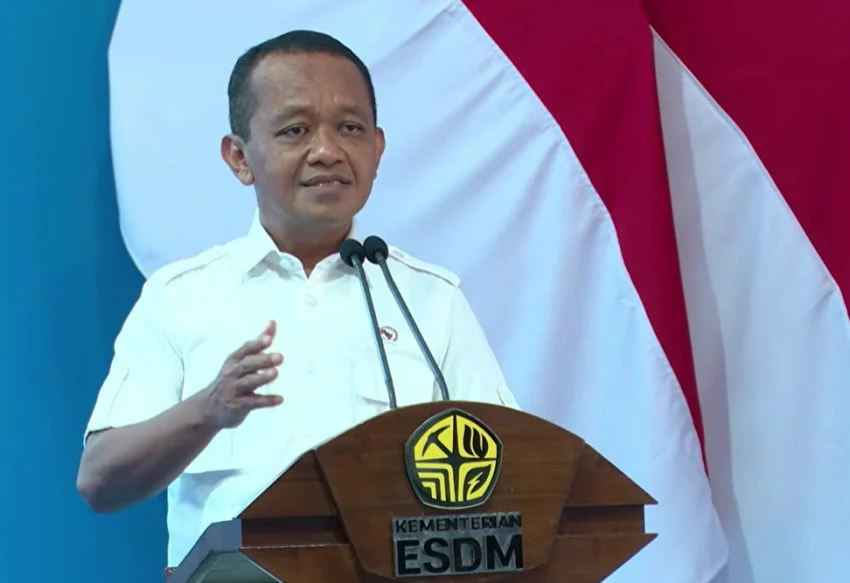
In a significant address at the Global Hydrogen Ecosystem 2026 conference held in Jakarta on Tuesday, July 21, 2026, the Minister of Energy and Mineral Resources (ESDM), Bahlil Lahadalia, outlined a transformative vision for the future of the global and domestic transportation sectors. Speaking before an audience of international investors, energy experts, and industry leaders, Minister Bahlil expressed his conviction that hydrogen-fueled vehicles are poised to become the primary competitors to battery-based electric vehicles (BEVs) within the next five to ten years. This projection comes at a critical juncture as nations worldwide accelerate their transition toward sustainable energy and seek to diversify their portfolios beyond traditional lithium-ion technology.
According to Minister Bahlil, the rapid pace of innovation in hydrogen fuel cell technology is fundamentally shifting the landscape of green transportation. He emphasized that while battery electric vehicles have enjoyed a significant head start in the consumer market, the inherent advantages of hydrogen—particularly concerning environmental sustainability and operational efficiency—cannot be overlooked. "This is an environmental issue, and my belief is that, at the latest, in the next 5 to 10 years, hydrogen will rival battery-based electric vehicles," Bahlil stated during the summit. His remarks underscore a growing sentiment within the Ministry of Energy and Mineral Resources that a multi-pathway approach is essential for achieving Indonesia’s ambitious Net Zero Emission (NZE) targets by 2060 or sooner.
The Environmental Imperative: Beyond the Battery
One of the central arguments presented by Minister Bahlil involves the long-term environmental impact of different clean energy technologies. While battery electric vehicles eliminate tailpipe emissions, they present a significant secondary challenge: the management of spent lithium-ion batteries. The extraction of raw materials such as lithium, cobalt, and nickel often involves intensive mining processes, and the eventual disposal or recycling of large-scale battery packs remains a complex industrial hurdle.
In contrast, hydrogen fuel cell electric vehicles (FCEVs) generate electricity through a chemical reaction between hydrogen and oxygen, with the only byproduct being pure water vapor. Minister Bahlil noted that hydrogen technology offers a cleaner lifecycle because it does not result in the same volume of hazardous chemical waste associated with battery degradation. "Hydrogen vehicles are considered to have an advantage from an environmental perspective because they do not produce battery waste like electric vehicles," he explained. This characteristic makes hydrogen an attractive proposition for a "circular economy," where the environmental footprint is minimized from production to end-of-life.
Technical and Economic Challenges to Hydrogen Adoption
Despite the optimistic outlook, the Minister was candid about the significant hurdles that remain before hydrogen can achieve mass-market penetration. Currently, the hydrogen economy faces a "chicken and egg" dilemma: consumers are hesitant to adopt the technology without a robust refueling infrastructure, while investors are reluctant to build stations without a critical mass of vehicles on the road.
Minister Bahlil identified four primary pillars that must be addressed to ensure the viability of hydrogen: technological efficiency, market certainty, investment scale, and regulatory support. Of these, the cost of production remains the most formidable barrier. Currently, the production of "Green Hydrogen"—hydrogen produced via electrolysis powered by renewable energy—is significantly more expensive than the production of electricity for batteries or the refining of fossil fuels.
"Hydrogen is indeed still expensive. This is a challenge in terms of how to obtain more efficient technology so that the price becomes competitive," Bahlil remarked. He pointed out that for hydrogen to compete with battery-based systems and traditional internal combustion engines, the cost per kilogram of hydrogen must drop to a level that is comparable to or lower than the cost of gasoline or bioenergy on a per-mile basis. This requires not only breakthroughs in electrolyzer efficiency but also a massive scale-up of renewable energy capacity to drive down the cost of the electricity used in the production process.
Strategic Comparison: Hydrogen vs. Battery Electric Vehicles
The debate between hydrogen and batteries is not merely about which is "better," but rather which technology is most suitable for specific use cases. Industry analysts often point out that while batteries are highly efficient for small passenger cars and short-distance urban commuting, hydrogen holds a distinct advantage in the heavy-duty sector.
- Energy Density and Weight: Hydrogen has a much higher energy density than current battery technology. For heavy-duty trucks, ships, and aircraft, the weight of the batteries required to cover long distances would significantly reduce the payload capacity. Hydrogen tanks, being lighter, allow for greater cargo efficiency.
- Refueling Time: One of the primary advantages of FCEVs is the refueling speed. A hydrogen tank can be filled in three to five minutes, similar to a traditional petrol car, whereas even "fast-charging" battery stations often require 20 to 40 minutes to reach an 80% charge.
- Range: Hydrogen vehicles typically offer a longer driving range on a single tank compared to the average range of mid-tier battery electric vehicles, making them more suitable for cross-country logistics.
Minister Bahlil’s timeline of 5 to 10 years suggests that by the early 2030s, the technological gap in these areas will have narrowed, and the infrastructure will have matured enough to allow hydrogen to move from niche industrial applications into the broader consumer market.
Indonesia’s Role in the Global Hydrogen Supply Chain
Indonesia is uniquely positioned to become a global leader in the hydrogen economy. The archipelago possesses some of the world’s largest reserves of geothermal energy, as well as vast potential for solar, wind, and hydro power. These resources are the essential "raw materials" for producing green hydrogen.
The Indonesian government, through the Ministry of ESDM, has already begun mapping out a National Hydrogen Roadmap. This plan includes the development of hydrogen "hubs" in strategic locations such as North Kalimantan and Sumatra, where large-scale renewable energy projects can be integrated with hydrogen production facilities. By leveraging its natural wealth, Indonesia aims to not only meet domestic demand but also become a major exporter of green hydrogen to neighbors like Singapore, Japan, and South Korea—nations that have already committed heavily to hydrogen-based economies.
Furthermore, state-owned enterprises such as Pertamina and PLN (Perusahaan Listrik Negara) have already initiated pilot projects. Pertamina, for instance, has been exploring the development of hydrogen refueling stations at existing gas stations, while PLN is investigating the use of excess peak-load electricity to produce hydrogen via electrolysis.
Chronology of Policy and Technological Milestones
The shift toward hydrogen in Indonesia has followed a calculated trajectory:
- 2021-2023: Initial feasibility studies and the inclusion of hydrogen in the Long-Term Strategy for Low Carbon and Climate Resilience (LTS-LCCR 2050).
- 2024: The launch of the first pilot hydrogen refueling station in Jakarta, serving a small fleet of government and corporate vehicles.
- 2025: Strengthening of international partnerships, including MoUs with Japanese and European technology providers to localize fuel cell manufacturing.
- 2026 (Present): The Global Hydrogen Ecosystem summit serves as a platform to invite large-scale foreign direct investment (FDI) to scale production and lower costs.
Minister Bahlil’s statement serves as a signal to the market that the Indonesian government is ready to provide the necessary regulatory framework to de-risk these investments. This includes potential tax holidays, import duty exemptions for specialized machinery, and subsidies for hydrogen-based research and development.
Implications for the Automotive Industry and Infrastructure
The shift toward a dual-track system (Battery and Hydrogen) will require a massive overhaul of the nation’s infrastructure. While Indonesia is currently pushing for the expansion of Public Electric Vehicle Charging Stations (SPKLU), the future will likely see the rise of Hydrogen Refueling Stations (SPBH).
For automotive manufacturers operating in Indonesia, such as Toyota, Hyundai, and various Chinese brands, Bahlil’s prediction provides a clear steer on future policy directions. While many have focused on battery assembly plants to take advantage of Indonesia’s nickel reserves, the Minister’s comments suggest that they should also begin considering the assembly and distribution of fuel cell vehicles. This diversification would protect the industry against potential shifts in global battery chemistry or supply chain disruptions in the mineral sector.
Expert Reactions and Market Sentiment
Following the Minister’s speech, several industry stakeholders offered their perspectives. Energy analysts noted that while the 5-to-10-year timeline is ambitious, it aligns with global trends seen in the European Union and East Asia. "The Minister is sending a message that Indonesia will not be a single-technology market," said an analyst from a Jakarta-based energy think tank. "By positioning hydrogen as a competitor to batteries, the government is encouraging a competitive environment that will ultimately drive down costs for the consumer."
However, environmental groups have cautioned that the focus must remain on "Green Hydrogen" (from renewables) rather than "Blue Hydrogen" (from natural gas with carbon capture) or "Gray Hydrogen" (from fossil fuels). They argue that for hydrogen to truly be an environmental savior, the entire production chain must be carbon-neutral.
Conclusion: A Balanced Energy Future
Minister Bahlil Lahadalia’s forecast at the Global Hydrogen Ecosystem 2026 reflects a sophisticated understanding of the evolving energy landscape. By identifying hydrogen as the next great frontier in transportation, the Indonesian government is preparing the nation for a post-lithium era.
The next decade will be a period of intense competition and innovation. As technology improves and costs decline, the choice between a battery electric vehicle and a hydrogen fuel cell vehicle may soon become as common as the choice between gasoline and diesel was in the previous century. For Indonesia, the goal remains clear: to utilize every available technological tool to ensure energy security, economic growth, and environmental preservation. The road to a hydrogen-powered future is fraught with challenges, but with the strategic vision outlined by Minister Bahlil, Indonesia is positioning itself at the forefront of this global energy revolution.