
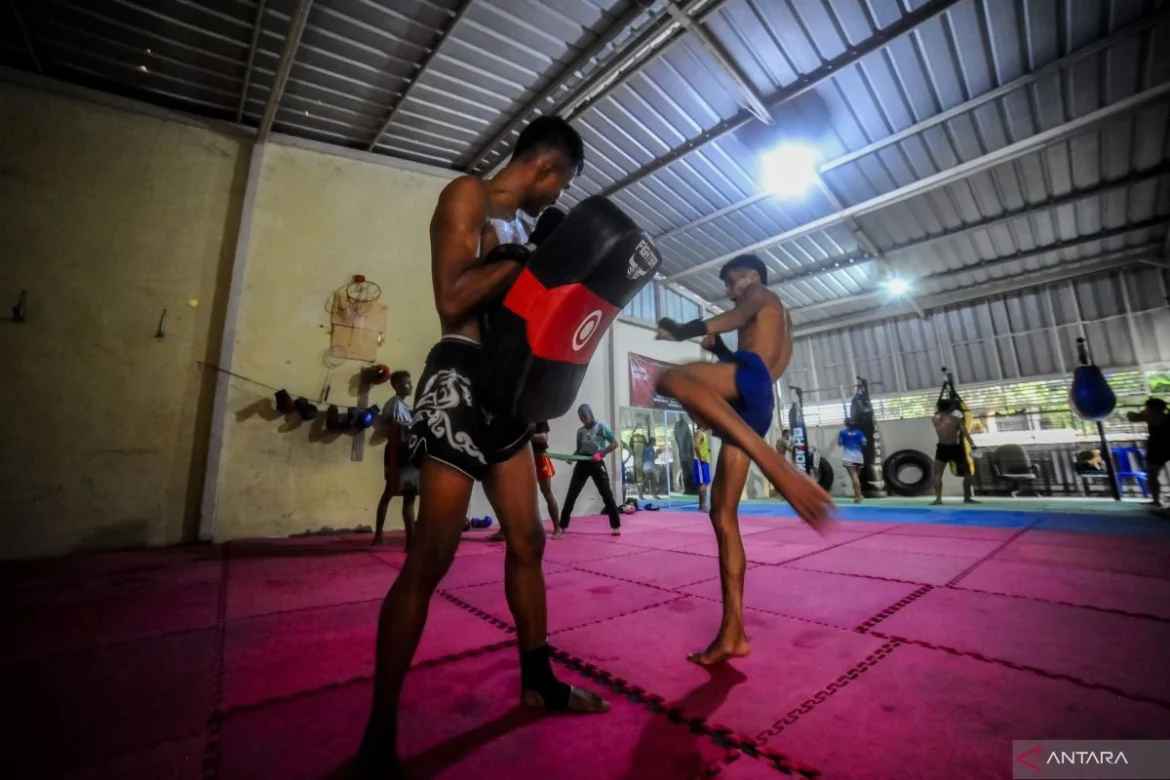
Jakarta (ANTARA) – Muay Thai, the celebrated martial art originating from Thailand, is poised to captivate audiences and athletes alike as it makes its grand appearance as a recognized sport at the Southeast Asian Games (SEA Games) 2025. While its visual similarities to Western boxing – both contested in a ring with gloves – might lead to casual comparisons, Muay Thai boasts a profound depth of character, unique techniques, and a philosophical underpinnings that set it distinctly apart. This article delves into the essence of Muay Thai, exploring its rich history and detailing the key differentiators that distinguish it from the sport of boxing.
The Essence of Muay Thai: "The Art of Eight Limbs"
The very name "Muay Thai" offers a direct insight into its identity. "Muay" translates to "boxing" or "martial art," and "Thai" denotes its origin, thus rendering Muay Thai as "Thai boxing." However, this moniker only scratches the surface of its complexity. Muay Thai is more commonly and evocatively known as "The Art of Eight Limbs" (or Nak Muay in Thai), a testament to its strategic utilization of eight distinct points of contact for offense and defense: the fists, elbows, knees, and shins/feet.
Unlike conventional boxing, which predominantly relies on punches from the hands, Muay Thai offers a far more expansive arsenal. Fighters are trained to seamlessly integrate strikes from their knees, shins, and feet, along with devastating elbow and knee strikes. The art of the clinch, a grappling-like phase where fighters bind each other to deliver close-range knee and elbow strikes, is a fundamental and defining element of Muay Thai combat. This multifaceted approach results in a fighting style characterized by its rapid pace, dynamic fluidity, and intense, high-octane exchanges.
Crucially, Muay Thai adheres to the principle of standing combat. Techniques such as ground grappling, throws designed to take an opponent to the mat, or prolonged holds are not permitted. This emphasis on upright fighting further distinguishes it from other martial arts that incorporate extensive ground work.
Traditionally, the movements in Muay Thai are often likened to the use of ancient weaponry. The fists are seen as swords, the elbows and knees as daggers or spears, and the shins and feet as axes or clubs. This metaphorical connection underscores the power and precision inherent in each strike, emphasizing not just raw force but also strategic targeting.
A Journey Through Time: The Historical Tapestry of Muay Thai
The origins of Muay Thai are deeply rooted in the history of Thailand, with evidence suggesting its development as a battlefield combat technique for Siamese soldiers as early as the 13th century. In an era where warriors often found themselves disarmed or engaged in hand-to-hand combat, the development of effective unarmed fighting skills became paramount for survival. Techniques that were once considered lethally effective, such as targeting joints or the back of the head, have since been refined and, in many cases, removed from modern rulesets to prioritize fighter safety and the sporting aspect.
Over centuries, Muay Thai evolved beyond its purely military application, permeating various strata of Thai society. It became a popular form of entertainment and a respected discipline within royal courts. Historical accounts even highlight the importance placed on its practice by royalty, with the first king of the Sukhothai Kingdom, King Phokhun Sri In Tharatit, reportedly sending his son to learn the art as a means of physical conditioning and character development. This underscores its dual role as a formidable fighting system and a tool for cultivating discipline and mental fortitude.
The formalization of Muay Thai into its modern sporting structure began to take shape around the 1930s. This period saw the adoption of international boxing conventions, including standardized gloves and a structured round system, which helped to professionalize the sport and make it more accessible to a global audience. The establishment of the International Federation of Muaythai Associations (IFMA) in 1993 marked a significant milestone, providing a unified governing body that paved the way for international championships and increased global recognition.
A legendary figure in Muay Thai lore is Nai Khanom Tom, whose exploits during the 16th-century conflict between Siam and the Konbaung Dynasty of Burma are recounted with reverence. Captured by the Burmese, Nai Khanom Tom is said to have fought and defeated multiple Burmese warriors in a single exhibition match, showcasing the effectiveness and martial prowess of his techniques. This legendary feat not only solidified Muay Thai’s reputation but also instilled a sense of national pride and respect for the art within Siam.
Today, Muay Thai is a vibrant part of Thailand’s cultural fabric, with matches drawing large crowds and serving as a significant tourist attraction. Its appeal extends across all age groups, offering a comprehensive system of physical training and self-defense that is adaptable for both beginners and seasoned practitioners.
Distinguishing Muay Thai from Boxing: A Tale of Two Combat Sports
While the ring and gloves might suggest a common lineage, the distinctions between Muay Thai and Western boxing are profound and manifest in several key areas:
1. The "Arsenal" of Strikes
The most apparent difference lies in the sheer variety of offensive tools employed. Muay Thai, as the "Art of Eight Limbs," leverages:
- Fists: Similar to boxing, punches are a primary weapon.
- Elbows: Short, sharp, and devastating strikes delivered at close range.
- Knees: Powerful thrusts and kicks used in both open combat and the clinch.
- Shins/Feet: Extensive use of kicks, including powerful roundhouse kicks, front kicks (teep), and sweeps.
In contrast, Western boxing is exclusively a sport of punches. Fighters are permitted only to strike with their closed fists. When boxers clinch, the referee’s intervention is typically swift, aiming to separate them and resume the boxing engagement. In Muay Thai, the clinch is an integral part of the fight, a tactical phase where fighters can deliver knees and elbows while maintaining control.
2. The Mechanics of Striking
Boxing places an unparalleled emphasis on the precision and power of hand strikes. The training regimen is meticulously designed to optimize the rotational power generated from the hips, intricate footwork for positioning, and the development of a diverse repertoire of punches, including jabs, crosses, hooks, and uppercuts.
Muay Thai incorporates boxing techniques, but its training philosophy is broader. Fighters must be adept at transitioning seamlessly between punches, kicks, elbows, and knees. This requires a different type of conditioning and a greater focus on spatial awareness and the ability to switch offensive strategies instantaneously. The technique may not be as specialized in pure punching as in boxing, but the overall striking versatility is significantly higher.
3. Stance and Footwork
The fundamental stance in boxing is designed for defensive agility and offensive reach. Boxers typically adopt a slightly sideways stance, balancing on the balls of their feet, which facilitates rapid pivots, sidesteps, and evasive maneuvers. This allows them to quickly get in and out of range and maintain a strong guard against punches.
Muay Thai fighters, conversely, tend to adopt a more forward-facing stance. This positioning is crucial for delivering powerful kicks and maintaining a stable base for defense against leg attacks. While footwork is important for movement and positioning, it is generally less about rapid evasion and more about maintaining balance and control for launching kicks and absorbing impacts.
4. The Rhythm and Flow of Combat
Boxing matches often exhibit a rhythmic, continuous flow of attacks and defenses. The sequence might involve a series of jabs, followed by a powerful cross, a defensive block, a sidestep, and then a counter-attack. The pace is dictated by the exchange of punches and the constant movement around the ring.
Muay Thai combat, while intense, often features a more varied and sometimes punctuated rhythm. The flow can shift dramatically from a barrage of punches to a powerful kick, followed by a clinch where knees and elbows are unleashed, and then back to open fighting. The introduction of different striking ranges and types of attacks creates a more dynamic and less predictable pattern of engagement.
5. Head Movement and Defensive Strategies
In boxing, the absence of elbow, knee, or high kick threats allows for greater freedom of head movement. Boxers can duck, weave, and bob with significant range, using these evasive techniques as a core part of their defense.
Muay Thai’s defensive strategy must account for a wider array of threats. Fighters are more conservative with their head movements, particularly avoiding dropping their heads too low or excessively to the sides, as this can create openings for devastating knee strikes or high kicks. Defense in Muay Thai often involves more active blocking with arms, shins, and elbows, as well as parrying and maintaining a solid guard.
6. Equipment and Traditional Adornments
The most visible difference in equipment is that boxers typically wear specialized boxing shoes to provide grip and ankle support. Muay Thai fighters, on the other hand, compete barefoot. This allows for a more direct connection to the canvas, enhancing the power and precision of their kicks and sweeps.
Furthermore, traditional Muay Thai bouts often feature ceremonial elements. Fighters may wear a Mongkol (headband) and Pra Jiad (armbands) before the fight, which are imbued with spiritual significance and believed to offer protection. These are removed before the bout commences. These traditional adornments are absent in professional boxing.
Implications for SEA Games 2025 and Beyond
The inclusion of Muay Thai in the SEA Games 2025 signifies a major step forward for the sport’s global recognition and legitimacy. This prestigious regional event will expose Muay Thai to a wider audience, potentially inspiring a new generation of athletes and fans across Southeast Asia. The competitive environment of the Games will undoubtedly push athletes to new heights, fostering increased professionalism and raising the standard of competition.
For Thailand, this is a moment of cultural pride and a testament to the enduring legacy of its national martial art. The sport’s inclusion will likely lead to increased investment in training facilities and athlete development programs, further strengthening its position on the international stage.
From a sporting perspective, the distinctiveness of Muay Thai compared to boxing offers valuable lessons for combat sports enthusiasts. For those seeking a holistic martial art that emphasizes a diverse range of striking techniques and strategic adaptability, Muay Thai presents a compelling option. Conversely, for individuals focused on honing exceptional punching skills and building cardiovascular endurance through intense, focused training, boxing remains an unparalleled discipline.
Both Muay Thai and boxing, despite their differences, offer significant benefits for participants, whether they are aspiring professional athletes or recreational practitioners. They foster discipline, improve physical fitness, build mental resilience, and provide a powerful outlet for self-expression and accomplishment. The choice between them ultimately depends on individual goals and preferences, but the inclusion of Muay Thai in a major multi-sport event like the SEA Games ensures that this ancient and dynamic art form will continue to flourish and captivate audiences for years to come.
The anticipation for Muay Thai’s debut at SEA Games 2025 is palpable, promising a display of skill, power, and tradition that is sure to leave a lasting impression.
Pewarta: [Name of Journalist, if available]
Editor: [Name of Editor, if available]
Copyright © ANTARA 2025
Dilarang keras mengambil konten, melakukan crawling atau pengindeksan otomatis untuk AI di situs web ini tanpa izin tertulis dari Kantor Berita ANTARA.
