
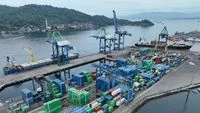
PT Pelabuhan Indonesia (Persero), commonly known as Pelindo, has embarked on an ambitious strategic initiative to reshape the maritime landscape of Southeast Asia by challenging the long-standing dominance of Singapore and Malaysia in the Malacca Strait. As one of the world’s busiest and most economically vital shipping lanes, the Malacca Strait handles a massive volume of global maritime trade annually. For decades, neighboring nations have captured the vast majority of transshipment traffic passing through this corridor. However, through a newly accelerated master plan centered on the Dumai Transshipment Hub in Riau, Indonesia is positioning itself to capture a significant share of maritime traffic that has historically bypassed local ports.
This strategic pivot represents a monumental shift for Indonesia’s state-owned port operator. By leveraging post-merger operational efficiencies and pushing forward with large-scale infrastructure investments, Pelindo aims to turn a historical geopolitical disadvantage into a formidable economic engine. The initiative underscores Indonesia’s broader ambition to secure maritime self-sufficiency, optimize national logistics, and integrate more deeply into global supply chains.
The Core Strategy: Capturing the Untapped 40 Percent Market Share
The cornerstone of Pelindo’s expansion strategy is the aggressive capture of an untapped market segment within the Malacca Strait. According to data presented by Pelindo’s Business Development Director, Prasetyo, approximately 110,000 vessels navigate the Malacca Strait every year. Out of this massive volume, roughly 60 percent of the ships traditionally dock or utilize transshipment services at established hubs in Singapore and Malaysia.
Crucially, the remaining 40 percent of vessels passing through the strait do not dock at either Singaporean or Malaysian terminals. These ships represent a massive, underserved market of maritime traffic—vessels that sail past the region without anchoring for major logistics, refueling, or container consolidation services. It is this specific 40 percent market share that Pelindo intends to capture.
Prasetyo clarified during a recent public discussion titled "The Roadmap of Indonesia’s Economic Independence" in Jakarta Selatan that the state-owned enterprise is not looking to engage in a destructive zero-sum game with its neighbors. Instead of trying to wrestle away the traffic already firmly anchored in Singapore and Malaysia, Pelindo is focusing its operational firepower on servicing the unclaimed volume. By providing a competitive, highly efficient alternative directly on the Sumatran coast, Pelindo hopes to convert transient shipping traffic into domestic port calls.
Historical Context and the Post-Merger Advantage
For generations, Indonesia’s role in managing maritime traffic along
the Malacca Strait has stood in stark contrast to its geographic proximity. While the archipelago shares the vital waterway and holds sovereignty over significant portions of its waters, a large proportion of ships carrying Indonesian commodities have historically relied on foreign ports—predominantly Singapore—for transshipment, sorting, and final export processing. This reliance historically added extra costs to Indonesian logistics, diminished domestic revenue opportunities, and limited the nation’s influence over regional shipping pricing.
The landscape for Indonesian port management changed fundamentally in late 2021, when the Indonesian government officially merged four distinct regional port operators—Pelindo I, II, III, and IV—into a single, unified corporate entity under the banner of PT Pelabuhan Indonesia (Persero). Prior to the consolidation, regional fragmentation often led to inconsistent operational standards, varying tariff structures, and weak coordination across archipelago terminals.
The consolidation created a unified balance sheet and streamlined operational command structures. This corporate consolidation has given Pelindo the financial muscle, technical capability, and strategic vision required to execute mega-projects like the Dumai Transshipment Hub. The ongoing integration has allowed the company to pool resources, standardize port services across the nation, and direct massive capital investments toward high-impact international trade gateways.
The Dumai Transshipment Hub: Timeline and Development Phases
The blueprint for challenging regional competitors hinges on the successful realization of the Dumai Transshipment Hub, located in Dumai, Riau Province. Strategically situated along the eastern coast of Sumatra facing the Malacca Strait, Dumai offers an ideal geographic location to intercept international maritime traffic.
Pelindo has structured the development of the Dumai Transshipment Hub as a phased multi-year infrastructure project. Given the sheer scale of the engineering, dredging, and terminal construction required to handle modern ultra-large container vessels (ULCVs), the initiative is slated for long-term rollout, with a targeted initial operational window set for 2030.
The preliminary phases of the project involve comprehensive feasibility studies, environmental impact assessments, and master planning to ensure deep-water access capable of accommodating the world’s largest container ships. Furthermore, Pelindo is upgrading supporting infrastructure, including road and rail connectivity to hinterland industrial zones, ensuring that the transshipment hub functions seamlessly as part of a larger multimodal logistics network.
National Policy Alignment and National Strategic Project Status
Recognizing the macro-economic significance of the Dumai Transshipment Hub, Pelindo has actively pursued official government backing to accelerate its development. The port operator has formally proposed that the Dumai Transshipment Hub be designated as a National Strategic Project (Proyek Strategis Nasional or PSN).
This designation carries immense practical weight in Indonesia. Attaining PSN status grants projects priority administrative treatment, streamlined land acquisition processes, expedited bureaucratic approvals, and robust central government support in overcoming regulatory bottlenecks.
The proposal has already garnered favorable early responses from key economic ministries. Minister of National Development Planning (PPN)/Head of Bappenas, Rachmat Pambudy, confirmed that the ministry is actively reviewing Pelindo’s proposal. The assessment process carried out by the Ministry of PPN/Bappenas is rigorous, focusing primarily on evaluating the project’s alignment with the broader goals outlined in the National Medium-Term Development Plan (RPJMN) for the 2025–2029 period. Additionally, the project is being audited against the strict technical and financial criteria stipulated under Minister of PPN/Head of Bappenas Regulation Number 4 of 2025.
Economic Implications and Broader Regional Impact
The implications of Pelindo’s push into the Malacca Strait extend far beyond corporate revenue growth; they touch upon national sovereignty, economic resilience, and regional competitiveness.
For the domestic economy, establishing a world-class transshipment hub on Sumatran soil is expected to significantly reduce logistics costs—a persistent challenge for Indonesian competitiveness. By keeping export and import goods within domestic port networks rather than sending them through Singapore for consolidation, Indonesian manufacturing and agricultural sectors stand to benefit from shorter turnaround times and lower freight overheads.
Furthermore, the project aligns with Indonesia’s broader industrial downstreaming policies. By consolidating regional maritime traffic, Dumai can evolve into a major processing, warehousing, and trade logistics center for Sumatran commodities such as palm oil, rubber, and industrial manufactured goods. This will create localized employment opportunities, stimulate regional economic growth in Riau and surrounding provinces, and attract foreign direct investment into ancillary maritime services such as bunkering, ship repair, and crew change facilities.
Geopolitically, the project signals a maturation of Indonesia’s maritime ambitions. As the world’s largest archipelagic state, Indonesia is increasingly asserting its rightful place as a central pillar of Indo-Pacific maritime commerce. While Singapore and Malaysia will undoubtedly remain formidable maritime hubs with deeply entrenched networks, Pelindo’s targeted strategy ensures that Indonesia will no longer merely watch from the sidelines as thousands of ships sail past its shores. Instead, the nation is laying the physical, financial, and regulatory groundwork to claim its share of the Malacca Strait’s immense economic bounty.
