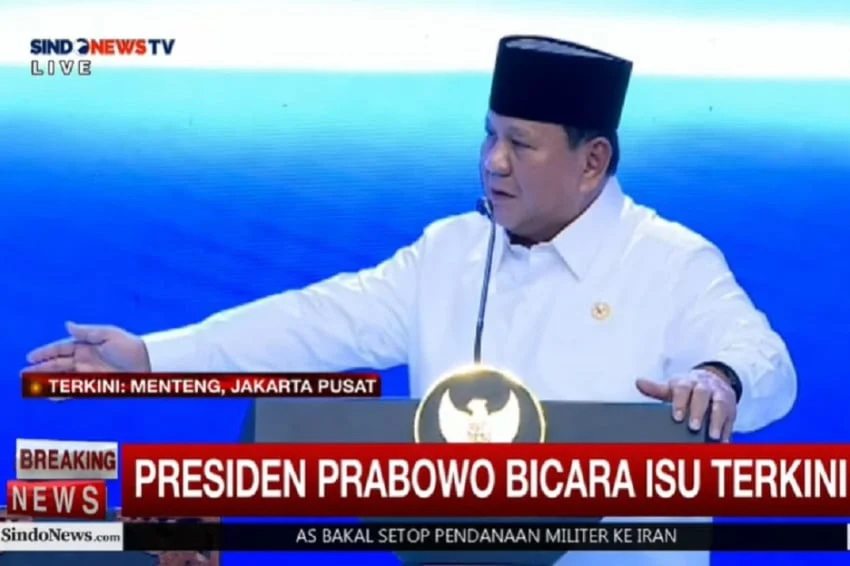
JAKARTA — President Prabowo Subianto delivered a profound philosophical and political commentary during the 15th-anniversary celebration of the NasDem Party in Jakarta, asserting that the history of human civilization is laden with betrayal driven by the alluring nature of political authority. Speaking before a gathered audience of high-ranking officials, political elites, and party members on Wednesday, November 11, 2026, the Indonesian head of state emphasized that absolute or significant power frequently tempts individuals to compromise their integrity for personal or factional gain.
The remarks, which quickly drew widespread national attention, touched upon timeless political realities regarding governance, human nature, and the persistent vulnerability of state institutions to corruption and internal subversion. President Prabowo’s address blended historical reflection with cautionary advice directed at contemporary political actors, urging heightened vigilance against the temptations inherent in high office.
Main Facts of the Presidential Address
During his keynote speech at the milestone anniversary event, President Prabowo addressed the structural and psychological hazards of leadership. He noted that throughout human history, power has consistently served as a catalyst for moral compromise.
"The history of human civilization is full of betrayal, with cases of betrayal because power is very tempting. Those in power are often tempted," Prabowo stated.
To reinforce his argument, the President invoked a classic political science maxim famously articulated by British historian Lord Acton: "Power tends to corrupt, and absolute power corrupts absolutely." Prabowo expanded upon this sentiment, pointing out that as an individual’s or a group’s authority expands, the psychological and systemic temptations to abuse that power scale proportionately.
The speech was not delivered in a vacuum. It coincided with a period of intense political dynamism and institutional maneuvering in Jakarta. Just days prior to the NasDem anniversary event, Prabowo publicly remarked on the turbulent political atmosphere, famously quipping about the possibility of state surveillance with the phrase, "These past few days have been full of dynamics; what if I’m being wiretapped?" This blend of candid humor and serious governance concerns set a reflective tone for his engagement with political allies and opponents alike.
Background Context and Political Climate
The context of President Prabowo’s address is deeply rooted in Indonesia’s ongoing political evolution. As the leader of a broad-based "Red and White Cabinet" coalition—which includes the NasDem Party among its supporters—Prabowo navigates a complex web of political alliances. Maintaining unity within such a diverse ruling coalition requires constant vigilance against factionalism, internal betrayal, and opportunistic maneuvering.
The NasDem Party, founded in 2011 by media tycoon Surya Paloh, has positioned itself as an influential force in Indonesian politics. Celebrating its 15th anniversary marked a significant institutional milestone for the party, transitioning from an emerging political movement into a seasoned legislative and executive stakeholder. By choosing this platform to discourse on the ethics of power and the historical precedents of political betrayal, Prabowo utilized the occasion to signal the ethical boundaries expected within his administration and broader governing coalition.

Political analysts note that Indonesian political culture has long wrestled with the tension between transactional politics and idealistic nation-building. Prabowo’s invocation of historical betrayal serves as both a philosophical observation and a practical warning to contemporary political elites that unchecked ambition can destabilize democratic governance and erode public trust.
Chronology of Events Surrounding the Address
The sequence of events leading up to and immediately following the President’s speech highlights the rapid dissemination and intensive domestic analysis of his remarks:
- Early November 2026: The Indonesian political landscape experiences heightened legislative and executive activity, accompanied by public debates concerning administrative policy, national security, and coalition dynamics.
- November 11, 2026 (Morning to Afternoon): President Prabowo makes public references to the dynamic and sensitive nature of current political communications, briefly touching upon concerns regarding surveillance and intelligence security.
- November 11, 2026 (Evening): The President attends the 15th-anniversary celebration of the NasDem Party in Jakarta as a guest of honor.
- November 11, 2026 (During the Speech): Addressing party members, dignitaries, and media representatives, Prabowo delivers his remarks on the corrupting influence of power and the historical ubiquity of political betrayal.
- Post-Event: Media outlets, political commentators, and opposition figures begin dissecting the implications of the President’s philosophical warnings within the framework of current national governance.
Supporting Data on Governance and Corruption Risks
Prabowo’s observations align closely with empirical findings from global governance watchdogs and political science research regarding the relationship between unchecked authority and systemic corruption. According to indices published by organizations such as Transparency International and the World Bank, developing democracies frequently face heightened risks of institutional capture when checks and balances are not rigorously maintained.
In Indonesia, anti-corruption campaigns have historically formed a central pillar of post-reformasi governance. Despite significant institutional mechanisms—such as the Corruption Eradication Commission (KPK)—challenges persist in insulating public administration from rent-seeking behavior and abuse of office. Prabowo’s philosophical framing of the issue underscores the administration’s ongoing struggle to enforce administrative discipline, accountability, and ethical standards across both central and regional bureaucracies.
Official Responses and Reactions from Related Parties
Following the prominent address, political figures, analysts, and representatives from various political parties offered diverse interpretations of the President’s statements:
- NasDem Party Leadership: Representatives of the NasDem Party welcomed the President’s presence and his candid discourse on statecraft. Party officials emphasized that unity, loyalty, and collective commitment to national interests are essential for the survival and success of any governing coalition. They interpreted Prabowo’s warnings as a constructive call for moral integrity rather than a targeted accusation against specific allies.
- Opposition and Independent Observers: Independent political analysts suggested that Prabowo’s remarks reflect a deep-seated pragmatism regarding human nature within political circles. Some commentators noted that highlighting the historical prevalence of betrayal serves as a preemptive psychological deterrent against internal dissent or opportunistic defections within the ruling coalition. Others pointed out that invoking such themes highlights the persistent fragility of political trust in high-stakes environments.
- Civil Society Organizations: Civil society watchdogs responded by emphasizing that institutional safeguards—such as robust freedom of information laws, an independent judiciary, and empowered anti-corruption watchdogs—are far more effective at curbing the abuse of power than moral exhortations alone. These groups urged the administration to translate philosophical reflections on governance into concrete legal and institutional reforms.
Broader Impact and Policy Implications
President Prabowo’s reflections on power and betrayal carry significant implications for the trajectory of Indonesian governance and political stability. By publicly acknowledging the corrupting temptations inherent in authority, the President sets a standard of candid political realism.
- Impact on Coalition Dynamics: The warning serves to remind coalition partners that loyalty to the state and adherence to ethical governance must supersede narrow factional interests. In a multi-party presidential system like Indonesia’s, maintaining legislative harmony requires constant diplomatic engagement combined with clear boundaries against administrative malfeasance.
- Anti-Corruption Momentum: While philosophical, the President’s reference to Lord Acton reinforces the administration’s stated commitment to accountability. Civil society and investors closely monitor how these rhetorical stances translate into policy execution, particularly regarding regulatory transparency and the enforcement of anti-corruption laws.
- Public Trust in Institutions: Openly discussing the historical frailties of leadership can either reassure the public of a leader’s self-awareness or heighten cynicism regarding the nature of politics. How the administration balances this rhetoric with tangible improvements in public service delivery will determine its long-term resonance with voters.
As Indonesia continues to navigate complex domestic and international challenges, President Prabowo’s address at the NasDem anniversary stands as a reminder of the enduring friction between political ambition and ethical governance. Whether these cautionary words will successfully shape institutional behavior and coalition solidarity remains a central question for the remainder of the political term.