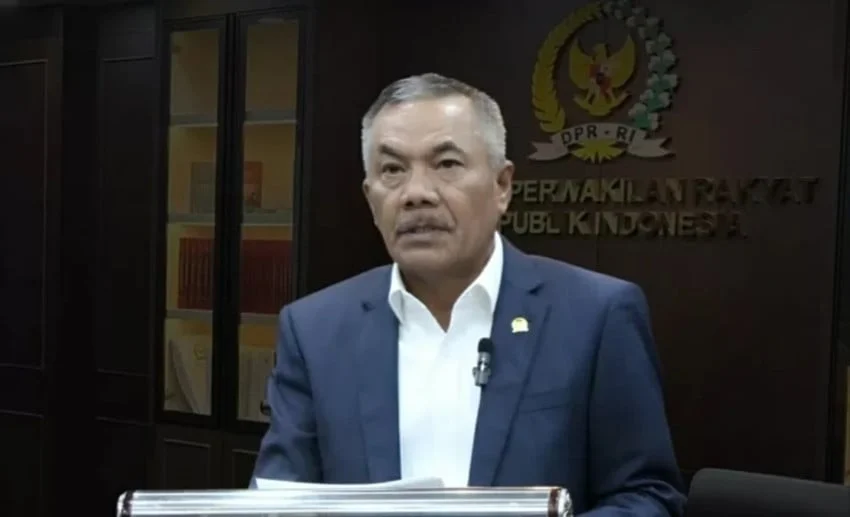
The political landscape in Jakarta has reached a point of intense scrutiny following the formal submission of a proposal for a "Statement of Opinion" (Hak Menyatakan Pendapat/HMP) aimed at the impeachment of Vice President Gibran Rakabuming Raka. Among the figures at the center of this legislative maneuver is Sarifuddin Sudding, a senior member of Commission III of the House of Representatives (DPR RI) representing the National Mandate Party (PAN). His signature on the proposal, representing the only member of his faction to do so, has sparked widespread speculation regarding internal party discipline and the broader stability of the current coalition government.
Sudding, speaking from the parliamentary complex in Senayan on Wednesday, November 11, 2026, moved to neutralize reports of internal discord. He categorically denied that his individual action indicated a schism within PAN. Instead, he framed his participation as a manifestation of a centralized strategic decision, asserting that he was acting under the direct instruction of the party’s General Chairman, Zulkifli Hasan.
The Legislative Context of HMP
In the Indonesian parliamentary system, the Hak Menyatakan Pendapat (HMP) represents the highest level of oversight power held by the DPR. It is a constitutional instrument that serves as a precursor to potential impeachment proceedings. Under the prevailing laws governing the composition and status of the MPR, DPR, and DPD (UU MD3), the initiation of an HMP requires a significant threshold of support from the legislature.
The current move to invoke this mechanism against the Vice President follows months of rising public and political dissatisfaction regarding specific policy decisions and controversies surrounding the executive branch. The fact that 120 members of the DPR have now collectively backed the proposal indicates a significant cross-party movement that transcends the traditional binary of government supporters and the opposition. For an administration that relies on a broad-based coalition, the inclusion of members from parties currently aligned with the government suggests that the political cost of the Vice President’s tenure has become a matter of urgent debate among the political elite.
Chronology of the Impeachment Drive
The trajectory toward this parliamentary crisis did not emerge in a vacuum. The following timeline outlines the escalation of tensions:
- Early 2026: Initial public outcry emerges concerning the Vice President’s involvement in several high-profile administrative appointments and perceived overreach in regional governance initiatives.
- August 2026: Several civil society organizations file formal complaints with the DPR’s Ethics Council regarding alleged constitutional breaches by the Vice President.
- October 2026: Formal discussions among opposition and some coalition backbenchers begin regarding the feasibility of an HMP.
- Early November 2026: The number of signatories for the proposal reaches the minimum requirement to be formally submitted to the DPR leadership.
- November 11, 2026: Sarifuddin Sudding, acting as the sole representative of the PAN faction, signs the document. The news triggers immediate reports of security adjustments at the Vice President’s official residence.
Analyzing the PAN Stance: One Command or Internal Rift?
The involvement of Sarifuddin Sudding is particularly notable given PAN’s historic role as a loyal partner in the governing coalition. Historically, PAN has prioritized stability and ministerial representation within the cabinet. For a member of such a party to support an impeachment-linked mechanism suggests that the party leadership may be hedging its bets.
Sudding’s statement—"We remain under one command with our General Chairman, Zulkifli Hasan, and I was ordered to represent the faction to declare the proposal for the HMP"—is a calculated political communication. It serves a dual purpose: it signals to the public and the media that the party is taking a firm stance against the Vice President, while simultaneously reassuring the party base and the coalition partners that this is a top-down, controlled maneuver rather than a grassroots rebellion.
Political analysts suggest that if the party leadership were truly opposed to the move, Sudding would likely face immediate sanction or removal from his committee seat. The absence of such disciplinary action, combined with his public defense, suggests that Zulkifli Hasan is navigating a complex strategy, potentially using the HMP as leverage in ongoing negotiations regarding the executive’s policy direction or future cabinet restructuring.
Supporting Data and Legislative Hurdles
The process of impeaching a Vice President in Indonesia is rigorous. Beyond the HMP, the process requires approval from the Constitutional Court (Mahkamah Konstitusi) to determine whether the Vice President has committed acts that violate the law, including corruption, bribery, or constitutional betrayal.
Currently, the 120 signatories represent roughly 20% of the total DPR membership. While this is sufficient to trigger a plenary debate, it is significantly short of the two-thirds majority required for the final impeachment vote in the People’s Consultative Assembly (MPR). The strategy behind the current HMP appears to be focused on "political delegitimization" rather than an immediate removal from office. By forcing a formal parliamentary inquiry, the proponents hope to compel the executive to provide transparency on issues that have thus far been shielded from public scrutiny.
Broader Implications for Indonesian Stability
The current situation poses a serious test for the executive branch. The involvement of diverse political factions in the HMP proposal indicates a decline in the Vice President’s political capital. The implications for the nation are three-fold:
- Executive-Legislative Relations: The relationship between the Palace and the DPR is entering a period of high volatility. If the impeachment proposal gains further traction, the legislative agenda of the government may stall as energy is diverted to defending the administration against parliamentary inquiry.
- Market Stability: As with any move toward impeachment, the financial markets remain sensitive. Investors typically favor predictability. The prospect of leadership instability in the executive branch could lead to a temporary cooling of foreign direct investment as stakeholders assess the risk of policy reversals.
- Coalition Cohesion: The "one command" rhetoric used by Sudding masks the reality that the coalition is fraying. If other parties follow the lead of the 120 members, the coalition could effectively dissolve, leading to a minority government scenario that would force the President to seek new alliances or face a gridlocked legislature.
Official Responses and Public Reaction
While the Palace has yet to issue a formal rebuttal to the specific claims made by the HMP signatories, security measures around the Vice President’s residence and the executive offices have been visibly tightened. Public reaction has been mixed; while some segments of society view the impeachment drive as a necessary check on power, others remain skeptical, viewing it as a distraction from pressing economic issues such as inflation and youth unemployment.
Political commentators emphasize that the next few weeks will be critical. The DPR leadership is now tasked with scheduling the plenary session to discuss the HMP. The decision on whether to prioritize this agenda or relegate it to committee deliberations will serve as a bellwether for the true level of support the Vice President retains within the House.
Conclusion
The participation of Sarifuddin Sudding in the impeachment proposal against Gibran Rakabuming Raka marks a significant escalation in Indonesia’s current political cycle. By positioning his signature as a tactical, command-driven maneuver, Sudding has attempted to maintain party unity while simultaneously signaling that the political status quo is no longer tenable. As the DPR prepares to deliberate on the HMP, the focus remains on whether this legislative action will remain a tool for political bargaining or evolve into a legitimate constitutional crisis. With 120 members now officially on the record, the pressure on the executive to address these grievances has reached an unprecedented level, setting the stage for a dramatic conclusion to the legislative year.