

The Ministry of Home Affairs (Kemendagri) is taking proactive steps to solidify the foundational role of local governments in executing the national agrarian reform agenda. Through a strategic focus on synchronization in development planning, reinforced regional task forces, creative fiscal solutions, and multi-sectoral institutional coordination, the government aims to address persistent land disputes, streamline administrative processes, and ensure that land certificates translate into tangible economic empowerment for local communities.
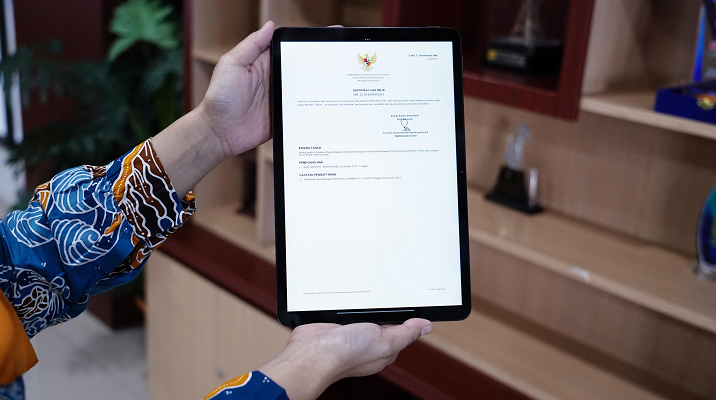
This policy acceleration comes as legislative bodies deliberate on the overarching framework of land reform, highlighting an urgent need for cohesive collaboration between central authorities, provincial leaders, and municipal administrations across Indonesia.
The Legislative Push: Aligning Central and Local Vision
Speaking before the Badan Legislasi (Baleg) at the Nusantara I Building of the House of Representatives (DPR RI) in Jakarta on Monday, September 7, 2026, Deputy Minister of Home Affairs (Wamendagri) Bima Arya Sugiarto emphasized that the successful implementation of agrarian reform cannot rest solely on the shoulders of central ministries. During a Working Board hearing dedicated to gathering inputs for the Draft Law (RUU) on Agrarian Reform Regulation, Bima underscored that regional governments serve as the frontline executors for translating high-level national policies into localized success.

To achieve this synchronization, the Ministry of Home Affairs routinely issues annual Regional Government Work Plan (RKPD) guidelines. These comprehensive documents serve as binding operational manuals for local administrations, directing them to seamlessly integrate national agrarian reform targets into their respective local development schedules. Furthermore, the ministry actively supports local governments through technical planning assistance, routine monitoring, and accelerated socialization of Regional Spatial Plans (RTRW) and Detailed Spatial Plans (RDTR). This regulatory alignment aims to prevent future land-use conflicts, eliminate bureaucratic red tape, and foster an investment-friendly climate that respects community rights.
Empowering the Agrarian Reform Task Force (GTRA)
A cornerstone of the decentralized land reform strategy is the strengthening of the agrarian reform task force, widely known as the Gugus Tugas Reforma Agraria (GTRA). Operating under the direct leadership of regional heads—such as governors, regents, and mayors—with the Head of the National Land Agency’s (BPN) regional office acting as the daily executive, the GTRA functions as the primary engine for local land redistribution and conflict resolution.

The task force holds a dual mandate: identifying and securing objects for agrarian reform (Tanah Objek Reforma Agraria or TORA) and mediating complex land disputes within regional jurisdictions. According to recent ministry data, institutional commitment to this framework has expanded significantly, with GTRA structures officially established across 38 provinces and 311 regencies and municipalities nationwide.
Despite these structural advancements, the Ministry of Home Affairs recognizes that institutional presence alone is insufficient without adequate financial backing. Many regional administrations face severe fiscal constraints that impede their ability to roll out post-certification community empowerment programs—such as agricultural training, micro-financing access, and market linkages—for recipients of agrarian reform land certificates.

Overcoming Fiscal Imbalances and Fostering Creative Financing
Addressing the fiscal disparities among Indonesian regions is critical to the long-term sustainability of land reform. Bima Arya explicitly highlighted that budgetary limitations should never serve as a structural bottleneck preventing citizens from reaping the economic rewards of land formalization.
To bridge this gap, the Ministry of Home Affairs is conducting comprehensive assessments to identify regions with low fiscal capacities. Rather than relying solely on traditional austerity measures, the ministry is encouraging local governments to adopt creative financing models. This includes leveraging cross-regional cooperation, establishing strategic partnerships with business entities, and forging funding synergies with various central ministries and state-owned enterprises. Furthermore, local administrations are urged to diversify their revenue streams beyond standard Locally Generated Revenue (PAD) to ensure that poverty alleviation initiatives tied to land certification remain fully funded and operational.

Protecting Customary Rights and Resolving Overlaps
Beyond planning and financing, the Ministry of Home Affairs is spearheading inter-ministerial coordination to tackle complex structural challenges, including overlapping administrative boundaries, disputed forest zones, lingering issues tied to Business Use Rights (HGU), and fragmented land data. Collaborative efforts are currently underway to update village and sub-district data located within designated forest areas, ensuring that legal certainties are established for communities residing within or adjacent to state-managed ecological zones.
In tandem with these spatial updates, the ministry has established strict safeguards regarding customary land (tanah ulayat). Bima issued a firm warning that local governments are strictly prohibited from unilaterally converting, reallocating, or acquiring customary lands where the presence of indigenous peoples and their traditional rights have been legally recognized under prevailing laws. This protective stance is designed to safeguard the socioeconomic survival of indigenous populations amid rapid industrialization, infrastructure development, and the implementation of National Strategic Projects (PSN).

Digital Transformation via Sipades and Administrative Order
To complement physical land distribution and legal protection, the Ministry of Home Affairs is simultaneously modernizing administrative governance at the grassroots level. The implementation of the Village Asset Management System (Sipades) represents a major leap forward in rural asset accountability.
Sipades enables village governments to systematically inventory, document, administer, and monitor public assets—including land status and ownership information—through a centralized digital framework. As of the current fiscal period, Sipades has been successfully deployed across 21,074 villages, accounting for approximately 28 percent of the total 75,266 villages nationwide. This digital transformation not only prevents asset embezzlement and internal disputes but also provides reliable baseline data that feeds directly into broader regional planning and agrarian reform databases.

Broader Implications and Future Outlook
The reinforced mandate for local governments in executing agrarian reform carries profound implications for Indonesia’s socioeconomic landscape. By decentralizing conflict resolution and embedding land reform into regional spatial planning, the government aims to reduce historical land inequality, stimulate rural economies, and provide legal security to millions of informal landowners.
However, the ultimate success of this policy framework will depend heavily on the institutional capacity, transparency, and political will of regional leaders. Bridging fiscal gaps and ensuring that post-certification empowerment programs are effectively executed will determine whether land reform merely distributes paper titles or genuinely lifts rural communities out of structural poverty.

As parliamentary deliberations on the Agrarian Reform Regulation Draft Law continue, the Ministry of Home Affairs has affirmed its absolute readiness to contribute institutional resources, technical expertise, and cross-sectoral coordination. With a clear roadmap emphasizing administrative order, fiscal innovation, and the absolute protection of indigenous and community rights, Indonesia moves closer to achieving a more equitable, transparent, and prosperous agrarian ecosystem.
