
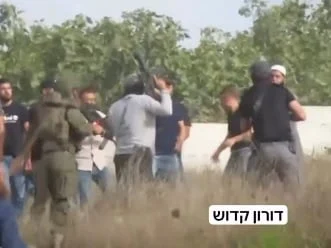
The Palestinian Fatah movement has issued a strong indictment against the Israeli government, holding it fully responsible for what it describes as a severe escalation of extremist Jewish settler violence across the occupied West Bank. This wave of attacks, which Fatah characterizes as systematic aggression by "gangs" of settlers reportedly backed by Israeli forces, has recently resulted in the deaths of at least ten Palestinians and left dozens more wounded. The recent assaults have targeted numerous Palestinian towns and villages, including Tal, Beit Furik, Deir Jarir, Al-Mughayyir, and Jit, inflicting widespread damage and fostering an atmosphere of terror among residents.
Fatah’s statement explicitly links the surge in settler violence to a deliberate and organized government policy aimed at forced displacement, land confiscation, and the relentless expansion of Israeli settlements. This intensification of hostilities in the West Bank is occurring concurrently with Israel’s ongoing extensive military campaign in the Gaza Strip, a connection Fatah posits as indicative of a singular, overarching "colonial project." The movement specifically names Israeli Prime Minister Benjamin Netanyahu and far-right ministers Itamar Ben-Gvir and Bezalel Smotrich, accusing them of providing explicit political and military cover for what it terms the "crimes" perpetrated by Jewish extremists. The recent attacks, according to Fatah, have involved egregious acts such as the burning of homes and agricultural land, indiscriminate shootings, widespread destruction of private property, and the uprooting of olive trees – tactics designed, they argue, to instill terror and forcibly remove Palestinians from their ancestral lands.
Escalating Violence and the Recent Attacks
The West Bank has witnessed a dramatic and alarming surge in violence perpetrated by Israeli settlers against Palestinians, a trend that has accelerated significantly since the beginning of the ongoing conflict in Gaza in October 2023. Prior to this period, settler violence was already a documented concern, but the recent months have marked an unprecedented spike in both frequency and severity. Human rights organizations, both Israeli and international, have consistently documented incidents ranging from vandalism and property destruction to physical assaults and even fatal shootings.
The recent spate of attacks highlighted by Fatah underscores a critical juncture in this escalating pattern. In locations such as Tal, Beit Furik, Deir Jarir, Al-Mughayyir, and Jit, Palestinian communities have reported coordinated incursions by armed settlers. These incidents often unfold with a disturbing degree of impunity, with eyewitnesses frequently reporting that Israeli security forces either stand by idly or actively provide protection to the settlers, enabling them to carry out their destructive acts. The burning of homes and vehicles leaves families displaced and without shelter, while the destruction of agricultural land and the uprooting of olive trees – a vital source of livelihood and cultural heritage for many Palestinians – devastates their economic stability and deepens their despair. The reported ten fatalities represent a grim toll, illustrating the lethal consequences of this unchecked aggression and reinforcing Fatah’s assertion that these are not isolated incidents but rather part of a broader, more sinister agenda.
Historical Context of Israeli Occupation and Settlements
To fully comprehend the gravity of the current situation, it is essential to contextualize it within the broader history of the Israeli occupation of the West Bank. Israel captured the West Bank, East Jerusalem, and the Gaza Strip in the 1967 Six-Day War. Since then, it has maintained a military occupation, establishing numerous settlements across the West Bank that are considered illegal under international law. The Fourth Geneva Convention explicitly prohibits an occupying power from transferring parts of its own civilian population into the territory it occupies. Despite this, successive Israeli governments have facilitated and encouraged the growth of these settlements, which now house hundreds of thousands of Israeli citizens.
The expansion of settlements is a core driver of conflict, fragmenting Palestinian land, restricting Palestinian movement, and gradually eroding the viability of a future independent Palestinian state. The settlements are often accompanied by extensive infrastructure, including segregated road networks and military outposts, further cementing Israeli control over Palestinian territory and resources. Over the decades, this process has led to the confiscation of vast tracts of Palestinian land, the displacement of communities, and a complex system of military rule that severely curtails Palestinian rights and freedoms. The presence of armed settlers, often ideologically driven and operating with a sense of entitlement, creates daily friction and a persistent threat to Palestinian lives and livelihoods.
Supporting Data and Human Rights Assessments
The claims made by Fatah are corroborated by extensive data collected by various human rights organizations and international bodies. The United Nations Office for the Coordination of Humanitarian Affairs (OCHA) has consistently reported a sharp increase in settler violence across the West Bank. For instance, OCHA reported that in 2023, there was an average of three settler attacks per day resulting in Palestinian casualties or property damage, a significant increase compared to previous years. Following the October 7, 2023, attacks and the subsequent war in Gaza, these figures escalated dramatically, with reports indicating hundreds of incidents of settler violence in the months that followed.
Israeli human rights group B’Tselem has also documented numerous cases where Israeli forces either failed to intervene to protect Palestinians from settler attacks or actively participated in actions against Palestinians alongside settlers. Their reports highlight a pervasive culture of impunity, where settlers rarely face prosecution for their crimes, further emboldening them. Amnesty International and Human Rights Watch have similarly condemned the Israeli government’s failure to protect Palestinians and uphold their obligations under international law, noting that the systematic nature of these attacks, coupled with the lack of accountability, amounts to a state-backed policy of dispossession. The destruction of olive trees, a recurring tactic, has particularly dire economic consequences; OCHA estimates that tens of thousands of Palestinian olive trees have been destroyed or damaged by settlers in recent years, impacting thousands of families whose livelihoods depend on agriculture.
Official Responses and International Reactions
The Fatah movement’s direct accusation against the Israeli government, particularly targeting Prime Minister Netanyahu and ministers Ben-Gvir and Smotrich, represents a significant escalation in rhetoric. Fatah asserts that these political figures are not merely failing to curb the violence but are actively endorsing it through their policies and rhetoric. Ben-Gvir, Israel’s National Security Minister, and Smotrich, the Finance Minister who also holds authority over civilian affairs in parts of the West Bank, are known for their ultranationalist and pro-settlement stances, often advocating for the annexation of the West Bank and the expulsion of Palestinians. Their public statements and policy decisions are frequently interpreted as providing a green light for settler expansion and aggression.
The Israeli government, through its various spokespersons, typically dismisses accusations of state-sponsored settler violence, often characterizing incidents as isolated clashes or attributing blame to both sides. The Israel Defense Forces (IDF) usually states that it operates to maintain security in the West Bank and separate conflicting parties, though critics argue its actions disproportionately protect settlers and restrict Palestinians. There is rarely a strong condemnation of settler violence from the highest levels of Israeli leadership, and when investigations are launched, they seldom lead to significant prosecutions or convictions, perpetuating the cycle of impunity.
Internationally, there has been growing alarm and condemnation regarding the escalating violence in the West Bank. The United Nations has repeatedly called for an end to settler violence and for Israel to uphold its obligations as an occupying power to protect the Palestinian population. UN human rights experts have warned of a "perilous situation" and demanded accountability. The European Union has also expressed deep concern, urging Israel to take immediate and decisive action to prevent settler attacks and ensure justice for victims. The United States, while a staunch ally of Israel, has also, on occasion, voiced concern over settler violence and its destabilizing effect on the region, urging de-escalation and adherence to international law. However, these condemnations have often been criticized by Palestinians and human rights advocates as insufficient to alter Israeli policy or effectively curb the violence.
Broader Impact and Implications
The relentless surge in settler violence in the West Bank, coupled with the ongoing military operation in Gaza, carries profound and far-reaching implications for regional stability, humanitarian conditions, and the prospects for a lasting peace.
Humanitarian Crisis: For Palestinians in the West Bank, the violence exacerbates an already dire humanitarian situation. Communities face displacement, loss of homes and livelihoods, and severe psychological trauma. The constant threat of attack restricts access to essential services, agricultural lands, and even schools, disrupting daily life and eroding the social fabric. The deliberate targeting of infrastructure and agricultural resources pushes vulnerable populations further into poverty and dependence.
Erosion of the Two-State Solution: The expansion of settlements, facilitated by this violence, is systematically undermining the viability of a future independent and contiguous Palestinian state, which remains the internationally recognized framework for peace. Each new settlement outpost, each confiscated acre, and each act of violence further fragments Palestinian territory, making the concept of a viable Palestinian state geographically and politically unfeasible. This erosion deepens Palestinian despair and fuels radicalization, making diplomatic solutions increasingly difficult.
Regional Instability: The escalation of violence in the West Bank is not an isolated phenomenon but is deeply interconnected with the broader Israeli-Palestinian conflict. It risks igniting a wider conflagration beyond Gaza, potentially drawing in other regional actors and further destabilizing an already volatile Middle East. The sense of injustice and the lack of protection for Palestinians can breed resentment and provide fertile ground for extremism.
Challenge to International Law: Israel’s continued expansion of settlements and its perceived inaction in preventing settler violence are widely seen as violations of international law, particularly the Fourth Geneva Convention. This challenges the international rules-based order and undermines the credibility of international institutions. The impunity granted to settlers sets a dangerous precedent and weakens the global commitment to human rights and accountability.
Political Ramifications: Domestically within Palestine, the escalating violence strains the authority of the Palestinian Authority (PA), which is increasingly seen by its populace as unable to protect them. This weakens the PA’s legitimacy and complicates efforts towards internal Palestinian unity. For Israel, while the current government’s policies may satisfy its right-wing base, they risk further isolating the country internationally and damaging its long-term security interests by fueling cycles of violence.
In conclusion, the Fatah movement’s accusations underscore a critical and dangerous moment in the Israeli-Palestinian conflict. The escalating settler violence, allegedly sanctioned and protected by elements within the Israeli government, represents not merely a series of isolated incidents but a deliberate strategy with severe humanitarian, political, and strategic ramifications. Addressing this crisis requires immediate action to protect Palestinian civilians, hold perpetrators accountable, and a fundamental shift in policy to halt settlement expansion and uphold international law, if any hope for a just and lasting peace is to be preserved.
