
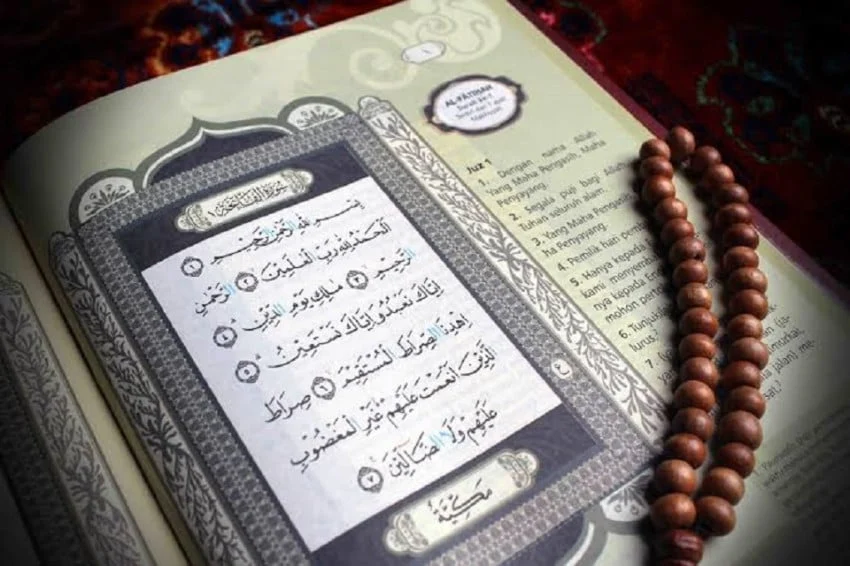
Surat Al Fatihah, the inaugural chapter of the Holy Quran, stands as a foundational pillar of Islamic faith and practice, widely revered as the "Mother of the Quran" (Umm Al-Kitab). Its seven concise verses are universally acknowledged to encapsulate the entire essence and overarching message of the sacred scripture, offering a comprehensive framework for belief, worship, and the human journey towards divine guidance. This Makkiyah surah, revealed in the early period of Prophet Muhammad’s prophethood in Mecca, primarily champions the praise of Allah Almighty while simultaneously imbuing believers with a profound message of sincerity and devotion in their acts of worship.
The profound significance of Al Fatihah is underscored by leading Islamic exegetes. Scholars such as Imam Ibnu Katsir, Jalaluddin Al Mahally, and Jalaluddin As Suyuthi, in their esteemed works Tafsir Ibnu Katsir and Tafsir Jalalain, meticulously detail how the surah’s brief yet powerful verses condense the entirety of the Quran’s teachings. They emphasize that Al Fatihah not only directs humanity towards the glorification of God but also serves as a poignant reminder of the Day of Recompense, an eschatological concept intended to inspire humility, earnest supplication, and unwavering devotion towards the Creator. This dual emphasis on targib (encouragement) towards righteous deeds and tarhib (warning) against straying from the divine path forms the core of its persuasive power, guiding believers to engage in virtuous actions and adhere to the path pleasing to Allah SWT.
The Foundational Role and Multiple Appellations of Al Fatihah
The centrality of Surat Al Fatihah in Islam cannot be overstated. Beyond its designation as "Umm Al-Kitab," it is known by numerous other honorific titles, each reflecting a distinct aspect of its multifaceted importance. These include "As-Sab’ul Mathani" (The Seven Oft-Recited Verses), highlighting its frequent recitation, particularly in daily prayers; "Ash-Shifa" (The Cure), signifying its spiritual healing properties; and "Ar-Ruqyah" (The Charm or Incantation), referencing its use in spiritual healing and protection against ailments. Its pervasive presence in Muslim life begins with the fact that no formal prayer (salat) is considered valid without its recitation, making it a cornerstone of daily worship for billions worldwide. This continuous repetition reinforces its lessons, embedding its message deep within the consciousness of every Muslim.
The Makkiyah classification of Al Fatihah further illuminates its foundational role. Revealed during a period when the nascent Muslim community faced intense persecution and polytheistic resistance in Mecca, the surah primarily focuses on establishing the core tenets of monotheism (Tawhid), the attributes of Allah, and the concept of accountability. Unlike Madaniyah surahs, which often contain legislative details, Makkiyah surahs concentrate on strengthening faith, moral character, and the absolute singularity of God. Al Fatihah perfectly embodies this, laying down the theological bedrock upon which the entire edifice of Islam is built. It teaches Muslims how to address their Creator, acknowledge His sovereignty, and seek His exclusive guidance, thereby solidifying their spiritual identity in challenging times.
A Verse-by-Verse Journey: Unpacking the Core Message
The seven verses of Surat Al Fatihah serve as a structured dialogue between the worshipper and Allah, unfolding a profound spiritual journey:
Ayat Pertama: The Basmalah – Seeking Divine Commencement
بِسْمِ اللّٰهِ الرَّحْمٰنِ الرَّحِيْمِ
Artinya: Dengan nama Allah Yang Maha Pengasih, Maha Penyayang.
(In the name of Allah, the Most Gracious, the Most Merciful.)
The first verse, the Basmalah, initiates every action and every chapter (except Surah At-Tawbah) of the Quran. Its presence at the beginning of Al Fatihah, however, has been a subject of scholarly discussion across Islamic jurisprudence. A key debate revolves around whether the Basmalah is considered an integral verse of Al Fatihah or a separate introductory phrase. As narrated by Abu Daud from Ibnu Abbas (r.a), the Prophet Muhammad did not discern the separation between surahs until the revelation of the Basmalah.
This scholarly divergence leads to practical implications in prayer. Those who consider it part of Al Fatihah, predominantly the Shafi’i school of thought, advocate for its audible recitation (jahr) in congregational prayers. Conversely, those who view it as a standalone introductory blessing, such as the Hanafi and Maliki schools, often suggest its silent recitation (sir) or omit it from the audible portion of Al Fatihah during prayer. Regardless of this interpretative difference, the Basmalah profoundly emphasizes seeking blessing and help from Allah before embarking on any endeavor, grounding all actions in divine remembrance and mercy. It establishes the tone for the entire surah, reminding the believer of Allah’s overarching compassion and beneficence.
Ayat Kedua: Alhamdulillahi Rabbil ‘Alamin – All Praise is Due to Allah
اَلْحَمْدُ لِلّٰهِ رَبِّ الْعٰلَمِيْنَۙ
Artinya: Segala puji bagi Allah, Tuhan seluruh alam.
(All praise is due to Allah, Lord of the worlds,)
This verse shifts from seeking Allah’s name to offering Him unqualified praise. "Alhamdulillah" signifies that all forms of praise, gratitude, and adoration inherently belong to Allah alone. This isn’t merely a verbal expression but a recognition of His perfect attributes, His unmatched power, and His boundless benevolence. The phrase "Rabbil ‘Alamin" (Lord of the worlds) expands this concept further, declaring Allah as the Sustainer, Nurturer, and Sovereign of all creation – visible and invisible, human and jinn, earthly and celestial. This universal dominion underscores His singular authority and the absolute dependence of all beings upon Him. It cultivates a sense of awe, gratitude, and submission in the heart of the believer, recognizing that every blessing, every breath, and every aspect of existence emanates from His divine grace.
Ayat Ketiga: Ar-Rahmanir Rahim – The Abundant Mercy
الرَّحْمٰنِ الرَّحِيْمِۙ
Artinya: Yang Maha Pengasih, Maha Penyayang.
(The Most Gracious, the Most Merciful,)
Reiterating the attributes introduced in the Basmalah, this verse emphasizes the expansive nature of Allah’s mercy. "Ar-Rahman" denotes His universal, all-encompassing mercy that extends to all creation, believers and non-believers alike, providing sustenance and life. "Ar-Rahim" refers to His specific, enduring mercy reserved for the believers in the Hereafter, granting them salvation and eternal bliss. This repetition serves to instill hope and reassurance in the worshipper, highlighting that despite His absolute power and sovereignty, Allah’s dominant attribute is mercy. It encourages believers to seek His forgiveness and to strive for righteousness, confident in the vastness of His compassion.
Ayat Keempat: Maliki Yawm Ad-Din – Master of the Day of Judgment
مٰلِكِ يَوْمِ الدِّيْنِۗ
Artinya: Penguasa hari pembalasan.
(Master of the Day of Judgment.)
This verse introduces the concept of accountability and the ultimate divine justice. By declaring Allah as the "Master of the Day of Judgment," it reminds humanity of a definite future where all will stand before their Creator to account for their deeds. This acknowledgment serves as a powerful deterrent against transgression and a profound motivator for righteous conduct. It balances the hope inspired by Allah’s mercy with the fear of His justice, fostering a holistic understanding of God’s attributes. The Day of Judgment is not merely a day of reckoning but also a day when true justice will prevail, distinguishing between the pious and the rebellious, the righteous and the unjust. This concept is crucial for developing sincerity and a sense of responsibility in one’s actions.
Ayat Kelima: Iyyaka Na’budu wa Iyyaka Nasta’in – Exclusive Worship and Dependence
اِيَّاكَ نَعْبُدُ وَاِيَّاكَ نَسْتَعِيْنُۗ
Artinya: Hanya kepada Engkaulah kami menyembah dan hanya kepada Engkaulah kami mohon pertolongan.
(You alone we worship, and You alone we ask for help.)
This pivotal verse is often considered the core of Al Fatihah, representing the covenant between the worshipper and Allah. It explicitly articulates the principle of Tawhid (monotheism) in its purest form: exclusive worship directed solely to Allah and exclusive reliance on Him for help. The repetition of "You alone" (Iyyaka) before both "we worship" (na’budu) and "we ask for help" (nasta’in) linguistically emphasizes this exclusivity. It rejects all forms of polytheism and dependence on creation, firmly establishing Allah as the sole object of devotion and source of strength. This verse transforms prayer from a mere ritual into a profound act of submission and absolute trust, empowering the believer by affirming that all true power and assistance reside with God.
Ayat Keenam: Ihdinas Siratal Mustaqim – The Plea for Guidance
اِهْدِنَا الصِّرَاطَ الْمُسْتَقِيْمَۙ
Artinya: Tunjukilah kami jalan yang lurus.
(Guide us to the straight path,)
Having established worship and dependence, the believer then articulates their most fundamental need: divine guidance. "The straight path" (As-Siratal Mustaqim) refers to the clear, unambiguous, and righteous way of life prescribed by Allah, encompassing true belief, sound morals, and correct actions. It is the path that leads to salvation and success in both this world and the Hereafter. This supplication acknowledges human vulnerability and the constant need for divine intervention to stay on the correct course amidst life’s complexities and temptations. It is a continuous prayer for clarity, wisdom, and steadfastness, recognizing that true guidance can only come from Allah.
Ayat Ketujuh: Siratalladhina An’amta ‘alayhim ghayril maghdubi ‘alayhim waladdallin – Distinguishing the Paths
صِرَاطَ الَّذِيْنَ اَنْعَمْتَ عَلَيْهِمْ ەۙ غَيْرِ الْمَغْضُوْبِ عَلَيْهِمْ وَلَا الضَّاۤلِّيْنَ
Artinya: (yaitu) jalan orang-orang yang telah Engkau beri nikmat kepadanya, bukan (jalan) mereka yang dimurkai, dan bukan (pula jalan) mereka yang sesat.
(The path of those upon whom You have bestowed favor, not of those who have evoked [Your] wrath or of those who are astray.)
The final verse elaborates on "the straight path" by defining it through example. It identifies the desired path as that of "those upon whom You have bestowed favor" – understood to be the prophets, the truthful, the martyrs, and the righteous, as detailed in other Quranic verses (e.g., Surah An-Nisa, 4:69). This sets a clear standard for emulation. Equally important, it distinguishes this path from two undesirable ones: "those who have evoked [Your] wrath" (Al-Maghdubi ‘alayhim) and "those who are astray" (Ad-Dallin). While these groups are generally interpreted by scholars as representing those who knowingly rejected divine truth (like some historical communities such as the Jews who received the law but rebelled) and those who unknowingly deviated due to ignorance or misguidance (like some historical communities such as the Christians who deviated from pure monotheism), respectively, the verse broadly serves as a caution against any deviation from truth, whether intentional or unintentional. This distinction provides clarity and helps believers navigate the complexities of life, seeking to align themselves with the righteous and avoid the pitfalls of error.
Broader Theological and Spiritual Implications
The cumulative message of Surat Al Fatihah extends far beyond its literal interpretation. Theologically, it establishes a direct, intimate connection between the Creator and His creation, fostering a sense of personal relationship rather than detached observance. Spiritually, its regular recitation serves as a constant reminder of one’s purpose, one’s dependence on Allah, and the ultimate destination of the Hereafter. It encourages introspection, humility, and a perpetual striving for inner purity and outer righteousness.
The targib (encouragement) embedded in Al Fatihah inspires believers to cultivate virtues such as gratitude, patience, and compassion, knowing that these actions are pleasing to Allah. Simultaneously, the tarhib (warning) against straying from the divine path fosters a healthy sense of accountability and self-correction, preventing complacency and guiding individuals away from sin. The surah’s comprehensive nature makes it a perfect opening not only for the Quran itself but for every daily prayer, acting as a spiritual compass that reorients the worshipper towards God and His divine purpose.
In conclusion, Surat Al Fatihah is not merely the first chapter of the Quran; it is its heart, its essence, and its most profound summary. Its timeless verses offer a universal message of praise, guidance, and unwavering devotion, forming the bedrock of Islamic faith and practice. Through its eloquent articulation of Allah’s attributes, the human need for guidance, and the ultimate accountability before God, Al Fatihah continues to illuminate the path for billions, serving as an indispensable guide for spiritual growth and a constant reminder of the profound wisdom embedded within the Holy Quran.
