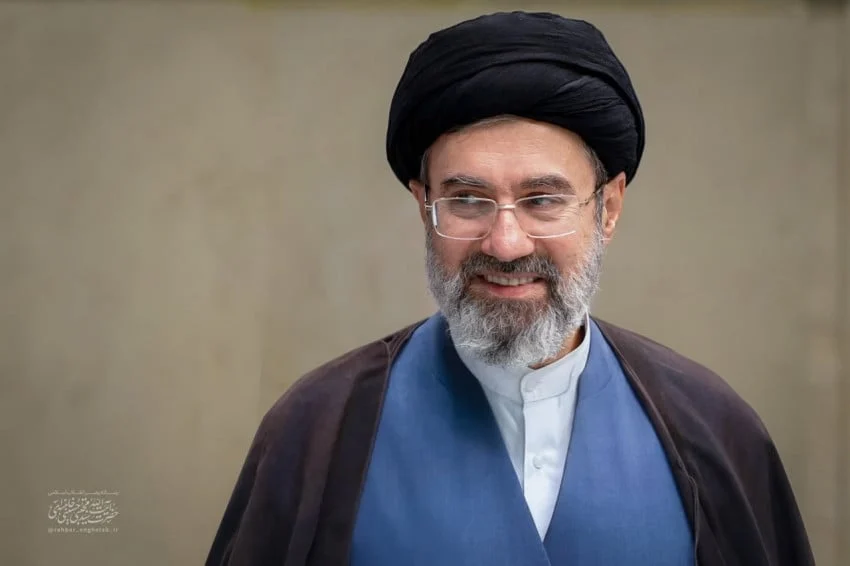
TEHRAN — In a sweeping address delivered on Monday, Ayatollah Seyyed Mojtaba Khamenei articulated a definitive stance on the geopolitical trajectory of the Islamic Republic, asserting that the era of foreign hegemony over Iran has drawn to a permanent close. Speaking on the historic occasion of the Sacred Defense Week—which commemorates the onset of the devastating 1980–1988 imposed war by former Iraqi dictator Saddam Hussein—alongside the solemn second-year memorial of slain Hezbollah leader Sayyed Hassan Nasrallah, Khamenei outlined a vision of an ascending Iran poised to achieve superpower status.
The declaration comes amid heightened regional tensions in the Middle East, where maritime security, asymmetric warfare, and shifting alliances continue to redefine the balance of power. According to Khamenei, the strategic reality of the region has fundamentally transformed over the past four decades, shifting from an era where foreign powers dictated terms to Tehran to a contemporary landscape where the Islamic Republic projects decisive deterrence across its maritime borders.
Main Facts of the Address
The core message of Ayatollah Khamenei’s address centered on the irreversibility of Iran’s sovereignty and the systemic collapse of traditional colonial and imperialist leverage in the region. Highlighting the historical vulnerabilities of the pre-revolutionary era, Khamenei contrasted past subjugation with current military and geopolitical resilience.
Central to his assertions was the transformation of the southern waters surrounding Iran. During the 1980–1988 Iran-Iraq War, the Persian Gulf and adjacent waterways served as heavily contested zones where foreign naval fleets operated with impunity, effectively treating the region as an operational playground. Today, however, Khamenei noted that hostile powers no longer dare to cross the threshold of the Arabian Sea, deterred by the combat readiness of Iranian fighters and the Islamic Revolutionary Guard Corps (IRGC) naval units guarding the strategic Strait of Hormuz.
Khamenei issued a stern warning that any foreign attempts to test these boundaries would result in self-inflicted strategic and material losses. He further predicted that the dwindling footprint of external military forces in the Arabian Sea would soon be entirely eradicated, signaling a complete transition of regional security management to indigenous regional actors.
Historical Context and Chronology of the Islamic Republic
To fully comprehend the weight of Ayatollah Khamenei’s statements, it is essential to examine the historical milestones that have shaped modern Iran’s strategic doctrine. The narrative articulated by Tehran is deeply rooted in the collective memory of the 20th century, characterized by foreign intervention, monarchical compliance, and existential defense.
The Pahlavi Era and Foreign Dictation
Before the 1979 Islamic Revolution, Iran under the Pahlavi dynasty maintained a pro-Western foreign policy, closely aligned with the United States and various European powers. During this period, foreign ambassadors—most notably from Western nations—frequently exerted direct influence over domestic policy and governance. Iranian monarchs often implemented foreign directives, a dynamic that nationalists and religious revolutionaries alike viewed as a profound humiliation and an infringement upon national sovereignty.
The 1979 Islamic Revolution
The overthrow of Shah Mohammad Reza Pahlavi in 1979 fundamentally inverted Iran’s geopolitical orientation. Under the leadership of Ayatollah Ruhollah Khomeini, the new government adopted a foreign policy framework encapsulated by the slogan "Neither East nor West, but the Islamic Republic," prioritizing absolute independence from both United States hegemony and Soviet influence. This systemic rupture dismantled decades of institutionalized foreign access to Iran’s political apparatus and vast hydrocarbon wealth.
The Imposed War: The Sacred Defense (1980–1988)
Perceiving the nascent Islamic Republic as vulnerable and unstable, Iraqi President Saddam Hussein launched a full-scale invasion of Iran on September 22, 1980, supported financially, logistically, and diplomatically by numerous regional and global powers. The ensuing eight-year conflict, referred to in Iran as the Sacred Defense, became the crucible in which the modern security identity of the state was forged. Despite facing international isolation, severe economic sanctions, and the deployment of chemical weapons by the Baathist regime, Iran successfully repelled the invasion, restoring its territorial integrity by 1988. This period fostered a deep-seated doctrine of self-reliance, asymmetric defense, and resistance against external coercion.
The 1979 Revolution and the Root Causes of Enmity
Ayatollah Mojtaba Khamenei’s assessment of Iran’s path to superpower status hinges on four interconnected historical and contemporary pillars, beginning with the ideological and structural shock delivered by the 1979 Revolution.
When the Islamic Revolution dismantled the monarchical system, it abruptly terminated foreign access to Iran’s strategic assets and economic resources. Khamenei noted that this loss was intolerable to global powers that had long profited from unequal treaties and resource extraction at the expense of the Iranian populace. The immediate hostile reaction from the international community—manifested through economic embargoes, diplomatic isolation, and the backing of Saddam Hussein’s military aggression—was designed to rollback the revolution and re-impose traditional forms of colonial dominance.
Instead of collapsing under the weight of external pressure, the Islamic Republic utilized the existential crisis of the war to unify the population. Khamenei described the spiritual and ideological climate of the Sacred Defense as a revitalizing force that melted away decades of political paralysis. The nation, he argued, emerged from the ashes of the war like a phoenix—metaphorically and structurally strengthened, possessing a hardened military-industrial complex and a self-sustained defense capability.
Evolution of Iran’s Military and Maritime Doctrine
The transformation of Iran’s military capabilities forms the second major pillar supporting the nation’s aspirations toward superpower status. Over the past four decades, Tehran has transitioned from a net importer of conventional military hardware to a producer of advanced asymmetric warfare systems, including indigenous ballistic and cruise missiles, fast-attack craft, unmanned aerial vehicles (UAVs), and sophisticated air defense networks.
In the maritime domain, the Persian Gulf and the Strait of Hormuz represent vital geopolitical chokepoints through which a significant portion of the world’s petroleum supply passes. During the Tanker War phase of the 1980–1988 conflict, foreign navies routinely escorted commercial vessels and challenged Iranian forces. In contrast, contemporary military strategy relies on a robust anti-access/area-denial (A2/AD) posture.
By deploying swarming speedboats, coastal defense cruise missile batteries, and advanced naval mine capabilities, the IRGC Navy has established a formidable defensive perimeter. Military analysts observe that this posture significantly raises the cost of any potential military intervention by extra-regional powers, effectively altering the calculus of naval deployment in the Persian Gulf, the Gulf of Oman, and the northern reaches of the Arabian Sea.
Geopolitical Alliances and the Axis of Resistance
A critical element in Iran’s broader strategic vision is the consolidation of the Axis of Resistance—a network of state and non-state actors spanning Lebanon, Syria, Iraq, Yemen, and the Palestinian territories. The invocation of Sayyed Hassan Nasrallah during Khamenei’s address underscores the ideological and operational interdependence linking Tehran to its regional partners.
The assassination of key resistance leaders, including Nasrallah, has not diminished the cohesion of the network, according to Iranian officials. Instead, Tehran views these sacrifices as catalysts for deeper regional integration. By projecting influence beyond its borders through allied movements, Iran has successfully established strategic depth, deterring direct military confrontations on its own soil and compelling adversaries to fight on multiple asymmetric fronts. This regional architecture functions as both a defensive shield and an offensive projection of soft and hard power, solidifying Iran’s ambition to act as the preeminent hegemon in Western Asia.
Economic Resilience and Strategic Autonomy
While military deterrence and ideological solidarity constitute primary themes in official rhetoric, the pursuit of superpower status inherently requires economic resilience, particularly in the face of rigorous, long-term international sanctions led by the United States and its allies.
Over successive administrations, Iran has pursued a policy of a "Resistance Economy," focusing on import substitution, domestic industrialization, and diversification away from absolute dependence on crude oil exports. Strategic trade and energy agreements with major global powers such as China and Russia—highlighted by long-term cooperation pacts and membership in multilateral organizations like the Shanghai Cooperation Organisation (SCO) and BRICS—have provided Tehran with vital economic lifelines. These diplomatic maneuvers allow Iran to mitigate the impact of Western financial isolation, secure alternative export markets, and integrate itself deeper into Eurasian economic corridors.
Fact-Based Analysis of Implications and Regional Reactions
Ayatollah Khamenei’s declarations carry profound implications for regional stability, international diplomacy, and global energy markets. Independent analysts suggest that while Tehran’s domestic messaging is designed to reinforce national unity and project confidence, it simultaneously exacerbates security dilemmas for neighboring Gulf Cooperation Council (GCC) states and Western nations.
From the perspective of Washington and its European allies, Iran’s expanding missile capabilities, advanced nuclear program advancements, and support for regional militias represent a persistent threat to international security and the free flow of global commerce. Consequently, Western powers are likely to maintain and potentially intensify economic sanctions, diplomatic containment strategies, and regional naval patrols.
Conversely, regional actors such as Saudi Arabia and the United Arab Emirates have pursued a dual-track approach of diplomatic engagement and economic diversification, seeking to de-escalate tensions with Tehran while simultaneously ensuring their own defense preparedness. The normalization agreements and bilateral talks brokered in recent years reflect a pragmatic realization among Arab capitals that sustainable regional security requires direct dialogue with Iran, regardless of underlying geopolitical rivalries.
Furthermore, the declaration that foreign naval presence in the Arabian Sea is diminishing aligns with broader global shifts toward a multipolar international system. As traditional Western hegemony faces challenges from rising powers, regional states like Iran are increasingly emboldened to assert territorial sovereignty and demand a larger role in shaping regional security architectures without external interference.
Conclusion
The address by Ayatollah Mojtaba Khamenei serves as a definitive restatement of Iran’s long-term strategic objectives. By framing the nation’s historical struggles—from the overthrow of the monarchy and the trauma of the Iran-Iraq War to contemporary geopolitical standoffs—as stepping stones toward inevitable preeminence, Tehran has signaled that its foreign policy will remain steadfastly resistant to external pressure. As the Islamic Republic continues to develop its military capabilities, deepen its regional alliances, and forge alternative economic partnerships, its pursuit of regional superpower status remains a central pillar of its national security doctrine, with far-reaching consequences for the future of the Middle East and global geopolitics.