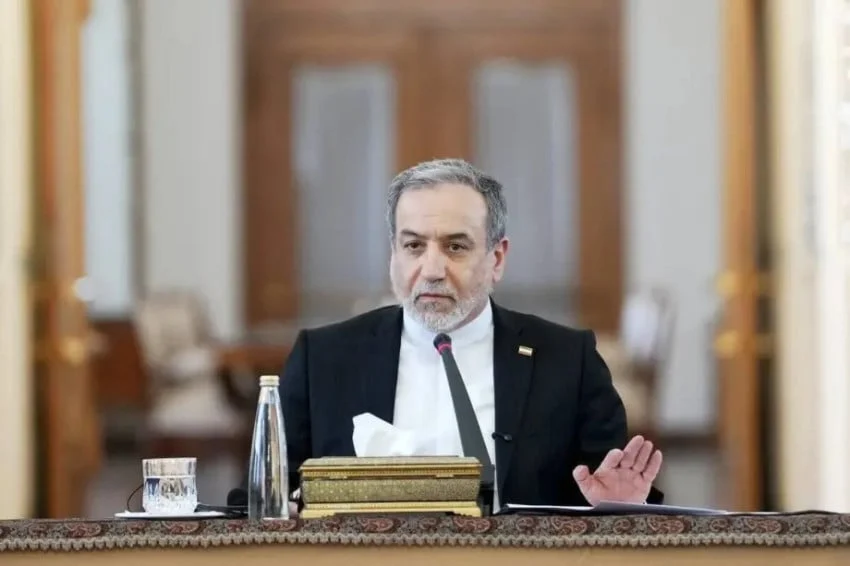
TEHRAN — In a concerted effort to navigate the complex geopolitical aftermath of the recent regional conflict, Iranian Foreign Minister Abbas Araghchi engaged in high-level diplomatic discussions on Thursday, September 10, 2026. Araghchi conducted separate telephone conversations with his Saudi Arabian counterpart, Prince Faisal bin Farhan, and the Chief of Army Staff of Pakistan, General Asim Munir. These consultations represent a critical phase in the post-conflict normalization process, focusing on the stabilization of the Middle East and the restoration of regional security architectures that were severely fractured during the military escalations earlier this year.
The discussions underscored a growing consensus among regional powers that the cessation of hostilities—formalized through a memorandum of understanding (MoU) between Washington and Tehran on June 18—must be bolstered by sustained dialogue. As the region attempts to pivot from a state of total war to a fragile peace, the roles of Saudi Arabia, as a regional economic leader, and Pakistan, as a major military power with significant influence in the Islamic world, have become central to the maintenance of the current ceasefire.
Chronology of the 2026 Conflict
The recent hostilities, which fundamentally altered the security landscape of the Persian Gulf and the broader Middle East, followed a precipitous decline in diplomatic relations and a series of escalatory military maneuvers.
- February 28, 2026: The conflict officially commenced as a coordinated military campaign launched by the United States and Israel against Iranian military and strategic assets. The opening strikes targeted command-and-control centers, radar facilities, and infrastructure associated with the Islamic Revolutionary Guard Corps (IRGC).
- March 2026: In response to the bombardment, Iran initiated a large-scale retaliatory campaign. This included the launch of ballistic missiles targeting Israeli territory and coordinated strikes against U.S. military installations and bases located in Iraq, Syria, and other regional proxies.
- April 2026: The conflict escalated into the maritime domain when Iran announced the total closure of the Strait of Hormuz to all international shipping. This decision paralyzed the transit of approximately 20% of the world’s total petroleum consumption, triggering a global energy crisis and a spike in crude oil prices that exceeded $200 per barrel within weeks.
- May 2026: International economic volatility reached its zenith as global supply chains suffered from the blockade. Ports across Asia and Europe reported severe shortages of industrial raw materials, and aviation fuel prices crippled the global airline industry.
- June 18, 2026: Following back-channel negotiations facilitated by neutral mediators, Washington and Tehran signed a memorandum of understanding (MoU) to end active military operations. The agreement included the gradual reopening of the Strait of Hormuz and a suspension of mutual offensive strikes.
Strategic Objectives of the Diplomatic Outreach
The telephone diplomacy conducted by Minister Araghchi is intended to solidify the June 18 agreement. In his talks with Prince Faisal bin Farhan, the focus centered on the "normalization of maritime security" and the resumption of regional trade. Saudi Arabia, having navigated a delicate path of neutrality during the conflict, has emerged as a key broker for the transition from the cessation of hostilities to a long-term peace framework.
With General Asim Munir of Pakistan, the discussion shifted toward the containment of proxy insurgencies and the stabilization of regional borders. Pakistan, which maintains deep military ties with both Iran and the Gulf states, has signaled its willingness to participate in a regional security monitor mechanism to ensure that the fragile ceasefire does not dissolve into localized conflicts.
"The primary focus remains the establishment of a durable peace," stated an Iranian Foreign Ministry spokesperson following the calls. "Our objective is to ensure that the security of the region is managed by the nations within it, rather than by external military escalations that carry the risk of total systemic collapse."
The Economic Impact: A Global Reckoning
The blockade of the Strait of Hormuz remains the most significant economic event of the decade. During the height of the closure, the global economy faced what many analysts termed a "logistics depression."
Supporting data from the International Energy Agency (IEA) indicated that during the 112 days the Strait was closed, global oil reserves were depleted at a rate of 4 million barrels per day. The resulting surge in energy costs led to a 15% increase in global inflation rates, forcing central banks in the G7 nations to implement emergency liquidity measures.
Furthermore, the destruction of regional energy infrastructure during the conflict resulted in an estimated $1.2 trillion in damages. Rebuilding these facilities is expected to take years, necessitating a new era of regional cooperation. The discussions held by Araghchi suggest that Tehran is cognizant of the need for economic integration to facilitate the reconstruction of its own damaged infrastructure, much of which was compromised during the February-to-June window.
Regional Perspectives and Official Responses
While Washington has not commented directly on Araghchi’s specific calls with Riyadh and Islamabad, the White House has previously stated that it expects full compliance with the June 18 MoU. Analysts in Washington suggest that the Biden administration is monitoring the situation to ensure that the current diplomacy does not lead to a regional alignment that would undermine U.S. strategic interests.
Conversely, the view from Riyadh is one of cautious optimism. Sources close to the Saudi Ministry of Foreign Affairs have suggested that the Kingdom is interested in a "regional security dialogue" that includes Iran, provided that such a dialogue addresses concerns regarding missile proliferation and regional proxy warfare.
Israel, meanwhile, maintains a posture of "armed readiness." While the government in Jerusalem has adhered to the cessation of hostilities, officials have publicly stated that the security of Israel remains their paramount concern, and any sign of renewed military mobilization by Iran or its proxies will be met with "decisive and immediate force."
Implications for Future Stability
The diplomatic maneuvers of September 2026 signify a shift in strategy for the Iranian government. By engaging with Saudi Arabia and Pakistan, Tehran is attempting to move away from its policy of isolation and towards a "regional security community" model.
However, the path to stability is fraught with challenges. The underlying tensions that led to the February 28 outbreak of war—namely the competition for regional hegemony, conflicting alliances, and the unresolved status of various regional proxy forces—remain largely unaddressed by the current MoU. The memorandum is a tactical agreement to stop fighting; it is not a strategic peace treaty.
Political scientists suggest that the next twelve months will be critical. If the diplomatic efforts by Araghchi can be translated into a formal non-aggression pact between the major powers of the Middle East, the region may witness a period of recovery. If, however, the talks remain purely performative, the structural weaknesses in the current peace—exacerbated by the economic scars of the energy crisis—could lead to a resurgence of hostilities.
As the international community watches, the role of regional powers is now more influential than it has been in decades. The transition from the volatile military theater of early 2026 to a stable diplomatic landscape requires not only the goodwill of the signatories but also a fundamental restructuring of the regional security paradigm. The efforts of Minister Araghchi, while small in the context of the recent conflict, provide a tentative framework for that transition, emphasizing that the era of total regional war has reached a point of exhaustion, necessitating a return to the negotiating table.