
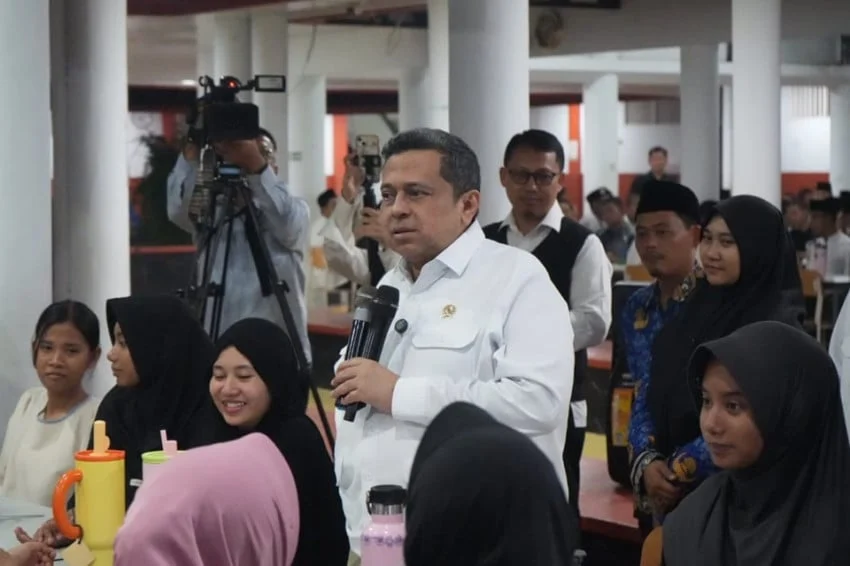
The landscape of modern Indonesian education continues to undergo significant structural evolution, marked by increased emphasis on inclusive learning environments, character development, and visionary leadership training for the nation’s youth. In a prominent demonstration of this commitment, the Head of the Halal Product Assurance Organizing Body (BPJPH), Ahmad Haikal Hasan, commonly known as Babe Haikal, conducted an official working visit to Sekolah Rakyat Menengah Atas (SRMA) 13 located in Bekasi City, West Java. The visit, which took place against the backdrop of national educational reform and targeted social outreach, served as a multifaceted platform to encourage disadvantaged and marginalized youth, reinforce the importance of academic perseverance, and integrate modern technological visualization tools into personal development aspirations.
This high-profile engagement brought together government leadership, institutional administrators, and exactly 190 students who form the core demographic of the SRMA 13 educational ecosystem. By blending informal interactions, shared dining experiences, and motivational dialogue, the visit underscored a broader governmental strategy to bridge socio-economic gaps in access to quality education while simultaneously cultivating the next generation of Indonesian leaders.
Main Facts and Overview of the Ministerial Engagement
The official delegation led by BPJPH Head Ahmad Haikal Hasan arrived at the SRMA 13 Kota Bekasi campus in the late afternoon, transitioning into an extended evening program centered around youth empowerment. The primary objective of the visit was twofold: to evaluate the ongoing integration of inclusive educational models championed by the current administration and to provide direct mentorship to students from diverse socio-economic backgrounds.
During the visit, Haikal Hasan engaged in direct, one-on-one conversations with the student body, culminating in a communal dinner shared among the 190 enrolled students, faculty members, and accompanying state officials. This communal setting was deliberately chosen to dismantle formal hierarchical barriers, allowing students to express their personal challenges, academic ambitions, and long-term career goals in an open, supportive atmosphere.
The core message delivered by the BPJPH Head focused heavily on psychological resilience, the necessity of establishing clear life trajectories, and the dismantling of self-doubt among students who originate from economically vulnerable households. By sharing anecdotes from his own professional journey and highlighting the triumphs of historical figures who overcame similar limitations, Haikal Hasan sought to instill a profound sense of self-worth and national responsibility within the student body.
Chronology and Detailed Timeline of the Visit
The itinerary of the visit was structured to maximize engagement and ensure comprehensive exposure to the daily realities of SRMA 13 students.
The day commenced with an administrative briefing between the BPJPH Head and the school leadership team, focusing on the operational challenges, infrastructural needs, and curriculum delivery models currently utilized at SRMA 13. Administrators detailed the demographic profile of the student body, noting that the vast majority of enrollees are beneficiaries of targeted educational assistance programs designed to prevent high school dropouts and combat systemic poverty through academic achievement.
Following the administrative briefing, Haikal Hasan transitioned to the main assembly hall, where the 190 students had gathered. The interactive session began with student presentations regarding their future aspirations. In a memorable moment highlighted during the event, a student named Julianto publicly articulated his ambition to serve as a government minister in the future. This display of lofty ambition served as a catalyst for a broader discussion on the mechanics of goal-setting and visualization.
The event progressed into the evening with a collaborative dining session. Breaking bread together provided a relaxed environment where students could approach the state official informally. Discussions during the dinner ranged from practical advice on time management and study habits to broader philosophical inquiries regarding national identity and civic duty. The visit concluded with a formal closing ceremony, during which the BPJPH Head reaffirmed his personal commitment to monitoring the progress of SRMA 13 and advocating for similar educational institutions at the national policy level.
Supporting Data and Contextual Framework of Sekolah Rakyat
To fully understand the significance of the visit to SRMA 13 Kota Bekasi, it is essential to examine the broader institutional framework of the Sekolah Rakyat (People’s School) initiative. The Sekolah Rakyat model represents a specialized intervention strategy deployed by the Indonesian government to reach demographic segments historically excluded from traditional elite educational pipelines.
Data from the Ministry of National Education and related state bodies indicate that educational parity remains a critical development challenge, particularly in densely populated urban peripheries such as Bekasi, where rapid industrialization often coexists with pockets of acute urban poverty. Institutions like SRMA 13 are engineered to absorb students who might otherwise be forced to terminate their education prematurely due to financial constraints.
Furthermore, infrastructural development supporting these institutions has seen increased state attention. Recent initiatives, such as the second phase of Sekolah Rakyat construction managed by the Ministry of Public Works (Kementerian PU), have integrated advanced construction methodologies, including Building Information Modeling (BIM). This technological integration ensures that the physical learning environments are modern, structurally sound, and optimized for contemporary pedagogical needs.
The inclusion of technological tools extends beyond physical infrastructure into the classroom itself. During his interaction with the students, Haikal Hasan placed significant emphasis on the utilization of modern technologies—specifically artificial intelligence (AI)—as a cognitive scaffolding tool. By leveraging AI-driven visualization platforms, students are encouraged to generate concrete visual representations of their future careers. Educational psychologists note that visual reinforcement helps bridge the gap between abstract ambition and actionable life planning, particularly for youth who may lack generational exposure to professional corporate or governmental environments.
Official Responses and Stakeholder Perspectives
The visit elicited positive reactions from various stakeholders, ranging from institutional educators to government representatives and community leaders.
Speaking to media representatives following the event, Ahmad Haikal Hasan emphasized that the fundamental prerequisite for national progress lies in the mental clarity and visionary capacity of the younger generation. "If we want our children to become the hopeful generation of the future, as we witnessed today, they must possess a clear vision. We have seen firsthand that these children possess exceptionally clear ambitions," he stated. He further noted that the state bears a collective responsibility to nurture these ambitions through consistent policy support, adequate resource allocation, and moral encouragement.
School administrators at SRMA 13 expressed profound gratitude for the ministerial visit, noting that external validation from high-ranking government officials provides an invaluable psychological boost to students who frequently struggle with feelings of marginalization. Teachers reported an immediate surge in classroom engagement and academic enthusiasm following the interaction, particularly among students who had the opportunity to directly converse with the BPJPH Head.
Parent-teacher association representatives also welcomed the initiative, highlighting the importance of bridging the disconnect between national-level bureaucrats and grassroots educational facilities. They noted that such visits validate the sacrifices made by families striving to keep their children enrolled in secondary education despite economic headwinds.
Broader Impact and Socio-Economic Implications
The implications of high-level engagement with institutions like SRMA 13 extend far beyond immediate motivational outcomes, touching upon critical socio-economic and policy dimensions in contemporary Indonesia.
First, the visit reinforces the policy of inclusive governance. By stepping outside traditional administrative confines to engage directly with marginalized youth, government officials signal a shift toward more empathetic, ground-level public administration. This participatory approach helps ensure that national policies regarding halal product awareness, youth development, and educational equity remain responsive to the lived realities of ordinary citizens.
Second, the integration of character-building initiatives with modern technological literacy addresses the demands of the future labor market. As Indonesia moves toward its demographic bonus period and targets its Golden Indonesia 2045 vision, the workforce must not only be technically competent but also psychologically resilient and ethically grounded. Initiatives that encourage students to articulate high-level aspirations—such as public service, scientific research, and industrial leadership—help dismantle the cycle of lowered expectations often associated with poverty.
Finally, the focus on SRMA 13 highlights the ongoing necessity of cross-sectoral collaboration. Effective educational reform requires the synchronized efforts of regulatory bodies like BPJPH, infrastructural agencies like the Ministry of Public Works, local municipal governments, and civil society organizations. As these institutions align their objectives, the structural barriers preventing equitable access to quality education and professional opportunity are progressively dismantled.
In conclusion, the visit by BPJPH Head Ahmad Haikal Hasan to Sekolah Rakyat Menengah Atas 13 Kota Bekasi serves as a compelling case study in modern educational outreach. By combining empathetic mentorship, practical motivational strategies, and a steadfast commitment to institutional inclusivity, the event reinforced the vital link between state support and youth empowerment, laying a solid foundation for the future leaders of the nation.
