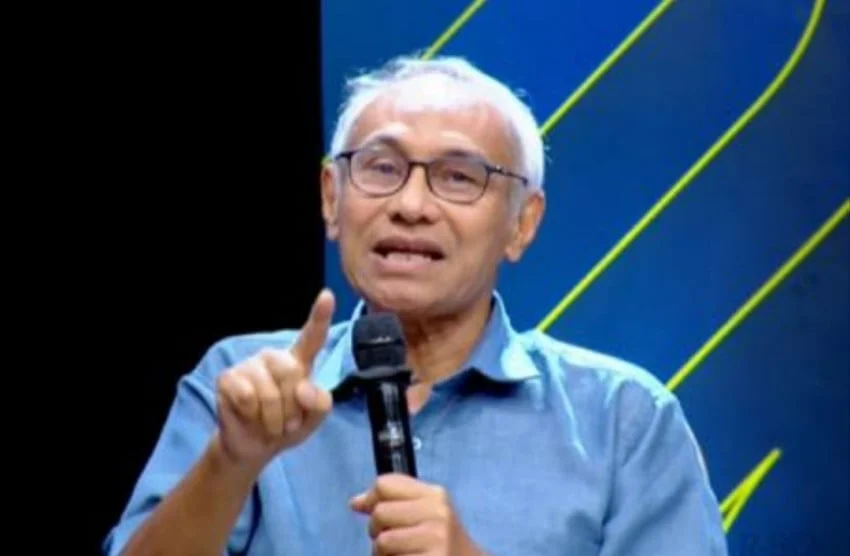
The socio-political landscape of Indonesia experienced a notable loss on Friday, November 13, 2026, with the passing of Rizal Fadillah, a prominent activist, legal thinker, and vocal critic of the administration of former President Joko Widodo. Fadillah, who gained widespread public recognition for his relentless efforts alongside prominent figures like telematics expert Roy Suryo and activist Dokter Tifa to scrutinize the educational credentials and official documentation of the former head of state, passed away in Bandung, West Java. His death was officially confirmed by Roy Suryo through a dedicated broadcast on his official YouTube channel, drawing tributes from fellow members of the political opposition and civil society movements.
Fadillah’s demise marks the departure of one of the most persistent legal campaigners within the Indonesian civil rights and political advocacy circles. Known for his steadfast adherence to what he perceived as constitutional transparency, Fadillah spent his final years engaged in high-profile legal battles, public forums, and academic challenges that sought to hold state institutions accountable. His passing has triggered widespread reflections among his colleagues, who have pledged to carry forward the torch of accountability that defined his career as a lawyer, Islamic scholar, and public intellectual.
Chronology of Events Surrounding His Final Hours
According to statements released by his close associates, Rizal Fadillah’s health deteriorated suddenly in the days leading up to his passing. Prior to his hospitalization, he had remained active in correspondence and discussions regarding ongoing civil lawsuits and public transparency petitions spearheaded by various advocacy coalitions, including the Petition 100 group and the Association of Muslim Intellectuals and Scholars.
On Friday, November 13, 2026, as his condition worsened, family members and colleagues rushed him to the Muhammadiyah Hospital in Bandung. Medical staff immediately transferred him to the Intensive Care Unit (ICU) as he exhibited severe medical complications. Despite the intensive medical interventions administered by the hospital staff, Fadillah succumbed to his illness late in the afternoon.
Roy Suryo, visibly shaken by the sudden news, delivered an emotional eulogy via his YouTube platform, @RoySuryoChannelOfficialAsli. In his address, Suryo highlighted Fadillah’s unwavering dedication to the collective cause, emphasizing that the late activist had stood shoulder-to-shoulder with him, Dokter Tifa, Rustam, Kurnia Tri Royani, and other members of the activist community during the height of their joint investigations and public campaigns.
"Ustaz Rizal Fadillah has been with us since the very beginning," Roy Suryo stated during his broadcast. "He stood alongside me, Dokter Tifa, Mas Rustam, Bu Kurnia Tri Royani, and several others in our collective endeavor to uncover the truth regarding the educational credentials of Joko Widodo, which subsequently extended to inquiries concerning his family members. This afternoon, he was called back by the Almighty. We pray that his end is marked by husnulkhatimah. Farewell, Ustaz Rizal Fadillah. Your struggle will certainly be continued by us, and the people of Indonesia are immensely proud of your unwavering dedication to upholding the truth without compromise."
Background Context: The Battle Over Academic Credentials
To understand the weight of Rizal Fadillah’s activism, one must examine the protracted controversy surrounding the academic credentials of former President Joko Widodo—a movement in which Fadillah played a foundational role. The controversy first gained national prominence when various independent researchers, lawyers, and political activists began questioning the authenticity of the bachelor’s degree obtained by Joko Widodo from the Faculty of Forestry at Universitas Gadjah Mada (UGM) in Yogyakarta.
As a legal expert and member of the Indonesian Muslim Brotherhood and various legal aid organizations, Fadillah utilized his expertise to draft legal notices, file public information requests, and initiate administrative proceedings against state universities and government bodies. Alongside the Retired TNI Officers and State Officials Petition (TPUA) and other allied groups, Fadillah argued that public officials, particularly those occupying the highest office in the land, were legally obligated to maintain absolute transparency regarding their educational backgrounds to preserve the integrity of state administration.
In late 2023 and continuing through subsequent years, Fadillah frequently acted as a spokesperson and legal strategist for coalitions demanding that UGM release comprehensive, verifiable records of Jokowi’s academic journey. He publicly accused academic institutions of shielding the former president from public scrutiny, arguing that universities bore a moral and legal duty to protect academic integrity over political convenience. These legal maneuvers frequently placed him at the center of intense national debates regarding freedom of information, defamation laws, and the limits of political dissent in Indonesia.
Key Figures and Coalition Dynamics
Rizal Fadillah was not a lone actor; his work was deeply embedded within a network of high-profile critics of the Jokowi administration. Among his closest collaborators was Roy Suryo, a former Minister of Youth and Sports turned fierce government critic; Dokter Tifa, a medical doctor and independent researcher who frequently analyzed digital and physical records; and various legal practitioners associated with civil society watchdog organizations.
This collective, often operating under loose coalitions such as Petition 100, utilized a multi-pronged approach combining social media campaigns, public symposia, open letters to legislative bodies, and formal administrative lawsuits through the State Administrative Court (PTUN) and the Central Information Commission (KIP). While mainstream legal analysts and the administration repeatedly dismissed these challenges as politically motivated smear campaigns devoid of credible evidence—pointing to official confirmations and diploma displays by UGM alumni and university officials—Fadillah and his peers maintained that their inquiries were matters of constitutional principle.
Fadillah’s specific contribution to the coalition lay in his legal acumen. While other members focused on technical analyses of photographs, signatures, and yearbook records, Fadillah specialized in the statutory framework governing public information disclosure, state university accountability, and the legal responsibilities of civil servants and elected officials. His writings and legal opinions were widely circulated among opposition circles, serving as intellectual fuel for ongoing skepticism toward the administration’s institutional transparency.
Official Responses and Institutional Stance
Throughout the height of the controversy, the official stance of Universitas Gadjah Mada remained unequivocal. University rectors, faculty deans, and official archival teams repeatedly issued formal statements confirming that Joko Widodo had successfully completed his studies at the Faculty of Forestry, graduating in 1985. UGM officials presented graduation registers, alumni association data, and photographic evidence from the era to substantiate these claims.
Furthermore, representatives of the Joko Widodo administration consistently dismissed the allegations as baseless political maneuvering designed to delegitimize the achievements of a popularly elected leader. Government spokespersons argued that the persistent focus on personal credentials was a distraction from substantive policy debates and amounted to harassment disguised as civic activism. Legal experts unaffiliated with either camp frequently pointed out that while freedom of information is a cornerstone of Indonesian democracy, public accusations must meet high evidentiary standards to avoid crossing into defamation and the erosion of public trust in foundational state institutions.
Despite these institutional pushbacks, Fadillah remained resolute. In his numerous public statements and opinion pieces published across independent media outlets, he maintained that demanding accountability from the executive branch was a fundamental right of every citizen, regardless of the political climate.
Broader Impact and Implications for Indonesian Civil Society
The passing of Rizal Fadillah arrives at a transitional juncture in Indonesian politics. With the administration of Joko Widodo having concluded and a new government under President Prabowo Subianto now firmly established, the nature of political opposition and civil society activism is undergoing a significant transformation.
Fadillah’s death underscores the physical and emotional toll exacted upon persistent critics within the Indonesian political sphere. For years, activists involved in high-stakes legal and political battles faced not only institutional resistance but also intense public polarization, social media backlash, and, in some cases, legal repercussions under the stringent provisions of the Electronic Information and Transactions (ITE) Law.
Political analysts note that while Fadillah’s specific campaigns regarding presidential credentials may not have achieved their stated legal objectives within the formal court system, they left an indelible mark on the discourse surrounding public transparency, institutional independence, and the role of academia in national politics. His work served as a case study in the utilization of the Public Information Disclosure Law (UU KIP) by non-governmental actors seeking to interrogate state power.
As tributes continue to pour in from across the political spectrum—ranging from ardent supporters who view him as an unyielding defender of truth to neutral observers who acknowledge his tenacity within the legal arena—the legacy of Rizal Fadillah remains complex. His associates have vowed that the legal petitions and informational archives compiled during his lifetime will be preserved and pursued by surviving members of his coalition. Whether these efforts will retain their momentum in the post-Jokowi era remains to be seen, but the departure of one of its most articulate legal strategists undeniably closes a notable chapter in contemporary Indonesian political advocacy.