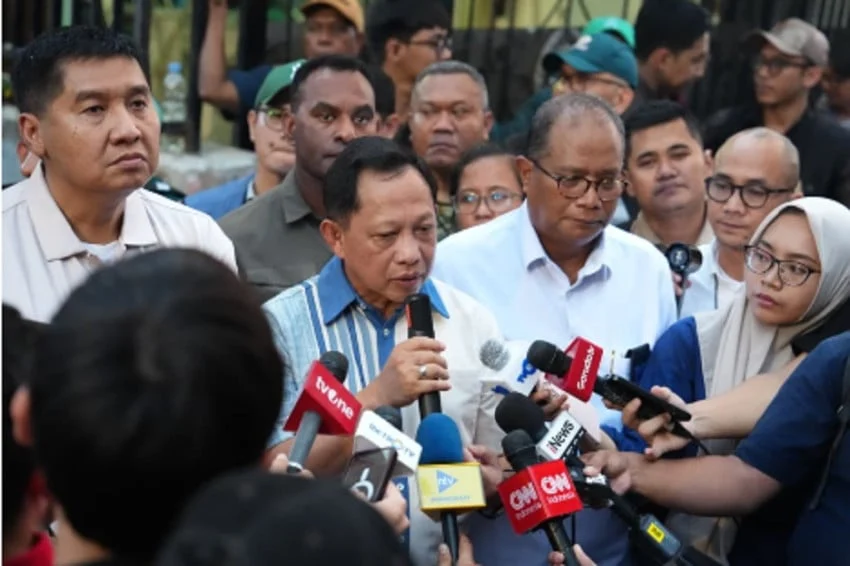
Minister of Home Affairs Muhammad Tito Karnavian has officially reaffirmed the Ministry of Home Affairs’ (Kemendagri) commitment to accelerating the implementation of the "3 Million Houses" program, a cornerstone initiative of President Prabowo Subianto’s administration. Speaking during the "Home Renovation and Police Health Service" event held in Kampung Ambon, Cengkareng, West Jakarta, on Saturday, October 24, 2026, the Minister emphasized that the government is prioritizing the streamlining of regional regulations to ensure that low-income families (MBR) can secure decent, affordable housing.
This strategic push comes at a critical juncture for Indonesia’s infrastructure development, as the government seeks to address a persistent housing backlog that has hindered social mobility and public health for decades. By simplifying bureaucratic hurdles at the local government level, the Ministry of Home Affairs aims to catalyze construction and facilitate the rapid scaling of housing projects across the archipelago.
The Magnitude of the Housing Crisis in Indonesia
The urgency of the "3 Million Houses" program is rooted in stark statistical realities. According to data from the Ministry of Public Housing and Residential Areas (PKP), the current housing backlog—the gap between the total number of households and the supply of available, livable housing units—stands at approximately 12.7 million units. Minister Tito Karnavian noted that nearly 30 million families in Indonesia currently either lack home ownership or are living in substandard conditions that fail to meet basic sanitation and safety standards.
This crisis is not merely a matter of shelter; it is a fundamental challenge to the nation’s human capital development. Inadequate housing is directly correlated with poor health outcomes, lack of educational continuity for children, and decreased economic productivity. By addressing this, the government views the housing initiative as a primary lever for poverty alleviation and long-term social stability.
Restructuring for Greater Focus
The recent administrative restructuring, which saw the separation of the Ministry of Public Works and Housing (PUPR) into distinct entities, including the newly formed Ministry of Housing and Residential Areas (PKP), marks a shift in the state’s strategic focus. Historically, the massive scope of public works—encompassing roads, dams, and bridges—often overshadowed the nuances of housing policy.
By isolating the Ministry of Housing and Residential Areas, the administration aims to create a dedicated bureaucracy capable of tackling the unique challenges of urban land acquisition, construction permits, and financing models specifically tailored for the lower-income demographic. Minister Tito Karnavian signaled that the Ministry of Home Affairs would act as the primary liaison between the central government and local authorities, ensuring that the legislative environment at the provincial and regency levels is conducive to these new national objectives.
Simplifying Regulatory Hurdles: The Role of Kemendagri
The "3 Million Houses" program faces significant challenges in the form of local regulations, land acquisition disputes, and zoning complexities. In many regions, the process of obtaining building permits (PBG) and land titles has traditionally been slow, expensive, and prone to bureaucratic inefficiency.
Minister Tito Karnavian outlined that the Ministry of Home Affairs is currently conducting a comprehensive review of regional regulations (Perda) to identify and eliminate obstacles that prevent low-income households from accessing government subsidies. "We are committed to cleaning up the regulatory landscape. If a regional regulation hinders the realization of the President’s pro-people programs, we will facilitate the necessary revisions to ensure speed and efficiency," the Minister stated during his address in Cengkareng.
This effort includes:

- Fast-tracking permits: Coordinating with local agencies to reduce the time required for housing permit issuance.
- Zoning alignment: Ensuring that local spatial planning (RTRW) accommodates high-density social housing projects.
- Incentivizing local participation: Encouraging regional governments to provide tax breaks or land subsidies to developers who focus on the MBR segment.
The Kampung Ambon Initiative: A Model for Grassroots Development
The event at Kampung Ambon, which combined home renovations with public health services, served as a microcosm of the government’s integrated approach. The presence of police in community-led housing improvements highlights the multi-stakeholder strategy being employed. By involving local law enforcement and community leaders, the government aims to create a safer and more stable environment for housing, which is often a prerequisite for infrastructure investment in previously underserved urban areas.
This grassroots approach is expected to be a recurring theme in the "3 Million Houses" program. By engaging local communities directly, the government intends to build social capital alongside physical infrastructure. The police health service aspect of the event further underscores the holistic view that housing is just one component of a broader effort to improve the quality of life for the urban poor.
Economic Implications and Macroeconomic Stability
The ambitious target of constructing 3 million houses is expected to have a profound ripple effect on the national economy. The construction sector is one of the most significant labor-intensive industries in Indonesia. The scale of this program will likely stimulate demand for raw materials—such as cement, steel, and bricks—while creating hundreds of thousands of jobs for construction workers, architects, and urban planners.
Economists have observed that the housing sector is a "multiplier industry." For every dollar invested in housing, there is a corresponding increase in demand for household goods, utilities, and services. If successfully implemented, the program could contribute significantly to the national GDP growth targets for the 2026-2027 fiscal years. However, the success of this stimulus depends heavily on the ability of the government to maintain low interest rates for subsidized mortgages, such as the KPR-FLPP (Housing Financing Liquidity Facility).
Challenges and Future Outlook
Despite the enthusiasm, experts warn that the road to 3 million units is fraught with obstacles. Land scarcity in major metropolitan areas like Jakarta, Surabaya, and Medan remains a primary hurdle. As land prices continue to appreciate, building affordable housing in proximity to jobs and transportation hubs becomes increasingly difficult.
Furthermore, the coordination between the central government and local administrations is often the "weak link" in Indonesian policy implementation. While the Minister of Home Affairs holds authority to guide regional policy, local autonomy remains a significant factor. Achieving total synergy will require constant monitoring, digital integration of permit systems, and, in some cases, the use of financial incentives to reward regions that meet their housing targets.
Looking ahead, the Ministry of Home Affairs plans to establish a national monitoring dashboard to track the progress of housing projects in real-time. This digital oversight mechanism will allow the central government to identify bottlenecks in specific regions immediately and deploy technical assistance to resolve them.
A Vision for an Equitable Future
The "3 Million Houses" program represents more than just brick and mortar; it is a test of the government’s ability to deliver on a high-stakes campaign promise that directly impacts the daily lives of the Indonesian populace. President Prabowo’s focus on the "small people" (rakyat kecil) is the guiding philosophy here. By removing the bureaucratic barriers that have long kept low-income families in cycle of instability, the administration hopes to foster a more resilient middle class.
As Minister Tito Karnavian emphasized, the state’s duty is to ensure that the fundamental human need for shelter is met through streamlined, efficient, and transparent governance. With the regulatory groundwork being laid by the Ministry of Home Affairs and the focused mandate of the Ministry of Housing and Residential Areas, the coming years will be critical in determining whether this grand vision can be translated into the reality of millions of new, sustainable, and dignified homes for the Indonesian people.
The progress of this initiative will be watched closely by stakeholders across the construction, finance, and social welfare sectors. If the government can maintain its current momentum, the "3 Million Houses" program could well be remembered as a transformative chapter in the history of Indonesian social policy, setting a new benchmark for how a developing nation tackles the complexities of rapid urbanization and social inequality.