
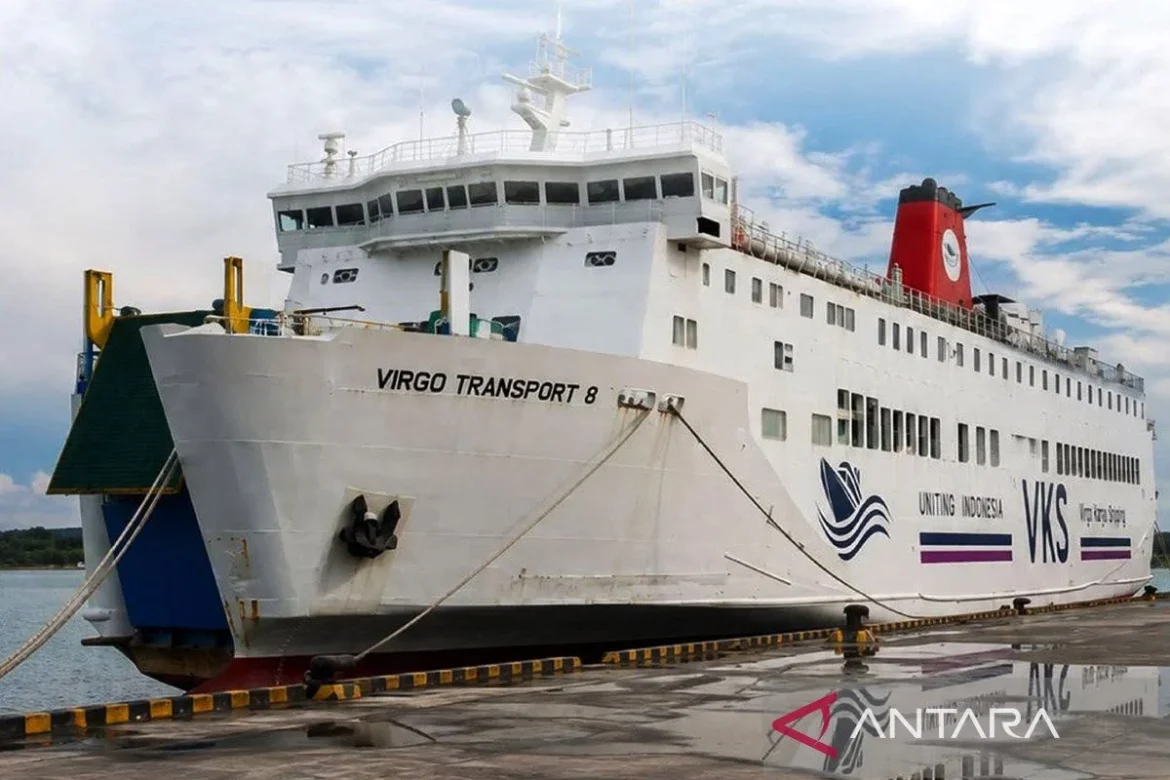
The waters of the Java Sea have once again borne witness to a harrowing maritime disaster following the tragic capsizing of the inter-island passenger and vehicle ferry KMP Virgo Transport 8. The vessel, which was operating along a vital maritime corridor connecting the island of Java to Kalimantan, encountered catastrophic weather conditions during a routine voyage from Surabaya to Banjarmasin. As a massive multi-agency search and rescue (SAR) operation enters its critical phases, the incident has sent shockwaves through Indonesia’s transportation sector, renewing urgent discussions regarding maritime safety protocols, extreme weather navigation, and the operational oversight of aging fleets in archipelagic waters.
Carrying a total of 243 souls on board—comprising 213 passengers and 30 dedicated crew members—alongside 89 diverse vehicles, the ferry became the focal point of an immense emergency response after disappearing from radar screens over the weekend. While initial rescue efforts have successfully pulled dozens of survivors from the turbulent waves, the fate of nearly 130 individuals remains unknown, prompting an unprecedented mobilization of naval assets, aerial support, and civilian vessels to scour the vast expanse of the Java Sea.
A Vital Inter-Island Lifeline Plunges into Crisis
KMP Virgo Transport 8 served as an essential economic and logistical bridge within Indonesia’s extensive maritime transportation network. Connecting the bustling industrial port of Surabaya in East Java with the regional hub of Banjarmasin in South Kalimantan, the vessel was designed to accommodate not only civilian travelers but also commercial trucks, private automobiles, and vital cargo necessary for regional trade.
Built originally in Japan in 1987 before eventually being acquired by PT Virgo Karya Shipping for Indonesian domestic waters, the ship represented a common archetype of older tonnage utilized heavily across Southeast Asian archipelagoes. While maritime experts continually emphasize that a vessel’s chronological age alone cannot determine its seaworthiness, incidents of this magnitude invariably ignite rigorous scrutiny over structural integrity, compliance with international and national safety standards, dynamic stability under heavy loads, and the rigorous enforcement of weather-restriction clearances prior to departure.
The ship departed from Surabaya on Saturday, September 12, 2026, under conditions that initially permitted transit, but rapidly deteriorated as the vessel pushed deeper into the open waters of the Java Sea.
Detailed Chronology of the Disaster
The sequence of events leading up to the disaster unfolded rapidly over the course of a terrifying evening, tracing a path from routine navigation to an all-out maritime emergency.
According to data compiled from the Class A Search and Rescue Office in Banjarmasin, KMP Virgo Transport 8 officially set sail from Surabaya at approximately 10.13 GMT on Saturday. Its final stable position was tracked roughly 80 nautical miles away from the Basirih SAR Pier in Banjarmasin, placing it squarely in the unpredictable waters of the Java Sea.
As Saturday night progressed into Sunday, September 13, 2026, the meteorological environment deteriorated sharply. High winds, turbulent swells, and heavy squalls battered the vessel. Recognizing the escalating peril, the ship’s nakhoda (captain) initiated contact with company representatives around midnight, conveying growing concerns regarding the punishing weather conditions buffeting the hull and straining the cargo lashings.
The situation escalated from hazardous to critical within a matter of hours. At approximately 02.00 WITA on Sunday, the captain transmitted an urgent report indicating that the ship had developed a dangerous list—a severe, uncorrectable tilt that immediately threatened its stability. This distress communication proved to be the final direct transmission from the bridge. Shortly thereafter, all electronic communication ceased, and the vessel vanished from tracking systems.
The formal alarm was raised at approximately 4.10 WITA on Sunday when Yoel Rihi, the General Manager of PT Virgo, officially reported the loss of contact to the Banjarmasin SAR Office. The response was immediate. Search and Rescue authorities rapidly dispatched personnel aboard the rescue vessel KN SAR Laksmana 241 to the vessel’s last known coordinates. Concurrently, a coordinated inter-agency mobilization was activated, integrating resources from the Banjarmasin Port Authority (KSOP), the Indonesian Navy (TNI AL), the Water Police, the Banjarmasin Navigation District, Pelindo, and the vessel’s operating agents.
Subsequent aerial and surface sweeps eventually located the ill-fated ferry. Tragically, KMP Virgo Transport 8 was found floating partially submerged in a completely inverted position, with its hull facing the sky and superstructure submerged beneath the waves.
Massive Multi-Agency Rescue Operations Underway
The discovery of the capsized vessel triggered one of the largest maritime search and rescue operations in the region in recent years. By Monday, September 14, the operation had expanded dramatically, incorporating roughly 622 specialized personnel, 12 surface vessels, military warships, and dedicated search aircraft, including specialized Basarnas helicopters tasked with scanning wider perimeters for drifting survivors.
The hostile environment of the Java Sea—marked by lingering turbulent currents, low visibility during squalls, and floating debris—has significantly hampered recovery efforts. Despite these formidable obstacles, coordination among diverse maritime actors has yielded vital results.
In a testament to maritime solidarity, commercial vessels operating along the same shipping lanes have actively participated in rescue efforts. Notably, a Pertamina oil tanker operating in the vicinity diverted its course to assist in the emergency response, successfully pulling 16 survivors from the perilous waters and providing immediate medical stabilization before transferring them to shore authorities.
Latest operational updates indicate that out of the 243 individuals registered on the manifest, 108 survivors have been successfully rescued and brought to safety, while six individuals have unfortunately been confirmed dead. However, the most pressing humanitarian crisis lies in the ongoing search for the remaining 129 people, who are still officially classified as missing. Rescue teams continue to operate on a 24-hour rotation, balancing the delicate task of surface scanning with specialized underwater assessments of the inverted hull.
Investigating the Root Causes: Weather, Cargo, and Stability
As emergency responders fight against time to locate the missing, government regulators, transport ministries, and national safety investigators have launched comprehensive probes to determine the precise chain of events that caused KMP Virgo Transport 8 to capsize.
While early observations point heavily toward extreme weather phenomena and high-velocity sea swells as primary contributing factors, aviation and maritime safety authorities emphasize that a thorough disaster analysis must look far beyond meteorology. Investigators are expected to scrutinize several critical technical domains:
- Cargo Shift Dynamics: Given that the vessel was transporting 89 vehicles—ranging from commercial freight trucks to private cars—investigators must examine whether the violent rolling induced by heavy seas caused a catastrophic cargo shift. In roll-on/roll-off (Ro-Ro) vessels, the unauthorized or inadequate lashing of heavy vehicles is a historically documented catalyst for sudden, unrecoverable vessel list and subsequent capsizing.
- Watertight Integrity and Ballast Management: The performance of the ship’s internal watertight doors, bilge systems, and ballast tanks during the crisis will be rigorously evaluated. If water breached the vehicle deck or lower compartments, the resultant free-surface effect could rapidly compromise the vessel’s center of gravity.
- Operational Compliance: Regulatory bodies are reviewing pre-departure clearance logs, meteorological advisories issued to the captain prior to departure from Surabaya, and whether the vessel was operating strictly within its certified load limits and stability parameters.
- Structural Condition and Maintenance History: Though built in 1987, the regulatory adherence, periodic dry-docking reports, and structural maintenance records managed by PT Virgo Karya Shipping will be subjected to deep forensic auditing to ensure the vessel’s aging hull met all mandatory safety standards for domestic Indonesian passenger transport.
Broader Implications for Indonesian Maritime Safety
The tragedy of KMP Virgo Transport 8 serves as a stark, painful reminder of the inherent vulnerabilities facing archipelagic transportation networks. Indonesia, as the world’s largest island nation, relies heavily on maritime ferries to move millions of citizens and vast quantities of goods across expansive, often unpredictable marine zones.
Accidents involving inter-island ferries invariably spark intense policy debates concerning the modernization of domestic fleets, the strict enforcement of passenger manifest accuracy, the implementation of advanced satellite tracking and weather-warning systems, and the rigorous accountability of ferry operators regarding safety management systems.
For the families of the survivors and the 129 still missing, however, systemic policy debates take a backseat to the immediate anguish of uncertainty. As rescue ships sweep the rolling swells of the Java Sea under the direction of joint SAR teams, the nation watches with bated breath, hoping against hope for further miracles amid the wreckage of one of the worst maritime tragedies in recent memory. Investigations will ultimately yield answers regarding accountability and structural safety, but the immediate priority remains unwavering: finding the missing and bringing them home.
