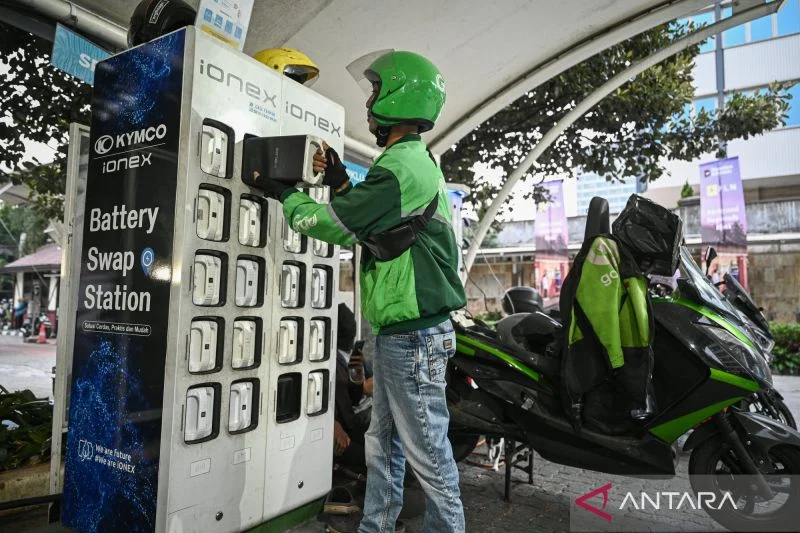
The landscape of electric vehicle adoption in Indonesia is undergoing a structural transformation, driven largely by innovative ownership frameworks designed to lower the barriers to entry for prospective buyers. Among the most impactful industry trends is the widespread adoption of the battery-as-a-service (BaaS) model, commonly referred to as the battery subscription or rental scheme. By decoupling the cost of the lithium-ion battery—historically the single most expensive component of an electric motorcycle—from the purchase price of the vehicle chassis, automotive manufacturers are offering significantly reduced upfront retail prices. As of September 2026, market data indicates that monthly battery subscription tariffs across major brands operating in Indonesia range dynamically from IDR 84,000 to IDR 250,000, depending heavily on the vehicle model, battery capacity, total quantity required, and the specific terms of the service provider.
This financial mechanism addresses one of the primary consumer hesitations in the electric two-wheeler market: capital expenditure and long-term battery degradation anxiety. By shifting the responsibility of battery maintenance, health monitoring, and eventual replacement to the manufacturer or service provider through a recurring rental agreement, brands are effectively mitigating obsolescence fears. As Indonesia pushes aggressively toward its national carbon neutrality goals, green transportation targets, and the reduction of fuel imports through mass electrification, understanding these comparative subscription plans has become essential for urban commuters, commercial fleet operators, and industry analysts alike.
Background Context and Evolution of the Electric Vehicle Market in Indonesia
The emergence of battery rental schemes did not occur in a vacuum; it represents the culmination of years of regulatory push, infrastructure development, and private sector innovation within Indonesia’s automotive sector. Over the past half-decade, the Indonesian government has consistently implemented and refined policies to accelerate the transition from internal combustion engine (ICE) vehicles to electric vehicles (EVs). Initiatives such as financial purchase incentives, conversion programs supervised by the Ministry of Education, Science, and Technology, and industrial roadmaps designed to domesticate the national battery supply chain have collectively catalyzed market growth.
Despite these government-backed interventions, market penetration encountered persistent friction points, prominently high initial purchasing costs. Lithium-ion battery packs account for roughly 40 to 50 percent of an electric motorcycle’s total production cost. Consequently, even with government subsidies, buying an electric motorcycle outright remained a significant financial hurdle for lower-to-middle-income consumers and commercial ride-hailing drivers who operate on tight cash flows.
To overcome this economic bottleneck, automotive brands operating in the archipelago began adapting business models pioneered in international markets, tailoring them to local consumer behavior. The introduction of modular battery swapping infrastructure, combined with flexible subscription contracts, allowed manufacturers to market vehicles at a base price comparable to, or even lower than, conventional gasoline-powered scooters. By September 2026, this subscription-based ecosystem matured significantly, featuring structured tariffs, clearly defined degradation guarantees, and integration with digital payment ecosystems.
Detailed Breakdown of Major Brand Offerings in September 2026
Market competition has driven several prominent automotive and technology brands to introduce distinct battery subscription tiers. Examining the specific structures implemented by industry leaders such as VinFast, Polytron, and ALVA reveals how different manufacturers approach consumer affordability and operational flexibility.
VinFast: Ultra-Low Entry Thresholds
Vietnamese electric vehicle pioneer VinFast has established a strong presence in the Indonesian market by emphasizing affordability and aggressive pricing strategies. The company offers a dedicated battery subscription service tailored for three of its popular urban electric motorcycle models: the Evo, the Feliz II, and the Viper.
Under VinFast’s operational framework, customers who choose to purchase the vehicle chassis without owning the battery outright can enroll in a subscription plan starting at an economical rate of IDR 84,000 per month for a single battery setup. For models or usage patterns requiring higher energy output necessitating two batteries, the monthly tariff increases moderately to IDR 144,000. All three designated models utilize a dual-slot battery configuration housed securely beneath the vehicle seat, fully compatible with VinFast’s rapidly expanding network of public battery-swapping stations.
By maintaining a starting subscription fee of IDR 84,000, VinFast currently holds one of the lowest entry barriers in the Indonesian battery rental market. This pricing strategy is specifically engineered to capture price-sensitive commuter segments, including daily office workers and logistics couriers seeking predictable operational expenses.
Polytron: Balancing Affordability with Performance Guarantees
Local electronic and automotive heavyweight Polytron has structured its battery rental program to accommodate a diverse lineup ranging from daily commuter scooters to higher-performance electric motorcycles. The brand’s pricing model reflects the varying power demands of its vehicle catalog.
For consumers opting for the Polytron Fox 200, the monthly battery rental fee is set at IDR 125,000. Meanwhile, the higher-tier Fox 500 and the popular Fox R models are subject to a standard subscription fee of IDR 200,000 per month. Polytron has actively marketed these programs as a vital financial tool to minimize initial vehicle acquisition costs, positioning electric mobility as an accessible lifestyle choice rather than a luxury investment.
Crucially, Polytron differentiates its service through risk mitigation regarding battery lifespan. The company’s policy explicitly guarantees that if a subscriber’s battery experiences a natural degradation in storage capacity falling below 85 percent under normal operating conditions, the unit will be replaced free of charge in accordance with program regulations. This clause effectively eliminates consumer anxiety regarding the expensive prospect of post-warranty battery failure.
ALVA: Comprehensive Tiers via the BEBAS Program
ALVA, a prominent domestic electric motorcycle manufacturer known for its premium styling and robust performance, approaches the market through its proprietary BEBAS program, an acronym translating to the Battery Rental Subscription (Berlangganan Baterai Sewa). This initiative covers the brand’s flagship models, namely the ALVA N3 and the ALVA CERVO.
For the ALVA N3, the subscription framework offers flexible scaling: utilizing a single battery incurs a monthly fee of IDR 150,000, while operating with a dual-battery configuration costs IDR 250,000 per month. Similarly, the high-performance ALVA CERVO, which utilizes a dual-battery system to deliver superior acceleration and extended range, carries a flat subscription rate of IDR 250,000 per month. ALVA has structured these rates to be fully inclusive of applicable taxes, ensuring transparency in monthly budgeting for its consumer base.
Through the BEBAS scheme, ALVA ensures that consumers do not bear the capital burden of purchasing replacement batteries independently, allowing them to enjoy peak vehicle performance backed by continuous manufacturer support.
Comparative Financial Analysis and Total Cost of Ownership
While subscription fees ranging from IDR 84,000 to IDR 250,000 per month significantly reduce the upfront retail price of an electric motorcycle, financial analysts and industry observers emphasize that subscription costs represent only one variable in the broader Total Cost of Ownership (TCO).
When evaluating the economic viability of these schemes, consumers must calculate several cumulative financial components:
- Upfront Chassis Purchase Price: The reduced initial cost of acquiring the motorcycle without the battery asset.
- Monthly Subscription Tariffs: The recurring fixed fee paid to the manufacturer or service provider for battery access and maintenance.
- Electricity Charging Costs: Expenditures associated with home charging or public fast-charging grid usage.
- Maintenance and Servicing: Routine mechanical checks, brake servicing, tire replacements, and software updates.
- Vehicle Taxation and Insurance: Annual motor vehicle registration fees (STNK), administrative costs, and comprehensive insurance policies.
Comparing the monthly subscription outlay against the amortized purchase cost of buying a battery outright requires careful arithmetic. For instance, a delivery driver covering extensive daily mileage may find the battery rental scheme highly advantageous because intensive use accelerates natural battery wear; under a rental model, degraded batteries are routinely swapped or replaced by the provider, insulating the user from catastrophic replacement costs. Conversely, a casual user with low monthly mileage might find that purchasing the battery outright yields a lower cumulative cost over a multi-year ownership lifecycle.
Industry Implications and Stakeholder Perspectives
The expansion of battery rental models aligns closely with overarching national strategic goals. Representatives from the Ministry of Industry have repeatedly emphasized that growing the electric vehicle population—which recently surpassed 280,000 units nationwide—is a fundamental pillar in building a sustainable green ecosystem. Government initiatives, supported by legislative bodies such as the DPR RI, continue to push for the acceleration of the domestic battery manufacturing industry to secure a localized supply chain, reduce dependency on imported raw materials, and lower production costs across the board.
From an economic perspective, financial analysts note that subscription models democratize access to green technology. By transforming a capital expenditure (CapEx) into a predictable operating expenditure (OpEx), these programs mirror software-as-a-service or telecommunications frameworks that resonate strongly with modern consumers. Furthermore, commercial fleet managers and ride-hailing operators view battery swapping and rental networks as operational game-changers, eliminating vehicle downtime traditionally associated with hours-long plug-in charging sessions.
Consumer Guidance and Future Outlook
As the Indonesian electric motorcycle market continues its rapid maturation through late 2026, prospective buyers are advised to conduct thorough due diligence before committing to a specific ownership scheme. Because subscription fees, battery quantities, warranty stipulations, and swap network densities vary considerably across brands—ranging from VinFresh’s entry-level IDR 84,000 tier to ALVA’s comprehensive IDR 250,000 packages—consumers must evaluate their unique daily travel distances, charging infrastructure access, and long-term budgetary constraints.
Ultimately, the proliferation of battery subscription models signals a maturing automotive market that prioritizes consumer flexibility and risk-sharing. By lowering financial hurdles and embedding maintenance guarantees into recurring service contracts, manufacturers are successfully converting skeptics into active participants in Indonesia’s historic transition toward sustainable, electrified urban mobility.