
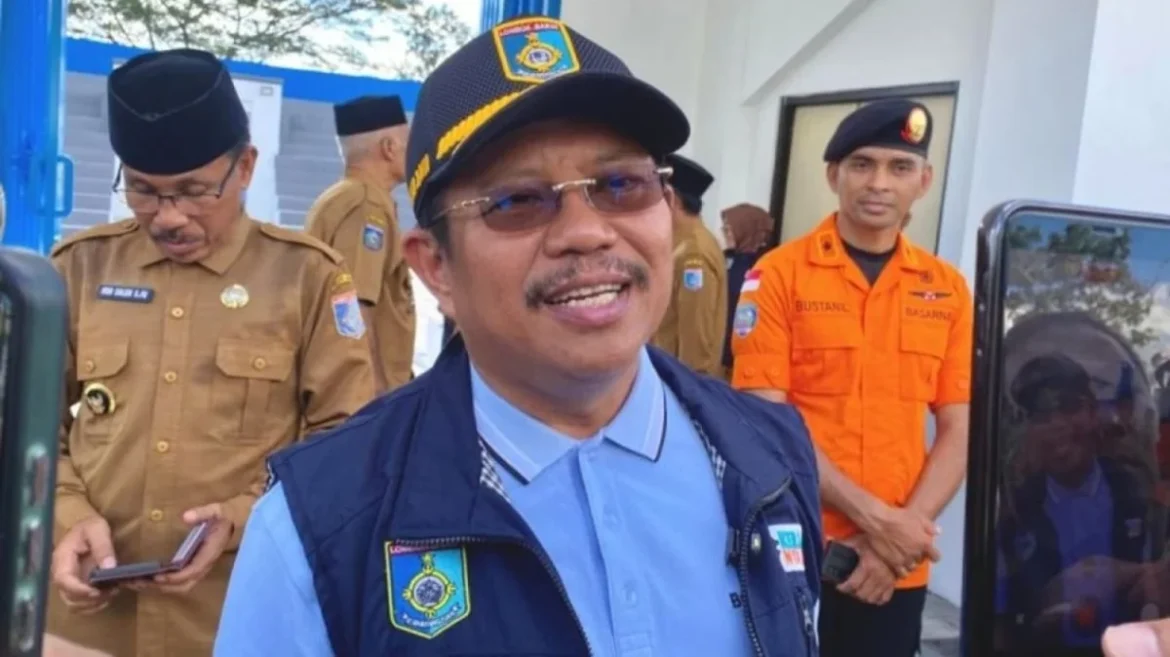
Jakarta, Indonesia – The Indonesian Corruption Eradication Commission (KPK) confirmed on Monday, July 20, 2026, that it has apprehended Lalu Ahmad Zaini, the Regent of West Lombok, in a high-profile sting operation. The anti-graft agency stated that the operation, which also involved 18 other individuals, is related to alleged illicit receipts linked to various public projects within the West Lombok Regency administration. This latest action underscores the KPK’s unwavering commitment to tackling corruption, particularly at the regional governance level, which remains a significant challenge to good governance and public trust in Indonesia.
Chronology of the Sting Operation and Apprehensions
The dramatic events unfolded throughout Monday, July 20, 2026, beginning with a swift and covert operation by KPK investigators in West Lombok, Nusa Tenggara Barat (NTB). Acting on intelligence gathered over an extended period, the special task force moved to secure key individuals suspected of involvement in a corruption network.
Early on Monday morning, KPK teams simultaneously executed arrests at multiple locations across West Lombok. Among the first to be apprehended was Regent Lalu Ahmad Zaini, caught in what the KPK describes as an "Operation Tangkap Tangan" (OTT), or a direct sting operation. This method, a hallmark of the KPK’s enforcement strategy, involves catching perpetrators in the act of committing a crime, often exchanging money or illicit goods.
In total, 19 individuals were secured during the operation. These individuals reportedly comprise a mix of civil servants (Aparatur Sipil Negara – ASN) from the West Lombok Regional Government and private sector entities believed to be implicated in the alleged scheme. KPK spokesperson Budi Prasetyo confirmed the breadth of the operation, stating, "The parties secured include those from the West Lombok Regional Government and several from the private sector."
During the initial phase of the operation, investigators also seized crucial evidence. This included a substantial sum of money, reportedly hundreds of millions of Rupiah, along with various financial and project-related documents. "Up to this moment, the money secured amounts to hundreds of millions of Rupiah, and several other related documents," Prasetyo elaborated, emphasizing that these items would be critical to the ongoing investigation.
Following their apprehension, the 19 individuals underwent preliminary questioning in West Lombok. By late Monday afternoon, the KPK made the strategic decision to transport seven key individuals, including Regent Lalu Ahmad Zaini, to Jakarta for more intensive interrogation at the KPK’s Red and White Building. This move is standard procedure for high-profile corruption cases, allowing the commission to utilize its full investigative resources and ensure the integrity of the process away from local influences. The group was expected to arrive in Jakarta around 9:00 PM WIB (Western Indonesian Time) to commence what is anticipated to be a rigorous 24-hour examination period, during which their legal status would be determined.

Background on the Allegations: Project Kickbacks and Public Trust
The core of the allegations against Regent Lalu Ahmad Zaini and his associates revolves around the "receipt of funds related to projects" within the West Lombok Regency. This typically refers to a system of kickbacks, bribes, or illegal commissions exchanged for the awarding of public contracts, preferential treatment in procurement processes, or the facilitation of permits. Such practices undermine fair competition, inflate project costs, and ultimately divert public funds meant for development and public services into private pockets.
In Indonesia, regional heads, including regents and mayors, wield significant authority over local budgets, public procurement, and the approval of various development projects, making their positions particularly vulnerable to corruption. Projects often range from infrastructure development (roads, bridges, public buildings) to public services (health, education) and economic initiatives (tourism, agriculture), all of which involve substantial government spending. The alleged scheme in West Lombok suggests a systematic exploitation of this authority for personal gain, potentially impacting the quality and timely completion of vital public works in the region.
The financial scale of the seized evidence—hundreds of millions of Rupiah—indicates that the alleged corruption was not an isolated incident but potentially a widespread practice. Such illicit financial flows erode public trust in government institutions, distort economic development, and perpetuate a cycle of impunity if left unchecked. The KPK’s intervention serves as a critical mechanism to disrupt these networks and restore integrity to local governance.
The Role of the KPK in Indonesia’s Anti-Corruption Fight
The Komisi Pemberantasan Korupsi (KPK) was established in 2002 as an independent government agency with a broad mandate to prevent and eradicate corruption in Indonesia. Its formation was a direct response to widespread corruption that plagued the nation, particularly after the fall of the New Order regime. The KPK is renowned for its aggressive and effective approach, often utilizing sting operations (OTTs) to apprehend high-ranking officials and expose complex corruption schemes.
Over the years, the KPK has successfully prosecuted numerous governors, regents, mayors, ministers, and even members of parliament, earning a reputation as one of Indonesia’s most trusted public institutions. The agency operates with extensive powers, including the authority to investigate, prosecute, and even wiretap, making it a formidable force against corruption. Its operations are often high-profile, sending a strong message that no one is above the law.
Data from the KPK consistently shows that regional heads remain a significant target for anti-corruption efforts. As of recent years, dozens of governors, regents, and mayors have been ensnared in KPK operations, primarily for bribery, gratification, and abuse of power related to procurement and licensing. This trend highlights the systemic challenges in regional governance and the persistent temptation for those in power to leverage their positions for illicit financial gain. The West Lombok case, involving Regent Lalu Ahmad Zaini, adds to this growing list, further emphasizing the need for continuous vigilance and reform at the local level.

Official Statements and Next Steps
KPK spokesperson Budi Prasetyo provided key updates throughout the day, underscoring the commission’s methodical approach. "This case is suspected to be related to receipts made by the regent concerning projects in the West Lombok Regency environment," Prasetyo stated, clarifying the nature of the alleged offense. He also confirmed that the initial examination of the 19 individuals would be followed by more thorough investigations in Jakarta.
The seven individuals brought to Jakarta, including Regent Lalu Ahmad Zaini, will undergo intensive questioning over the next 24 hours. During this period, KPK investigators will delve deeper into their roles, verify the seized evidence, and gather additional information. Based on the findings, the KPK will then determine whether to designate any of the individuals as suspects. If sufficient evidence is found, formal charges will be prepared, and the case will proceed through the Indonesian legal system. The 24-hour window is critical under Indonesian law for the KPK to establish grounds for detention and formalize suspect status.
The KPK typically maintains a high level of secrecy around ongoing investigations to prevent interference and ensure the integrity of the process. Further details regarding specific projects involved, the identities of other alleged conspirators, and the exact mechanisms of the kickback scheme are expected to emerge as the investigation progresses and if suspects are formally named.
Broader Implications and Impact
The apprehension of Regent Lalu Ahmad Zaini carries significant implications for West Lombok, the broader anti-corruption fight in Indonesia, and public confidence in regional governance.
- Political Instability in West Lombok: The immediate consequence for West Lombok Regency will be political disruption. With the regent detained, an interim leader will likely be appointed, potentially leading to a period of administrative uncertainty and slowed decision-making on ongoing projects and public services. The reputation of the regional government will also suffer, affecting its ability to attract investment and secure partnerships.
- Erosion of Public Trust: Each high-profile corruption case, especially one involving a regional head, further erodes public trust in government institutions. Citizens, who rely on their elected officials for transparent and effective governance, become disillusioned when leaders are found to be engaging in illicit activities. This can lead to civic apathy and a perception that corruption is endemic.
- Reinforcement of KPK’s Mandate: Despite occasional political pressures and attempts to weaken its authority, the KPK’s continued success in conducting major sting operations reinforces its crucial role in Indonesia’s democratic framework. This operation sends a clear message that the fight against corruption remains a top national priority and that the KPK will continue to act decisively.
- Call for Systemic Reforms: The recurring nature of corruption cases involving regional heads highlights the need for more robust systemic reforms in public procurement, financial oversight, and ethical governance training for civil servants. There is an ongoing debate in Indonesia about how to prevent such abuses of power rather than merely prosecuting them after the fact.
- Economic Impact: Corruption in public projects not only diverts funds but also leads to substandard infrastructure, inflated costs, and a generally less efficient allocation of resources. For a region like West Lombok, which relies on sectors such as tourism and agriculture, the misdirection of development funds can hinder economic growth and limit opportunities for its citizens. The hundreds of millions of rupiah allegedly siphoned off could have been invested in schools, healthcare facilities, or vital infrastructure.
As the investigation into Lalu Ahmad Zaini and his alleged network unfolds, the nation will be watching closely. The outcome will not only determine the fate of the individuals involved but also contribute to the ongoing narrative of Indonesia’s struggle against corruption, a battle central to its aspirations for good governance and sustainable development. The KPK’s actions on July 20, 2026, serve as another potent reminder of the vigilance required to uphold integrity in public service.
