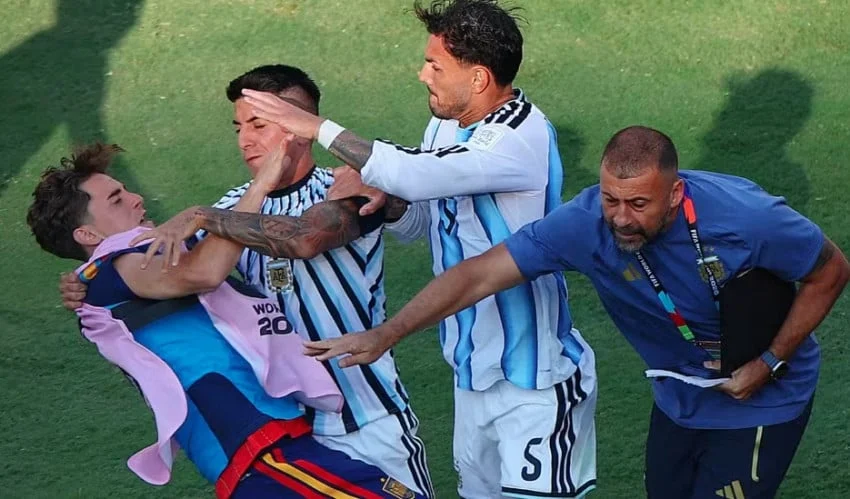
The sting of defeat in the 2026 FIFA World Cup final, a heart-wrenching 1-0 loss to Spain in extra time at MetLife Stadium, New Jersey, has been compounded by a looming threat of severe sanctions against the Argentine Football Association (AFA). FIFA has reportedly launched a comprehensive investigation into a series of incidents involving Lionel Scaloni’s squad throughout the knockout stages, with particular focus on the post-match melee that erupted immediately after the final whistle on Sunday, July 20, 2026.
The decisive moment of the final came in the 112th minute when Spain’s Ferran Torres netted the winning goal, securing their first World Cup title since 2010. However, the jubilation of the Spanish camp was overshadowed by unsportsmanlike conduct from several Argentine players, who engaged in heated confrontations with their Spanish counterparts. The intensity of the match, which saw Argentina’s Enzo Fernandez red-carded in the 93rd minute for a second bookable offense, seemed to spill over into uncontrolled aggression once the final whistle blew.
Leandro Paredes was shown a straight red card after the match had concluded for his involvement in a physical altercation with Spanish players Eric Garcia and Gavi. Further scrutiny has fallen upon Nahuel Molina, who was captured on camera allegedly throwing a punch towards Spanish captain Rodri. These incidents have placed Argentina under the microscope of football’s governing body, raising serious questions about the team’s discipline and adherence to FIFA’s Code of Ethics.
FIFA Investigates Multiple Incidents
The post-final scuffle is not the sole focus of FIFA’s inquiry. Reports indicate that the world football governing body is also reviewing the conduct of Argentine players following their hard-fought semi-final victory over England. After securing their place in the final, several members of the Argentine squad were seen unfurling a banner bearing the slogan "Las Malvinas son Argentinas," which translates to "The Falkland Islands are Argentine."
This provocative display is understood to be in potential violation of FIFA’s disciplinary regulations, which strictly prohibit the display of any political messages or symbols during international football competitions. The inclusion of such a message, particularly given the historical and ongoing territorial dispute over the Falkland Islands (known as the Malvinas Islands in Argentina), is likely to be viewed by FIFA as a serious breach of protocol, designed to incite or provoke rather than to celebrate sporting achievement.
A FIFA spokesperson, in a statement released shortly after the initial reports of investigations emerged, confirmed that an independent Disciplinary Committee is meticulously examining match reports and all surrounding circumstances before determining any further actions. The spokesperson emphasized FIFA’s commitment to upholding the integrity of the game and ensuring fair play, both on and off the pitch.
Potential Penalties and Their Implications
The immediate consequence for Enzo Fernandez and Leandro Paredes, both of whom received red cards, is an automatic minimum one-match suspension in any future competitive fixture for the Argentine national team. However, the severity of the sanctions could escalate significantly if the ongoing investigations reveal instances of violent conduct. FIFA’s disciplinary code outlines penalties for actions such as striking, kicking, elbowing, spitting at, or assaulting opponents. Such offenses can result in suspensions ranging from a minimum of three matches to considerably longer bans, depending on the gravity of the infraction and any aggravating factors.
Beyond individual player suspensions, the AFA itself could face substantial fines. These fines are often levied for a team’s failure to control its players or for bringing the sport into disrepute. The cumulative impact of these potential sanctions – player bans, fines, and possibly even more stringent measures such as stadium bans for future home matches or points deductions in future qualifying campaigns – could have a profound and lasting effect on Argentine football.
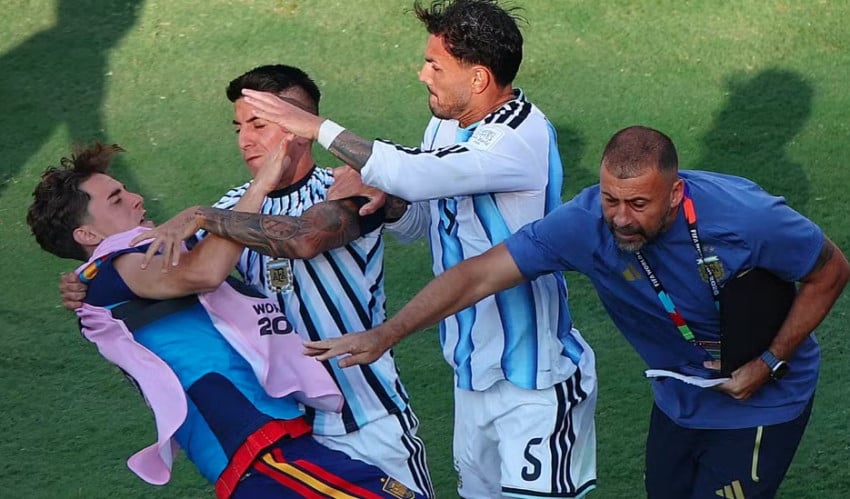
The weight of these potential repercussions is amplified by Argentina’s rich footballing history and its passionate fanbase. The nation has a deeply ingrained football culture, and any significant sanctions from FIFA would undoubtedly resonate deeply within the country, potentially leading to widespread disappointment and frustration among supporters who have long dreamed of World Cup glory.
A Chronology of Controversy
The journey to the 2026 World Cup final was marked by a series of high-stakes matches, each carrying significant emotional and physical toll. The timeline of events leading to the current FIFA investigation can be traced back through the knockout stages:
- Quarter-Finals: Argentina’s path to the final involved navigating a challenging quarter-final match, the details of which may also be under review for any disciplinary infringements, though no major incidents were widely reported.
- Semi-Finals (July 16, 2026): Argentina secured their spot in the final by defeating England in a tense semi-final encounter. It was in the immediate aftermath of this victory that the "Las Malvinas son Argentinas" banner was displayed by several players. This act, while celebrated by some within Argentina, immediately drew criticism from those who view it as a politicization of sport. FIFA’s regulations on political messaging have been in place for years, often citing the need to maintain neutrality and prevent the use of football as a platform for divisive political statements.
- Final (July 20, 2026): The final match against Spain was a fiercely contested affair. Enzo Fernandez’s red card in extra time marked a significant turning point, leaving Argentina a man down in a crucial phase of the game. The subsequent goal by Ferran Torres sealed their fate. However, the real controversy ignited post-match, with multiple altercations involving Argentine players. Leandro Paredes’ red card and Nahuel Molina’s alleged actions have become central to FIFA’s disciplinary review.
The fact that FIFA is investigating incidents from both the semi-final and the final suggests a pattern of behavior that the governing body may deem unacceptable. This dual focus could lead to a more comprehensive and potentially harsher set of sanctions than if only the final’s events were being scrutinized.
Supporting Data and Precedents
FIFA has a history of imposing significant penalties for disciplinary breaches. Notably, in past World Cups, teams have faced fines and suspensions for various offenses, including:
- Fan Misconduct: Fines have been levied against national federations for unruly fan behavior, including the throwing of objects onto the field or discriminatory chants.
- Player Misconduct: Individual players have received lengthy bans for violent conduct, serious foul play, or unsportsmanlike behavior that goes beyond the scope of standard yellow or red card offenses. For instance, Zinedine Zidane’s infamous headbutt in the 2006 World Cup final resulted in a red card and a subsequent ban from international matches.
- Political Statements: While less common for on-field actions, FIFA has taken action against teams for displaying political messages. The use of nationalistic or politically charged symbols is often met with strict enforcement of regulations designed to keep the sport apolitical.
The "Las Malvinas" banner, in particular, carries historical weight. The Falklands War of 1982 between Argentina and the United Kingdom remains a sensitive issue. FIFA’s stance on political expression in sport is generally one of strict neutrality, aiming to prevent the use of the global stage for territorial disputes or nationalistic fervor that could alienate other member nations or fan bases.
Broader Impact and Implications for Argentine Football
The potential sanctions facing Argentina extend beyond immediate disciplinary measures. A protracted investigation or a series of severe penalties could impact the AFA’s standing within FIFA and its ability to secure funding or host future events. The reputational damage could also affect player morale and future recruitment, as well as the perception of Argentine football on the international stage.
The intense pressure and passion inherent in World Cup finals can sometimes lead to emotional outbursts. However, FIFA’s mandate is to ensure that these emotions do not manifest as violence or blatant disregard for the rules. The investigation into Argentina’s conduct will serve as a crucial test case for FIFA’s commitment to upholding its disciplinary standards, particularly in high-profile matches where emotions run high.
The outcome of FIFA’s investigation remains to be seen. However, the detailed review of multiple incidents, coupled with the strict disciplinary code governing international football, suggests that Argentina is facing a significant disciplinary challenge. The "Albiceleste" faithful, who celebrated their nation’s triumph in 2022 and reached the final in 2026, now anxiously await FIFA’s decision, which could cast a shadow over their recent sporting achievements. The integrity of the game, and the adherence to its rules by all participants, will be at the forefront of FIFA’s deliberations.