JAKARTA — Economic experts have placed the strategic economic policies of the Prabowo-Gibran administration under intense scrutiny, specifically evaluating their heavy reliance on foreign and domestic investment alongside aggressive job creation frameworks to navigate persistent global economic headwinds. Amid a complex geopolitical landscape marked by supply chain disruptions, fluctuating commodity prices, and tightening global monetary policies, the current administration’s foundational economic blueprint seeks to insulate the domestic market while simultaneously accelerating growth through targeted capital inflows and employment generation.
The overarching strategy of the current government represents a deliberate continuation and refinement of previous structural reforms, adapted specifically to meet the pressures of a fragmenting global trade system. During a recent high-profile televised economic dialogue in Jakarta, prominent academics and policy analysts dissected the efficacy of these measures. Among them, University of Indonesia (UI) Economics Professor Telisa Falianty provided a comprehensive assessment of the nation’s macroeconomic fundamentals, pointing out that despite external shocks, key economic indicators remain resilient and reflect structural stability.
Macroeconomic Resilience Amid Global Uncertainty
According to Professor Falianty, Indonesia’s core macroeconomic metrics continue to perform within a healthy and stable corridor. National economic growth remains robustly anchored above the psychological and strategic threshold of 5 percent per year. This growth rate places Indonesia among the outperforming emerging markets in the G20, particularly at a time when several advanced economies are experiencing sluggish growth or entering mild recessions.
Concurrently, inflationary pressures have been successfully contained within the central bank’s target corridor, hovering stably around 3 percent. This controlled inflation rate is particularly significant as it protects the purchasing power of lower- and middle-income households from the erosive effects of runaway price increases on staple goods. Furthermore, the national open unemployment rate has experienced a downward trajectory, retreating to 4.65 percent. This reduction reflects gradual labor market absorption, driven by both formal sector expansion and targeted governmental interventions designed to match labor supply with evolving industry demands.
"The direction of the government’s current policy is already being felt directly by the public," Professor Falianty stated during the broadcast. She highlighted several proactive fiscal and administrative measures taken by the state, including active facilitation to attract high-value investments, strategic adjustments to public service costs, the stabilization of BPJS Healthcare contribution structures, and the deliberate freezing of electricity tariffs to prevent inflationary spikes. These measures are paired with rigorous fiscal discipline aimed at ensuring that state revenues and expenditures remain balanced, thereby safeguarding the fiscal space necessary to fund priority national programs without triggering unsustainable sovereign debt accumulation.
Microeconomic Realities and the Plight of the Middle Class
While macroeconomic indicators paint an encouraging picture, policymakers and economists alike acknowledge that microeconomic conditions present a more nuanced narrative. Over the past five years, official statistics indicate a steady reduction in absolute poverty rates and a marginal improvement in national income inequality metrics, as measured by the Gini coefficient. However, the day-to-day financial reality for ordinary citizens—particularly the burgeoning urban and semi-urban middle class—remains fraught with unique structural challenges.
In reflections surrounding the broader socioeconomic landscape, economists have noted that the middle class frequently shoulders a disproportionate share of the economic burden. While social assistance programs successfully cushion the bottom deciles of the population, and corporate tax incentives empower large enterprises, the sandwich generation and middle-income earners often navigate high living costs, housing affordability crises, and stagnant real wage growth in the formal sector.
Addressing these micro-level vulnerabilities requires more than broad-based monetary policy; it demands granular administrative execution. Professor Falianty emphasized the critical necessity of rigorous field-level supervision, especially regarding labor market programs. Initiatives designed to bridge the skills gap and generate employment—such as national vocational training and structured apprenticeship programs—must be thoroughly socialized and decentralized. Effective execution relies heavily on active collaboration between central government agencies, regional municipal governments (Pemerintah Daerah), and local mass media channels to ensure target demographics are fully aware of and able to access these opportunities.
"Looking at employment programs, for instance, we recently observed an apprenticeship initiative that generated an extraordinarily high level of public interest and participation," Professor Falianty noted. "This high demand clearly signifies that the younger generation desperately requires structured entry points into the professional workforce."
The Evolution of Indonesia’s Investment Strategy
The strategic pivot toward positioning investment as the primary engine of economic growth is not accidental. As commodity-driven export booms face cyclical normalization, Indonesia has actively pursued a policy of downstreaming (hilirisasi) across various mineral and agricultural sectors. By shifting away from the export of raw unprocessed commodities toward domestic processing and manufacturing, the administration aims to capture higher value-added segments of global supply chains.
However, attracting foreign direct investment (FDI) and domestic direct investment (DDI) in an era of high global interest rates requires a competitive business climate. The government has leveraged structural reforms initiated under the Omnibus Law on Job Creation (UU Cipta Kerja) to streamline business licensing, reduce bureaucratic red tape, and offer targeted fiscal incentives for strategic industries such as electric vehicle (EV) manufacturing, green energy infrastructure, and digital technology hubs.
Despite these legislative frameworks, investors continuously evaluate subnational governance, regulatory predictability, and logistics efficiency. Analysts point out that sustained success in investment realization hinges upon continuous bureaucratic reform at both the central and regional levels. Ensuring legal certainty and maintaining infrastructure readiness across industrial estates outside Java will remain critical prerequisites for evenly distributing economic growth across the archipelago.
Chronology of Policy Implementation and Institutional Response
The current economic trajectory under the Prabowo-Gibran administration is the culmination of a multi-year policy evolution aimed at achieving structural transformation.
Phase One: Foundation and Legal Architecture (2020–2023)
The groundwork for the current investment-led strategy was laid with the passage of the Job Creation Law, followed by subsequent regulatory harmonizations designed to improve the ease of doing business. During this period, the state heavily prioritized infrastructure development—spanning toll roads, ports, and digital fiber optics—to reduce logistics costs and integrate regional markets.
Phase Two: Downstreaming and Export Control (2022–2024)
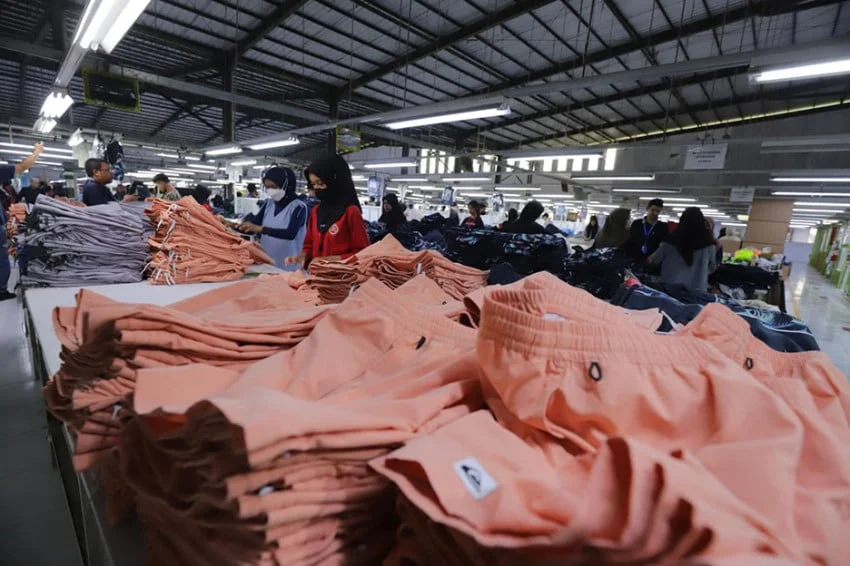
Indonesia expanded its raw material export bans, moving progressively from nickel to copper, bauxite, and agricultural derivatives like palm oil. This forced international manufacturing firms to establish processing plants locally, creating localized demand for technical labor and engineering services.
Phase Three: Consolidation and Social Cushioning (2024–Present)
Under the administration, economic policy has increasingly focused on balancing aggressive capital attraction with targeted social protection. Measures such as maintaining utility price caps, subsidizing healthcare contributions, and expanding youth employment and apprenticeship programs have been deployed to protect household consumption—which historically accounts for over 50 percent of Indonesia’s Gross Domestic Product (GDP).
Broader Implications and Future Outlook
The medium-term outlook for Indonesia’s economy will largely depend on the government’s ability to navigate external geopolitical risks while addressing internal structural bottlenecks. Global trade fragmentation, protectionist policies in major Western economies, and the trajectory of US Federal Reserve monetary policy pose continuous external risks to the rupiah and domestic capital markets.
On the domestic front, the success of the administration’s flagship programs—ranging from nutritional support initiatives to large-scale industrialization projects—will require meticulous fiscal management. Economists stress that maintaining investor confidence requires a delicate equilibrium between state-led strategic interventions and the preservation of a market-friendly regulatory environment.
Ultimately, the convergence of stable macroeconomic fundamentals, prudent fiscal policies, and targeted microeconomic interventions provides a solid foundation for Indonesia’s economic ambitions. However, translating high-level growth figures into tangible, daily welfare improvements for the wider populace will remain the ultimate benchmark of success for the Prabowo-Gibran administration’s economic blueprint. Continuous dialogue among academics, policymakers, and private sector stakeholders will be essential in identifying emerging friction points and ensuring that national development remains both inclusive and resilient in an unpredictable global economy.