
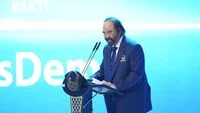
In a significant display of political alignment and strategic cooperation, Chairman of the NasDem Party, Surya Paloh, issued a formal call for President Prabowo Subianto to intensify efforts in consolidating the national government’s administration. This appeal was delivered during the commemoration of the NasDem Party’s 15th anniversary, held in Jakarta on the evening of Wednesday, November 11. Paloh’s address underscored the party’s unwavering commitment to the current administration while setting a high bar for the President’s performance in the coming years.
The event, which served as both a celebration of the party’s decade-and-a-half existence and a platform for outlining its political trajectory, saw Paloh emphasizing the necessity of unity within the executive branch. His remarks, characterized by a tone of both support and exhortation, highlighted the complexities currently facing the Prabowo administration and the importance of a cohesive government strategy to navigate them.
A Call for Stability and Resilience
During his speech, Surya Paloh publicly offered his prayers for President Prabowo Subianto’s health and wellbeing. However, the sentiment quickly pivoted to political substance. Paloh specifically requested that the President dedicate himself to more robust consolidation of his cabinet and the broader governmental apparatus.
"Our prayer is that you remain in good health, stay spirited, smile more, and successfully consolidate the ranks. Among those ranks, you will find NasDem," Paloh stated, signaling the party’s continued position as a reliable partner in the ruling coalition.
The request for "more smiling" serves as a subtle acknowledgment of the high-pressure environment surrounding the new administration. As President Prabowo steers the country through the initial phases of his term, political analysts note that public perception and the morale of the government bureaucracy are critical components of policy execution. Paloh’s comments suggest that a composed and unified leadership style is not merely a stylistic choice but a strategic imperative for the success of the current government.
Ensuring Administrative Success
One of the most striking aspects of Paloh’s address was his firm insistence that the Prabowo administration cannot afford to fail. Reflecting on the remaining three years of the current presidential term, Paloh framed the success of the administration as a matter of national interest rather than merely a party-aligned goal.
"I say it again: President Prabowo must not fail! Even the presidents who come after Prabowo must not fail to manage this country," Paloh asserted. This statement carries significant weight in Indonesian political discourse, reflecting a broader concern for long-term national stability. By explicitly mentioning future administrations, Paloh positioned the current government’s success as a foundational pillar for the long-term progress of Indonesia.
The sentiment resonates with ongoing discussions regarding Indonesia’s "Golden Era" goals, which aim to propel the nation into the top global economies by 2045. For these ambitious goals to be realized, the current administration must navigate immediate challenges, including economic recovery, inflation control, and the implementation of massive infrastructure and social programs.
NasDem’s Strategic Positioning and Contributions
The 15th anniversary of the NasDem Party serves as a historical marker for the organization. Founded in 2011, the party has evolved from a fledgling political movement into a significant power broker in Indonesian politics. Its participation in the current government is seen as a move toward stability, despite the party having taken a different political path during the previous election cycle.
Paloh highlighted that NasDem is prepared to contribute more substantively to the government’s agenda. He stressed that the nation’s potential can only be maximized if all political stakeholders remain consistent in utilizing their capabilities, fostering synergy, and doubling down on national consolidation.
"God willing, Indonesia is right to maintain its hope and great optimism for the future," Paloh remarked, attempting to cultivate a sense of national unity and confidence among his party members and the public.
Background and Political Context
The relationship between Surya Paloh and President Prabowo Subianto has undergone a notable transformation. Following the 2024 general election, which saw Prabowo Subianto secure the presidency, the political landscape shifted significantly. NasDem, which had previously supported a different candidate, made the strategic decision to join the government coalition.
This move was widely interpreted by political experts as a calculated effort to preserve political relevance and contribute to national stability. Joining the government coalition provides NasDem with access to key policy-making channels, while for President Prabowo, having the support of a well-organized party like NasDem enhances the government’s legislative influence in the House of Representatives (DPR).
The current political landscape is characterized by a "Big Tent" coalition approach, where the President seeks to minimize opposition to expedite the passage of legislation. Paloh’s recent comments indicate that he is comfortable with this arrangement, provided that the focus remains on effective governance.
Analysis of Implications
The call for stronger consolidation is not without its challenges. The Indonesian government is a complex structure involving a wide array of political parties, bureaucratic layers, and regional interests. Consolidating these diverse elements into a singular, cohesive force requires skillful political negotiation and diplomatic maneuvering.
Analysts point to several key areas where this consolidation will be tested:
- Legislative Efficiency: The ability of the President to pass key economic bills through a parliament with diverse party interests.
- Cabinet Performance: Ensuring that ministries operate with high efficiency and minimal overlap, particularly in sectors related to food security, energy, and infrastructure.
- Public Trust: Maintaining the confidence of the populace through visible improvements in living standards and public services.
If the Prabowo administration can effectively heed the advice of its coalition partners, it may avoid the legislative gridlock that often plagues multi-party systems. However, failure to maintain this consolidation could lead to internal friction, slowing down the government’s agenda during a critical window of development.
Data and Indicators of Success
The Indonesian economy, the largest in Southeast Asia, currently faces the dual challenge of global economic headwinds and domestic structural needs. According to data from the Ministry of Finance and Bank Indonesia, maintaining a steady GDP growth rate of above 5% is essential to support the government’s ambitious development agenda.
The government’s ability to consolidate its power will directly impact the implementation of flagship projects, such as the continued development of the new capital city, Nusantara, and the expansion of the "Free Nutritious Meal" program. These initiatives require massive budget allocations and seamless inter-agency coordination—exactly the type of consolidation that Paloh alluded to in his speech.
Looking Ahead
As the NasDem Party enters its 16th year, its role in the Indonesian political scene appears increasingly tied to the success of the current administration. Paloh’s directive to his party members is clear: they are expected to be an active, contributing part of the governing machinery.
The coming months will be a litmus test for both the administration and its coalition partners. As the global economic situation fluctuates and internal social demands grow, the government’s ability to "consolidate the ranks" will determine whether the current administration will be remembered for its transformative impact or its inability to overcome internal political friction.
In conclusion, Surya Paloh’s address at the NasDem 15th anniversary was a sophisticated blend of political loyalty and a stern warning about the stakes of the current term. By positioning NasDem as a supportive but demanding partner, Paloh is attempting to steer the government toward a more effective and unified path. Whether President Prabowo can translate this call into tangible administrative success remains one of the most critical questions in contemporary Indonesian politics. For now, the message from the NasDem leadership is unequivocal: national success is the only acceptable outcome, and consolidation is the essential mechanism to achieve it.
