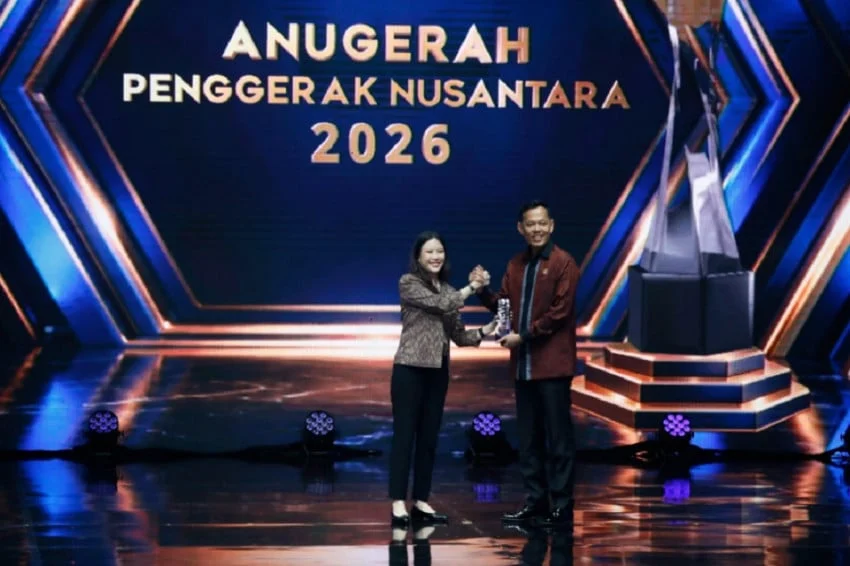
The capital city of Jakarta served as the backdrop for the prestigious Anugerah Penggerak Nusantara 2026, a landmark event hosted by iNews Media Group on Thursday, November 12, 2026. This high-profile gala served to honor ministries, government agencies, regional administrations, private sector enterprises, and individual national figures who have demonstrated exceptional dedication to the advancement of Indonesia’s socio-economic landscape. As the nation navigates the complexities of the mid-2020s, the ceremony highlighted the pivotal role of collaborative governance and private-public partnerships in fostering sustainable growth.
A Confluence of Visionaries and Change-Makers
The event brought together an assembly of influential leaders, ranging from policymakers in the national cabinet to pioneers in regional development. The underlying theme of the 2026 iteration of the awards was the acceleration of Indonesia’s transformation into a more integrated and competitive global player. By recognizing those who have pushed the boundaries of innovation in public service and industrial development, iNews Media Group sought to underscore the necessity of a unified national vision.
Angela Tanoesoedibjo, CEO of iNews Media Group, delivered a keynote address that emphasized the synergy required between disparate sectors to achieve national prosperity. She noted that the recipients were chosen based on rigorous criteria evaluating their impact on infrastructure, social welfare, and digital transformation. "The purpose of this recognition is to galvanize a spirit of progress across all layers of society," Tanoesoedibjo stated during her remarks. "When we honor those who have effectively translated policy into tangible impact, we provide a blueprint for others to follow."
The Strategic Importance of Regional Development
A significant portion of the evening’s discourse focused on the decentralization of economic power. Tanoesoedibjo highlighted that the future of Indonesia is not merely tied to the growth of major metropolitan hubs, but is inextricably linked to the vitality of regional economies. She pointed to the untapped potential in sectors such as sustainable ecotourism, local agricultural refinement, and small-to-medium enterprise (SME) digitalization as the true engines of the national economy.
Recent economic indicators suggest that regional growth—specifically in secondary cities—has become a critical driver of the national GDP. Since 2024, government policies have increasingly shifted toward incentivizing local infrastructure projects, such as the expansion of regional logistics networks and the electrification of rural areas. This strategic focus aims to reduce the economic disparity between the western and eastern provinces, a goal that was central to the achievements celebrated during the awards ceremony.
Contextualizing the Awards: A Chronology of Progress
The Anugerah Penggerak Nusantara has evolved into an essential calendar event for stakeholders in Indonesian development. Its trajectory reflects the nation’s shifting priorities:
- 2024 (Inaugural Year): The focus was primarily on post-pandemic recovery and the stabilization of national health systems. Awards were largely directed toward frontline institutions that managed the country’s health resilience.
- 2025 (Expansion Year): The scope widened to include digital transformation and the adoption of green energy initiatives. This marked the introduction of categories related to sustainable development goals (SDGs).
- 2026 (The Current Edition): The focus has shifted toward "Integrated Growth." This year’s criteria demanded proof of cross-sectoral collaboration, requiring nominees to demonstrate how their initiatives connected with broader national goals such as the "Indonesia Emas 2045" vision.
The 2026 selection process involved an independent panel of experts from academia, government oversight bodies, and the private sector. The evaluation period spanned from January to September 2026, during which nominees were vetted for their adherence to transparency, environmental compliance, and long-term socio-economic impact.
Infrastructure and Industry: The Pillars of Growth
During her address, Tanoesoedibjo articulated a vision where modern infrastructure serves as a bridge to equality. "We are seeing that infrastructure is not just about concrete and steel; it is about creating access—access to better healthcare, better education, and better markets," she observed.
Statistical data supports this sentiment. Infrastructure investment in Indonesia has grown by an average of 6.2% annually since the start of 2025. This investment has directly correlated with a reduction in logistics costs, which had long been a bottleneck for domestic industry. By integrating transport corridors with industrial zones, the government has enabled regional players to enter global supply chains with greater efficiency.
Furthermore, the emphasis on health and education as foundational pillars reflects the government’s push to improve the Human Capital Index. Awards in these categories were granted to institutions that implemented innovative digital education platforms or expanded healthcare coverage to remote, underserved regions. These initiatives represent a move toward a more resilient domestic workforce capable of thriving in a globalized, knowledge-based economy.
Official Responses and the Broader Implications
Representatives from the honored ministries expressed a collective sense of responsibility following the ceremony. A spokesperson for one of the recipient ministries noted that the award serves as both a validation of past efforts and a mandate for future accountability. "The Anugerah Penggerak Nusantara is a call to action," they said. "It reminds us that the metrics of success are measured in the tangible improvements to the quality of life for the average citizen."
From an analytical standpoint, the implications of this event are twofold. First, it fosters a healthy culture of competition among regional governments, as local leaders strive to emulate the success stories highlighted by the media group. Second, it serves as a signaling mechanism for foreign and domestic investors, showcasing regions and sectors that have demonstrated a high level of operational efficiency and governance maturity.
The recognition of corporate entities also signals a shift in the role of the private sector in Indonesia. No longer is the private sector seen merely as an economic participant; it is increasingly expected to act as a partner in national development, aligning its corporate social responsibility (CSR) programs with the government’s national development priorities.
The 10 Categories of Excellence
While the ceremony covered a wide array of achievements, the focus remained on the "Anugerah Penggerak Pelayanan Publik" (Public Service Mover Award), which highlighted the most significant advancements in bureaucratic reform. This category specifically looks for government agencies that have successfully implemented "One-Stop" digital services, significantly reducing the time and cost associated with business licensing and public administration.
Other categories included:
- Excellence in Sustainable Infrastructure: Awarded to projects that balance growth with environmental preservation.
- Innovation in Digital Economy: Recognizing firms that have successfully bridged the digital divide for rural populations.
- Regional Economic Pioneer: Celebrating local administrations that achieved significant GDP growth through local value-added industries.
- Champion of Human Capital Development: Honoring educational and vocational institutions that have successfully aligned their curricula with the needs of the modern workforce.
Conclusion: Sustaining the Momentum
As the ceremony concluded, the message from the leadership at iNews Media Group was clear: the path toward a developed Indonesia is a marathon, not a sprint. The Anugerah Penggerak Nusantara 2026 serves as a milestone in this journey, capturing the essence of a nation in the midst of a profound structural transition.
By shining a spotlight on these initiatives, iNews Media Group has not only documented the progress of the past year but has also set a high standard for what is expected in the years to come. As the winners return to their respective fields, the challenge remains to scale these localized successes into nationwide standards. The spirit of the 2026 awards is one of cautious optimism—a recognition that while the progress is substantial, the pursuit of a fully modernized and inclusive Indonesia requires sustained effort, collaboration, and a relentless focus on the needs of the populace.
The event, which concluded late Thursday, leaves behind a legacy of shared goals and a roadmap for those who aim to contribute to the nation’s ongoing development narrative. As Indonesia looks toward 2027 and beyond, the influence of these "Penggerak" (movers/drivers) will likely serve as the bedrock upon which the next phase of national progress is built.