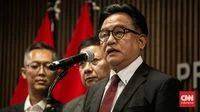
In a significant clarification regarding the mechanisms of Indonesia’s executive leadership, Coordinating Minister for Law, Human Rights, Immigration, and Correctional Affairs Yusril Ihza Mahendra has formally addressed the discourse surrounding the potential replacement of Vice President Gibran Rakabuming Raka. Speaking at the Presidential Palace in Jakarta on Thursday, November 12, the veteran constitutional law expert emphasized that the Indonesian legal framework does not explicitly mandate that a successor to the vice presidency must be drawn from the political coalition that supported the incumbent president during the general election.
The statement comes amidst evolving public discourse regarding the stability of the current administration and the theoretical procedures required should the vice presidency become vacant. While the conversation remains speculative, Minister Yusril’s intervention serves to ground the discussion in the existing constitutional and statutory reality, specifically referencing the Law on the People’s Consultative Assembly (MPR), the House of Representatives (DPR), the Regional Representative Council (DPD), and the Regional Legislative Councils (DPRD)—collectively known as the MD3 Law.
The Legal Basis for Succession
Under the current Indonesian regulatory framework, the process for filling a vacant vice presidency is a structured constitutional exercise. Article 8, Paragraph 2 of the 1945 Constitution of the Republic of Indonesia dictates that in the event of a vacancy, the President shall propose two candidates to the MPR. The MPR then convenes to select a new vice president within 60 days.
Minister Yusril highlighted that while political parties are naturally involved in the nomination process, the law does not impose a restriction that limits the President’s choice solely to members of the winning coalition. "Strictly speaking, there is no such prohibition," Yusril stated. He further underscored that the prerogative to nominate the candidates remains firmly with the President. "We respect and honor the fact that determining the vice president is the authority of the sitting president."
Technological Advancements and Executive Continuity
Beyond the question of succession, Minister Yusril provided critical insights into the continuity of governance, particularly regarding the execution of presidential duties while the head of state is abroad. A common point of confusion in Indonesian political discourse involves the "triumvirate"—the interim leadership structure composed of the Minister of Home Affairs, the Minister of Foreign Affairs, and the Minister of Defense—which assumes temporary duties if both the President and Vice President are incapacitated or abroad.
Yusril clarified that the modern era of hyper-connectivity has rendered the traditional concerns regarding executive absence largely obsolete. He noted that the President maintains the ability to direct the government from any location globally. "With current sophisticated communication technology, there is no obstacle for the President to run the government and issue direct orders and instructions from abroad," he explained.
Furthermore, he clarified the nature of the Vice President’s role in signing government decrees. According to Yusril, a Vice President does not possess independent decision-making authority in the absence of the President. When a Vice President signs a decree while the President is away, the document remains a "Presidential Decree," signed under the authority of the President, typically noted as "u.b." (untuk beliau/on behalf of). This distinction reinforces the unitary nature of the Indonesian executive branch, where the Vice President serves as a constitutional deputy rather than a separate executive authority.
Chronology and Political Context
The current administration, led by President Prabowo Subianto, entered office following a landslide victory in the 2024 general elections. The coalition, known as the Indonesia Onward Coalition (Koalisi Indonesia Maju), encompasses a broad spectrum of political parties. The discourse regarding a "replacement" for Vice President Gibran is largely theoretical, stemming from ongoing debates in the public sphere about governance stability and the rigorous demands of the office.
Historically, the process of replacing a Vice President in Indonesia is an exceedingly rare event. The most notable precedent occurred in 1973 following the death of Vice President Hamengkubuwono IX, and more recently, the transition of Megawati Soekarnoputri from Vice President to President in 2001 following the impeachment of Abdurrahman Wahid. These events highlight that while the mechanisms exist, they are utilized only under extraordinary circumstances.
Fact-Based Analysis: Implications for Governance
The clarification provided by Minister Yusril carries several important implications for the Indonesian political landscape:
- Presidential Prerogative: By affirming that the President holds the ultimate authority to propose candidates without being shackled by coalition-only requirements, Yusril has effectively granted the executive branch more flexibility. This reduces the influence of political parties in dictating the President’s choice during a potential succession crisis, potentially allowing for the selection of a technocrat or a figure of national consensus.
- Clarification of Executive Workflow: By demystifying the "u.b." (on behalf of) signature process, the government has provided clarity to the civil service and the public. This ensures that administrative continuity remains uninterrupted, even if the President is engaged in high-level international diplomacy abroad.
- Modernizing Governance: Yusril’s emphasis on digital communication as a valid tool for statecraft reflects a broader shift toward modernizing the Indonesian bureaucracy. It signals that the government views geographical location as secondary to the functional ability to communicate orders, thereby increasing the agility of the executive branch.
The Role of the MPR in Succession
While the President holds the power to nominate, the MPR remains the ultimate arbiter in the selection of a new vice president. This check-and-balance mechanism ensures that any change in the second-highest office in the land maintains democratic legitimacy. The requirement for the MPR to select a candidate within 60 days serves as a safeguard against prolonged power vacuums, ensuring that the state remains stable and functional.
Analysts note that Yusril’s comments also serve to preemptively manage political tension. By framing the selection as a presidential prerogative, he minimizes the potential for legislative gridlock before any such situation even arises. It shifts the burden of leadership onto the President, who must balance coalition demands with the national need for a competent, stabilizing deputy.
Future Outlook
As the administration continues its term, the legal interpretations provided by the Coordinating Minister serve as a foundational guide for constitutional practice. The focus remains on the stability of the administration and the seamless execution of the President’s agenda. While the discourse on succession remains a sensitive topic, the current administration has signaled a commitment to adhering strictly to the MD3 Law and the 1945 Constitution.
Minister Yusril concluded his remarks by reaffirming that the system of governance is robust enough to handle the transition of personnel without requiring a fundamental shift in policy or political direction. As Indonesia continues to navigate its role as a growing global power, the clarity of its constitutional processes remains a cornerstone of its domestic stability and international credibility. The government’s proactive stance in clarifying these protocols suggests a desire to maintain institutional transparency, ensuring that the public and political stakeholders understand the procedural safeguards in place for the nation’s highest offices.