
The persistent ecological and humanitarian crisis triggered by forest and land fires, commonly known in Indonesia as karhutla, has once again inflicted severe distress upon the populace of Central Kalimantan. As thick, hazardous haze blankets the region, restricting daily routines and posing critical health threats, collaborative relief efforts have scaled up to provide immediate refuge. In response to this urgent situation, Paragon Kahf has partnered with Youth Act Kalimantan, operating under the auspices of the Ranu Welum Foundation, to bolster the operational capacity of 25 Smoke-Free Safe Houses (Rumah Aman Asap) strategically scattered across Central Kalimantan. This coordinated intervention seeks to address the acute shortages of medical supplies, clean air facilities, and basic necessities faced by vulnerable residents and frontline volunteers.
The initiative bridges the gap between corporate social responsibility and grassroots humanitarian action, targeting communities where air quality indices have plummeted to hazardous levels. By equipping these 25 shelters with life-saving apparatuses and health commodities, the collaboration aims to mitigate the immediate health impacts of prolonged smoke exposure, which disproportionately affects children, the elderly, and individuals with pre-existing respiratory conditions.
Comprehensive Relief Distribution at Ground Zero
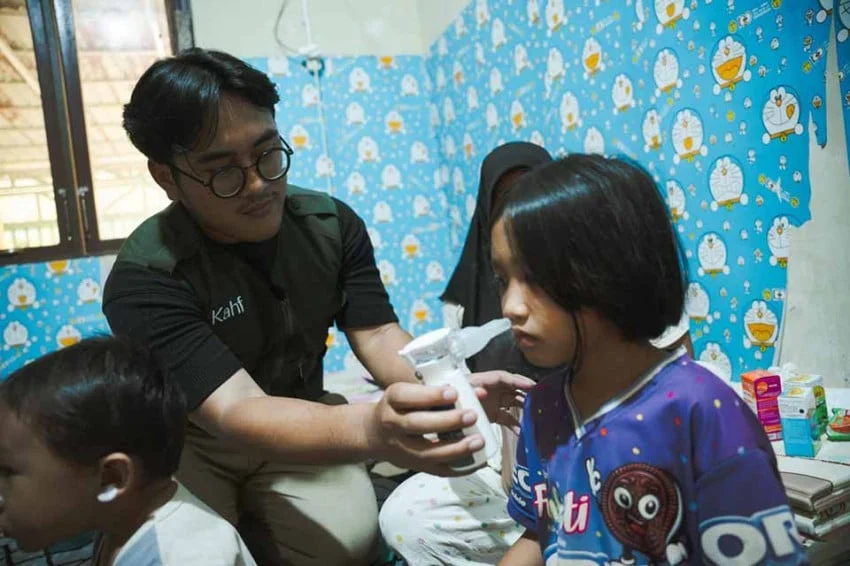
The formal handover of the humanitarian aid took place at the Smoke-Free Safe House located in Pilang Village, Pulang Pisau Regency, which serves as a vital sanctuary for locals seeking respite from the dense smog. The logistical support delivered by Paragon Kahf and Youth Act Kalimantan is comprehensive, designed to transform ordinary community spaces into functional, emergency medical outposts.
The distributed inventory includes medical-grade oxygen tanks, nebulizers, KF94 protective face masks, specialized respirator masks and filters, essential vitamins, and targeted pharmaceuticals. Furthermore, recognizing the indoor air pollution caused by the infiltration of external smoke, the organizations supplied air purifiers alongside gallons of clean drinking water and water pump equipment to ensure basic sanitation and hydration needs are met.
Pilang Village acts as a microcosm of the broader crisis in Central Kalimantan, where rural communities often lack immediate access to formal healthcare facilities. The establishment of these safe houses provides a localized buffer, allowing residents to access filtered air, undergo basic nebulization therapy, and receive preliminary medical evaluations before conditions escalate into severe acute respiratory infections (ARI).
Operational Scope and Impact Metrics
Since the intensification of the smoke crisis, Youth Act Kalimantan has maintained a robust presence across the affected districts. Official programmatic tracking reveals that as of late 2026, the network of 25 Smoke-Free Safe Houses has recorded approximately 2,500 visits from distressed residents. This extensive outreach is sustained by a dedicated cadre of 25 active volunteers who manage day-to-day operations, monitor air quality, distribute protective gear, and administer basic first aid.
While the visitor metrics reflect the total cumulative reach of Youth Act Kalimantan’s overarching mitigation program rather than the exclusive distribution footprint of the Paragon Kahf partnership, the synergy between the two entities has significantly amplified the operational capacity of each shelter. Volunteers, who often face physical exhaustion and respiratory strain while assisting displaced or affected families, receive critical logistical relief through the replenishment of consumable medical supplies and protective equipment.
Corporate Perspective and Partnership Rationale
Addressing the strategic importance of the collaboration, Dwi Lesmana, Head of Corporate Affairs at ParagonCorp, emphasized that the initiative represents a dual commitment: safeguarding civilian health and supporting the tireless efforts of volunteers operating on the front lines of the environmental disaster.
According to Lesmana, partnering with localized organizations that possess deep contextual understanding is paramount to effective disaster response. Youth Act Kalimantan has consistently demonstrated an intimate awareness of the ground realities and specific logistical requirements of each safe house. By aligning corporate resources with local expertise, ParagonCorp aims to alleviate the socio-economic and psychological burdens carried by communities living beneath the haze. This targeted approach ensures that the provisions dispatched directly answer the pressing needs reported by field coordinators rather than imposing generic relief packages that may miss local operational nuances.
Distinguished Figures and Civil Society Engagement
The distribution event in Pilang Village drew notable figures from the environmental and humanitarian sectors. Roro A. Garini, Executive Director of the Ranu Welum Foundation and coordinator of the Rumah Aman Asap network, was present alongside local women’s committee leaders who manage the daily operations of the Pilang facility. Their leadership underscores the grassroots community-led framework that sustains the safe houses, wherein local residents actively participate in managing health logistics and community care.
Adding a prominent voice to the event was Jerhemy Owen, a well-known environmental content creator whose public advocacy and direct involvement in fire-suppression efforts in Central Kalimantan have garnered significant national attention. Owen’s presence served to amplify public awareness regarding the ongoing ecological vulnerabilities of Indonesia’s peatland regions and the indispensable role of civil society coalitions in disaster mitigation. His involvement bridges digital advocacy with physical humanitarianism, drawing wider demographic engagement toward environmental preservation and disaster response in Borneo.
Chronology and Background of the Central Kalimantan Haze Crisis
The recurrence of forest and land fires in Central Kalimantan is deeply intertwined with seasonal weather patterns, prolonged dry spells, and historical land-use practices, particularly involving the drainage of vast carbon-rich peatland ecosystems. When these peatlands dry out, they become highly combustible, giving rise to subterranean fires that are notoriously difficult to extinguish and capable of generating dense, persistent smoke that lingers for months.
Historically, severe haze crises have disrupted regional stability across Southeast Asia, severely impacting public health, paralyzing transportation networks, and educational institutions, and contributing heavily to carbon emissions. The emergency response protocols implemented by civil society groups typically activate during the peak of the dry season when hotspot indicators surge. The establishment of localized safe houses has emerged over the past decade as a best practice in community-based disaster risk reduction, serving as an immediate life-support system while long-term firefighting and peat-rewetting efforts are underway by government and multi-agency task forces.
Socio-Economic and Public Health Implications
The prolonged exposure to particulate matter smaller than 2.5 micrometers (PM2.5) presents severe public health hazards. Medical consensus indicates that chronic inhalation of wildfire smoke can lead to diminished lung function, exacerbation of asthma and chronic obstructive pulmonary disease (COPD), cardiovascular complications, and systemic inflammation. For children, whose respiratory systems are still developing, and the elderly, the health toll can be long-lasting and, in severe cases, fatal.
Beyond immediate health concerns, the recurring haze crisis exerts a heavy socio-economic toll on Central Kalimantan. Agricultural productivity declines, outdoor labor is frequently suspended to protect worker health, and local commerce slows down significantly. The intervention by Paragon Kahf and Youth Act Kalimantan, while primarily humanitarian and medical in nature, indirectly stabilizes local resilience by keeping basic health infrastructure functional at the village level. By reducing the incidence of severe respiratory ailments, the safe houses help prevent the overwhelming of regional hospitals, which are often stretched to their limits during peak fire seasons.
Future Outlook and Mitigation Imperatives
As climate variability continues to intensify weather extremes across the Indonesian archipelago, stakeholder discussions increasingly emphasize the necessity of proactive adaptation alongside reactive emergency relief. Initiatives like the Paragon Kahf and Youth Act Kalimantan partnership provide an essential blueprint for corporate-NGO collaboration during climate-induced disasters. However, experts reiterate that sustainable resolution requires continued investment in peatland restoration, strict enforcement of anti-arson regulations, community-based fire prevention training, and the expansion of permanent health infrastructure in remote fire-prone districts.
The sustained operation of the 25 Smoke-Free Safe Houses in Central Kalimantan stands as a testament to the resilience of local communities and the efficacy of targeted solidarity. Through continued material support, volunteer dedication, and multi-sectoral partnerships, these safe houses remain beacons of safety, offering breath and hope to populations weathering the storm of environmental crisis.
