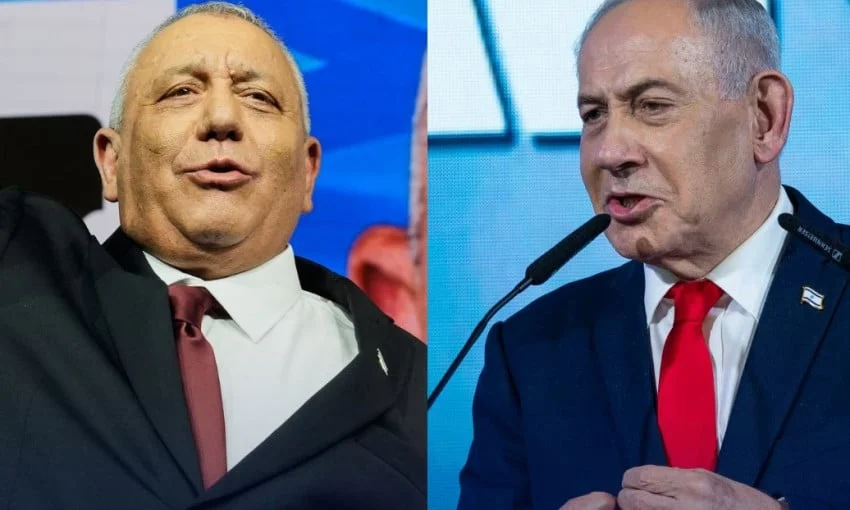
The political landscape of Israel stands at a critical juncture as the Central Election Commission processes the latest batches of ballots from the tightly contested national legislature. With 85.6 percent of the total vote officially counted, the preliminary tallies reveal a deeply polarized electorate and a fragmented parliament that could fundamentally alter the nation’s domestic governance and foreign policy trajectories. According to the updated figures released in Tel Aviv, the political bloc led by veteran leader Benjamin Netanyahu has secured 53 seats in the Knesset. Close behind is the opposing bloc spearheaded by Eisenkot, which has managed to capture 48 seats. In a notable development that underscores shifting voter dynamics and political mobilization, various Arab-led political factions have collectively amassed an impressive 19 seats, positioning themselves as potential kingmakers in the complex arithmetic of Israeli coalition-building.
The ongoing electoral exercise follows a turbulent period in Israeli politics characterized by successive rounds of voting, deep ideological divides, and intense scrutiny over security and governance. As the nation awaits the final certified results, political analysts, international observers, and regional stakeholders are closely examining what the impending government formation means for the fragile geopolitical equilibrium in the Middle East. While the immediate focus remains on the allocation of parliamentary seats, the broader implications extend far beyond domestic policy, touching upon long-standing conflicts, regional diplomacy, and the fundamental identity of the state.
Background Context of the Israeli Electoral System and Political Fragmentation
To understand the gravity of the current electoral outcome, one must examine the unique architecture of Israel’s parliamentary democracy. Operating under a nationwide proportional representation system with a low electoral threshold—currently set at 3.25 percent—the Knesset is inherently prone to fragmentation. No single political party has ever won an outright majority of 61 seats in the 120-member unicameral legislature since the founding of the state in 1948. Consequently, governance in Israel is invariably defined by coalition politics, requiring major parties to forge alliances with smaller factional partners, ranging from ultra-Orthodox religious groups to secular right-wing nationalists and, periodically, Arab-majority lists.
In recent years, this structural fragmentation has been exacerbated by deep ideological polarization centered largely around the personality and policies of Benjamin Netanyahu, Israel’s longest-serving prime minister. The political ecosystem has grown increasingly calcified into two opposing camps: those firmly aligned with Netanyahu and his right-wing, nationalist, and religious allies, and a diverse, ideologically eclectic anti-Netanyahu camp united primarily by the goal of unseating him. This dynamic has led to unprecedented political instability, resulting in multiple national elections within a compressed timeframe as coalitions routinely collapsed over budgetary disputes, judicial reforms, and security doctrines.
The emergence of Eisenkot as a prominent counterweight to Netanyahu introduces a distinct strategic dimension to the current race. Coming from a formidable military background as a former Chief of the General Staff of the Israel Defense Forces (IDF), Eisenkot has sought to appeal to voters disillusioned with the current administration’s handling of security, foreign relations, and internal social cohesion. However, the persistence of deeply entrenched partisan lines means that securing a stable, working majority will require extraordinary political maneuvering from whichever bloc ultimately attempts to form a government.
Chronology of Events Leading to the Current Vote
The path to the current electoral showdown has been paved by a cascade of domestic crises, regional escalations, and intense legislative battles. Over the past four years, Israel has navigated unprecedented challenges that severely tested its institutional resilience and social fabric.
The sequence of events began with the formation of the short-lived "change coalition" in 2021, an ideologically diverse government led initially by Naftali Bennett and later Yair Lapid, which briefly ousted Netanyahu after twelve consecutive years in power. This coalition, which for the first time in Israeli history included an independent Arab party—Ra’am—as a full coalition partner, sought to lower political tensions and address pressing socioeconomic issues. However, internal ideological contradictions and relentless pressure from the opposition eventually led to its collapse from within, triggering yet another early election cycle.
Subsequent electoral outcomes empowered Netanyahu to construct one of the most right-wing coalitions in the nation’s history, incorporating ultranationalist and far-right figures such as Itamar Ben-Gvir and Bezalel Smotrich. This administration immediately pursued an aggressive agenda, prioritizing controversial judicial overhauls that sparked mass nationwide protests, accelerated settlement expansion in the occupied West Bank, and intensified security confrontations across the Palestinian territories.
Throughout late 2023 and 2024, the cumulative pressures of regional warfare, economic strain, and deepening international isolation created severe cracks within the ruling coalition. Public dissatisfaction grew regarding security failures, hostage negotiations, and the overarching management of multi-front military engagements. Sensing vulnerability, opposition leaders and reform-minded military figures coalesced around alternative leadership structures, setting the stage for the current high-stakes parliamentary election. The campaign itself was fiercely contested, dominated by debates over national security, the future of the judiciary, the cost of living, and Israel’s standing in the international community.
Analysis from Experts and Regional Observers
The preliminary results have ignited intense debate among foreign policy experts, political scientists, and investigative journalists regarding the substantive difference between the competing political blocs. Weighing in on the electoral dynamics, prominent investigative journalist, author, and documentary filmmaker Antony Loewenstein offered a sobering assessment during an interview with international broadcasters. According to Loewenstein, while Netanyahu’s campaign rhetoric has frequently laid bare what he terms a "profound racism" toward the Arab minority within Israel, the alternative leadership represented by Eisenkot may not offer a transformative departure from established state policies.
"Regarding the major issues—the West Bank, Gaza, Iran, and relations with the wider Middle East—there is virtually no meaningful difference," Loewenstein stated. He elaborated that while the disastrous fallout from the policies enacted by Netanyahu and far-right figures like Ben-Gvir over the past four years cannot be overstated, a shift in executive leadership is unlikely to yield a fundamental transformation in core national security or territorial doctrines.
"Perhaps there will be cosmetic changes in the West Bank, such as the arrest of a few of the most violent settlers," Loewenstein noted. "However, fundamentally, they share a very similar worldview, which I believe is the concept of ‘Greater Israel,’ and that is deeply dangerous."
This analytical perspective highlights a pervasive skepticism among certain international analysts who argue that the structural imperatives of Israeli security policy—governed by a consensus on military dominance, regional deterrence, and opposition to a fully sovereign Palestinian state—tend to transcend individual electoral outcomes. Even within the more centrist or moderate factions of the Israeli political spectrum, support for unilateral withdrawal, comprehensive peace negotiations, or the dismantling of major settlement blocs remains politically marginal.
Potential Coalition Scenarios and Parliamentary Mathematics
As the Central Election Commission finalizes the count and political parties transition from the campaign trail to the backrooms of negotiation, several distinct coalition scenarios are beginning to emerge, each fraught with complex arithmetic and formidable political hurdles.
The first and most frequently discussed scenario involves the formation of a national unity government. Under this framework, the ideological friction between the Netanyahu bloc and the Eisenkot camp could potentially be sidelined in the interest of national stability, security management, and economic recovery. A unity government would theoretically bridge the gap between right-wing nationalists and centrist security hawks, creating a formidable parliamentary majority that would be insulated from the demands of the more radical fringe elements on both the extreme right and the religious right. However, historical precedents suggest that unity governments in Israel are notoriously fragile, often paralyzed by mutual distrust and competing ambitions for the premiership.
A second, more improbable scenario involves Eisenkot attempting to assemble a governing coalition that includes or relies upon the support of the Arab-led political parties, which have collectively secured 19 seats. For this pathway to materialize, Eisenkot would first need to secure internal consensus among the various factions within his own bloc, ensuring their willingness to accept a government that incorporates or depends on Arab political representation.
Yet, this prospect faces immediate and severe political roadblocks. Prominent figures within the broader anti-Netanyahu or centrist-right spectrum, including political leaders such as Avigdor Lieberman (Yisrael Beiteinu) and Naftali Bennett, have repeatedly and explicitly stated their refusal to join or support any coalition that relies on Arab political parties. Lieberman and Bennett’s steadfast opposition underscores the enduring potency of ethno-nationalist divides within Israeli politics, making a coalition reliant on Arab parliamentary support an exceptionally difficult, if not mathematically impossible, enterprise under current conditions.
Official Responses and Domestic Reactions
In the wake of the partial returns, political headquarters in Tel Aviv and Jerusalem have been a hive of frantic diplomatic activity. Representatives from the leading blocs have refrained from declaring definitive victory, emphasizing the need to wait for the final, certified tally from the Central Election Commission before making definitive statements or initiating formal coalition talks.
Spokespersons for Benjamin Netanyahu’s Likud party have emphasized the resilience of their electoral base in the face of intense media scrutiny and political opposition. They argue that the combined strength of the right-wing and religious parties reflects a democratic mandate for strong leadership, uncompromising national security policies, and the preservation of traditional Jewish values within the state. Party insiders maintain that Netanyahu remains uniquely positioned to navigate the complex geopolitical hazards facing Israel, pointing to his extensive experience in international diplomacy and defense management.
Conversely, representatives from Eisenkot’s camp and allied centrist factions have framed the election as a historic opportunity to restore institutional integrity, heal internal social fractures, and re-evaluate strategic priorities. Campaign organizers have highlighted the impressive turnout among moderate voters and expressed optimism that the final seat allocation will provide sufficient leverage to challenge the status quo.
Meanwhile, leaders of the Arab-majority parties have hailed their 19-seat bloc as a major victory for political mobilization and representation. Speaking to community leaders and supporters, several prominent Arab lawmakers stressed that their constituents have demonstrated an unwavering commitment to making their voices heard within the democratic process. They argued that regardless of which Jewish-majority bloc attempts to form the government, the substantial size of the Arab parliamentary contingent ensures that minority issues, socioeconomic disparities, and the pursuit of civil equality cannot be ignored by the incoming administration.
Broader Regional Impact and International Implications
The outcome of this electoral cycle carries profound implications for the wider Middle East and the international community’s engagement with Israel. For regional actors, including neighboring Arab states that have normalized relations with Israel under the Abraham Accords, as well as adversaries such as Iran and its regional proxies, the composition of the next Israeli government will dictate the tempo of regional diplomacy and conflict dynamics.
Western allies, particularly the United States and European Union member states, are monitoring the vote count with intense interest. International partners have grown increasingly concerned over the trajectory of the Israeli-Palestinian conflict, humanitarian conditions in Gaza, and the expansion of Israeli settlements in the West Bank. While diplomatic channels maintain robust support for Israel’s security, foreign ministries across Washington and Europe have frequently expressed unease over the influence of far-right figures within Israeli governance.
An administration heavily influenced by ultranationalist factions risks deepening diplomatic friction with traditional allies and complicating multilateral efforts to achieve long-term regional stability. Conversely, a government featuring centrist elements or operating under a broader unity framework might afford international diplomats a renewed window for engagement, particularly regarding humanitarian aid, regional security coordination, and potential pathways toward a revitalized peace process.
As election officials conduct final audits and verify provisional ballots, the nation waits with bated breath. The eventual configuration of the next Knesset will not merely determine who occupies the prime minister’s office; it will cast a long shadow over Israel’s domestic cohesion, its international standing, and the volatile geopolitical future of the entire Middle East.