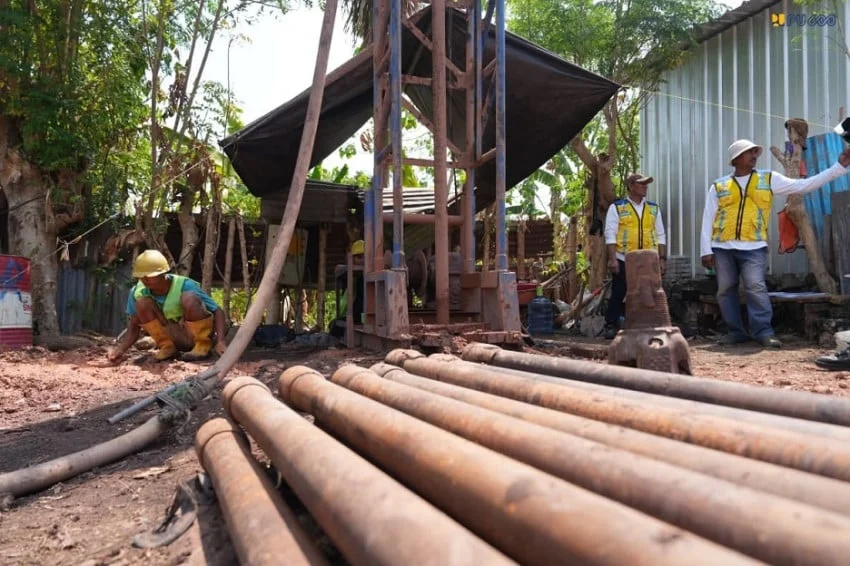
The Ministry of Public Works of the Republic of Indonesia has officially inaugurated the implementation of Building Information Modelling (BIM) technology, fully integrated with the ministry’s proprietary Common Data Environment (CDE), for the second phase of the Sekolah Rakyat (People’s School) infrastructure project. This digital transformation initiative marks a significant shift in how the government manages the lifecycle of public infrastructure, prioritizing transparency, cost efficiency, and structural accountability. By digitizing the workflow from the initial design phase to the operational maintenance of educational facilities, the Ministry of Public Works aims to establish a new benchmark for public construction projects, particularly those targeting vulnerable communities.
The Strategic Importance of BIM and CDE Integration
Building Information Modelling (BIM) is no longer merely a design tool; it is a comprehensive process that generates and manages digital representations of the physical and functional characteristics of places. In the context of the Sekolah Rakyat Tahap II project, BIM provides a multi-dimensional view of the construction process, integrating technical data—such as material specifications, structural load-bearing capacities, and spatial configurations—into a cohesive 3D model.
However, the real innovation lies in its integration with the Common Data Environment (CDE). The CDE serves as a centralized digital repository, acting as a "single source of truth" for all project stakeholders. By utilizing the CDE, the Ministry of Public Works ensures that consultants, contractors, auditors, and government supervisors are accessing the same, up-to-date information. This eliminates the traditional inefficiencies caused by siloed data, version control errors, and manual document exchanges. The integration facilitates real-time collaboration, where every decision made, every change order approved, and every safety report filed is logged within a transparent, immutable digital audit trail.
Ministerial Directive and Vision for Infrastructure
Minister of Public Works Dody Hanggodo has emphasized that this technological leap is not merely about modernization but about fulfilling a mandate for higher quality public services. Speaking on October 28, 2026, Minister Hanggodo highlighted that infrastructure for the education sector, particularly for children from extreme poverty backgrounds, must be constructed with the highest standards of safety and functionality.
"We are leveraging digital technology to drive transparency and efficiency in our educational infrastructure projects," stated Minister Hanggodo. "The provision of school buildings, dormitories, and sanitation facilities is a fundamental right. By utilizing BIM, we ensure that these buildings are not only constructed on time and within budget but are also durable and safe for the long term. Safety-first culture, coupled with high-level professional communication and collaborative digital environments, is the new standard for the Ministry of Public Works."
The Minister’s stance reflects a broader government directive to combat the "leaking" of project budgets—a historical challenge in large-scale public works—by using data-driven oversight. By linking the physical progress on-site to the digital model, the ministry can now detect discrepancies between planned designs and actual construction at a granular level, allowing for immediate corrective action before minor issues escalate into costly structural failures.
Context and Chronology: The Sekolah Rakyat Initiative
The Sekolah Rakyat initiative was launched to address critical gaps in educational access across Indonesia, particularly in remote or underserved areas. The project’s timeline has evolved through several key stages:
- Inception Phase (2025): The Ministry of Public Works identified hundreds of locations where basic educational infrastructure was either non-existent or dilapidated. The initial phase focused on emergency repairs and the construction of basic classrooms.
- Strategic Scaling (Early 2026): Following the successful pilot, the government expanded the program to include comprehensive facilities, such as boarding schools (asrama), advanced sanitation systems, and digital learning hubs.
- Digital Integration (Late 2026): The implementation of BIM and CDE was introduced as the standard for Phase II. This phase specifically targets the construction of 182 high-priority sites simultaneously, necessitating a robust digital management system to ensure consistency across the archipelago.
- Operational Monitoring (Future): Post-construction, the BIM data will be handed over to local authorities to facilitate predictive maintenance, ensuring that the facilities remain in top condition for years to come.
Technical Analysis: Bridging the Gap Between Plan and Reality
The application of BIM in the Sekolah Rakyat project functions through a multi-layer verification process. During the construction phase, project managers utilize mobile devices and site-scanners to capture current conditions, which are then superimposed onto the original 3D BIM model. This allows for an automated comparison against the "S-Curve"—a graphical representation of project progress over time.

If the physical progress of a wall or foundation differs from the BIM model, the CDE flags the discrepancy. This level of oversight is unprecedented in regional public construction. Furthermore, the system incorporates the "As-Built" documentation process, where the final building is handed over with a complete digital twin. This digital twin contains detailed information about every component of the building—from the type of cement used to the wiring diagrams behind the walls—which is invaluable for future renovations and facility management.
Socio-Economic Implications
The investment in digital construction technology for the Sekolah Rakyat project carries significant socio-economic weight. By ensuring that school buildings are finished on schedule and meet high-quality standards, the government is directly investing in the future of marginalized youth. The integration of technology reduces the risk of corruption and mismanagement, ensuring that public funds allocated for the poor reach their intended targets without being siphoned off through inflated costs or subpar materials.
Furthermore, the adoption of BIM by the Ministry of Public Works encourages the private sector—contractors and consulting firms—to upgrade their own capabilities. As the government mandates BIM for public tenders, the entire construction industry in Indonesia is being incentivized to transition from traditional, paper-based methods to advanced digital engineering. This creates a ripple effect, improving the overall competitiveness and skill level of the national construction sector.
Expert Perspectives and Industry Reactions
Industry analysts have praised the ministry’s decision to mandate BIM for the Sekolah Rakyat project. Engineering consultants suggest that the use of a Common Data Environment is the "missing link" that has plagued previous infrastructure projects. In many past instances, information was lost between the design phase and the construction phase, leading to frequent project delays.
"The move towards a centralized digital ecosystem for infrastructure is a hallmark of a modern, accountable administration," noted a structural engineering expert familiar with the project. "By using CDE, the ministry is reducing the ‘black box’ nature of public works. When every stakeholder has visibility into the project’s status, it fosters an environment of accountability. Contractors are more likely to adhere to schedules, and auditors have a clearer path to verify that the work done matches the budget allocated."
Challenges and Future Outlook
While the transition to BIM and CDE is highly beneficial, the Ministry of Public Works faces the challenge of training personnel and local contractors who may be accustomed to legacy workflows. The successful execution of the Sekolah Rakyat Phase II will be a litmus test for the ministry’s ability to scale this technology to even larger projects, such as national highways, bridges, and complex water infrastructure.
The ministry has indicated that it is developing a comprehensive capacity-building program to ensure that all regional offices and partnered construction firms are proficient in using the CDE. This long-term commitment to digital literacy is as important as the software itself. As the 182 sites for the Sekolah Rakyat project continue to develop, the data generated will serve as a foundational dataset for future national infrastructure projects.
In conclusion, the integration of BIM and CDE into the Sekolah Rakyat Phase II project is a bold step toward a more transparent and efficient public works sector. By prioritizing high-quality infrastructure for the most vulnerable segments of society, the Ministry of Public Works is demonstrating that technology, when applied with a focus on public good, can be a powerful catalyst for social development. As the project progresses toward completion, the reliance on digital accuracy and real-time collaboration will likely serve as a model for future government investments, reinforcing the commitment to "Safety First" and professional excellence in the construction of Indonesia’s future.