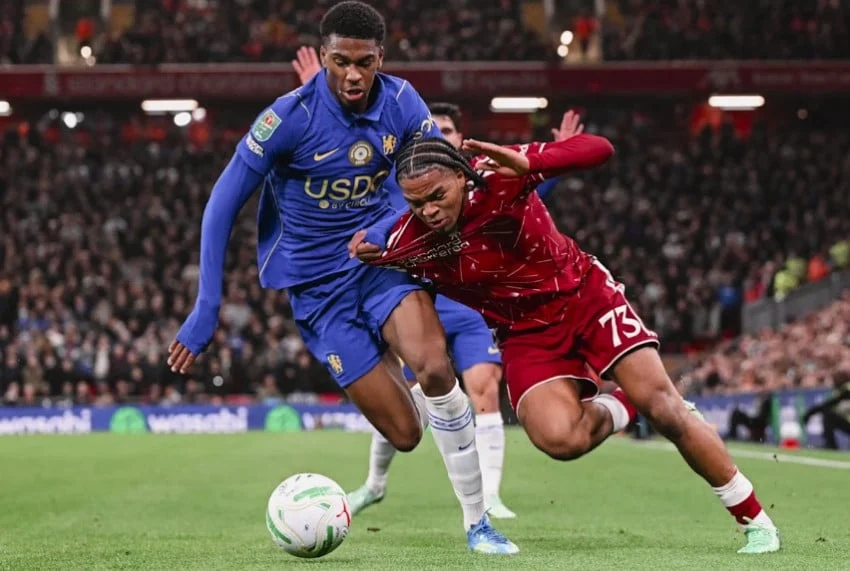
Liverpool secured a hard-fought passage to the quarter-finals of the 2026/2027 English League Cup, known as the Carabao Cup, after overcoming Chelsea in a tense penalty shootout at Anfield on Thursday, October 29, 2026. The match, which ended 1-1 after 120 minutes of play, was ultimately decided by a 6-5 shootout scoreline, with defender Joe Gomez emerging as the hero for the Merseyside club while Chelsea’s Wesley Fofana suffered the agony of a decisive miss.
A Tactical Stalemate at Anfield
The atmosphere under the Anfield floodlights was electric, as two of England’s most storied clubs clashed in the fourth round of the competition. The fixture, widely considered the tie of the round, lived up to its billing, featuring high-intensity pressing, tactical discipline, and the fine margins that often define knockout football.
Both managers, Arne Slot for Liverpool and his counterpart at Chelsea, opted for a blend of experienced starters and promising squad players, reflecting the current trend of utilizing the League Cup to balance competitive squads. From the opening whistle, the game was characterized by a rapid transition-based approach. Liverpool looked to utilize the width provided by their full-backs, while Chelsea sought to exploit the half-spaces behind the Liverpool midfield, relying on the creative instincts of their attacking cohort.
Chronology of the Encounter
The first half remained largely tactical until the 40th minute, when the deadlock was broken. Chelsea was awarded a penalty following a defensive error inside the Liverpool box. Morgan Rogers, who has been a standout performer for the London side this season, stepped up to the spot. With composure, Rogers slotted the ball past the Liverpool goalkeeper, giving the visitors a 1-0 lead and silencing the home crowd.
However, the lead was short-lived. Just three minutes later, in the 43rd minute, Liverpool responded with clinical efficiency. A corner kick led to a scramble in the penalty area, where a handball by Chelsea defender Wesley Fofana was spotted by the officiating team. Referee intervention confirmed the infringement, leading to a penalty for The Reds. Cody Gakpo, known for his reliability from dead-ball situations, took the responsibility. He dispatched the penalty with precision, leveling the score at 1-1 before the halftime whistle.
The second half and the subsequent extra time were marked by fatigue and defensive resilience. Both sides had opportunities to seal the victory in regulation time, but clinical finishing was absent. Chelsea’s defense, marshaled by Fofana, held firm against sustained pressure, while Liverpool’s backline successfully neutralized the threat posed by Chelsea’s counter-attacks. As the clock hit 120 minutes, the match moved into the high-stakes environment of a penalty shootout.
The Decisive Penalty Shootout
The tension in the stadium was palpable as the players moved to the Kop end for the shootout. Both teams displayed remarkable composure during the initial rounds, with almost every penalty finding the back of the net. The quality of the spot-kicks reflected the technical caliber of the squads, leaving the goalkeepers with little chance of intervention.
The turning point occurred in the final stages of the shootout. With the scoreline leveled at 5-5, Joe Gomez, often recognized more for his defensive utility than his goal-scoring record, stepped up to take his turn. He delivered a composed strike that found the corner of the net, putting the pressure firmly on Chelsea. Wesley Fofana, who had endured a difficult night having conceded the earlier penalty, faced the daunting task of keeping his side in the competition. However, his effort sailed high over the crossbar, signaling the end of Chelsea’s journey in the tournament and sending Liverpool through to the last eight.
Statistical Context and Historical Significance
This encounter serves as a testament to the current parity between the two clubs. Historically, Liverpool and Chelsea have shared numerous high-stakes battles in domestic cup competitions, including multiple finals at Wembley. This fourth-round fixture was a continuation of that fierce rivalry.

For Liverpool, the victory is a significant morale booster as they look to defend their domestic cup ambitions. The club has maintained a consistent trajectory in the Carabao Cup over the last five seasons, often utilizing it as a platform for young academy talents to integrate into the senior setup. Conversely, for Chelsea, the early exit represents a setback in their bid for silverware under their current management structure, which has placed a heavy emphasis on trophy-winning as a benchmark for progress.
Data from the match highlights the intensity of the contest:
- Possession: Liverpool held 54% of the ball, while Chelsea maintained 46%.
- Shots on Target: Both teams recorded 5 shots on target throughout the 120 minutes.
- Fouls: The game saw a total of 22 fouls, reflecting the aggressive nature of the midfield battles.
Post-Match Analysis and Implications
Following the match, observers noted that while Liverpool’s victory was narrow, it was deserved based on their control of the tempo during the second half. Managerial decisions were key, with substitutions providing the necessary energy to sustain the high press required to stifle Chelsea’s creative outlets.
For Chelsea, the loss highlights a recurring issue in their season: the lack of clinical finishing in crucial moments. While their build-up play has improved, the inability to convert possession into multiple goals remains a hurdle. Wesley Fofana’s involvement in both the conceded penalty and the final miss will likely be a point of discussion, though teammates and staff are expected to rally around the defender, noting that high-pressure shootouts are inherently unpredictable.
Looking Ahead to the Quarter-Finals
With the victory secured, Liverpool now advances to the quarter-finals of the 2026/2027 League Cup. They join a list of remaining contenders who will be looking to capitalize on the absence of other top-tier clubs that exited in the earlier rounds. The draw for the quarter-finals will be closely monitored, as the competition narrows down to the teams with the highest potential to reach the final at Wembley.
For Liverpool, this result is a step toward maintaining their status as one of the most successful teams in League Cup history. Their ability to win through a penalty shootout also provides valuable psychological experience for a squad that features several younger players. As the domestic season reaches its halfway point, the focus for the Reds now shifts back to their league campaign, buoyed by the momentum of this midweek success.
Broad Impact on the Premier League Landscape
The elimination of Chelsea from the League Cup may have unforeseen benefits for their Premier League campaign. With a reduced fixture list, the London side will have more time on the training pitch to refine their tactical systems and recover players from the fatigue of a congested calendar. This is particularly relevant as the winter period approaches, a time often associated with an increase in injuries and performance drops.
For the English football landscape, the match underscored the enduring importance of the Carabao Cup. Despite debates regarding the fixture list congestion in modern football, the passion displayed by both sets of players and the high turnout at Anfield confirm that the competition remains a vital artery of English football, providing a unique platform for high-stakes competition between the country’s elite clubs.
As the tournament progresses, the focus will undoubtedly shift to how Liverpool handles the added intensity of the quarter-final stage, and whether Chelsea can translate their tactical improvements into more consistent results in the league. For now, the Anfield faithful can celebrate another step forward, while Chelsea is left to reflect on a night of what might have been.