
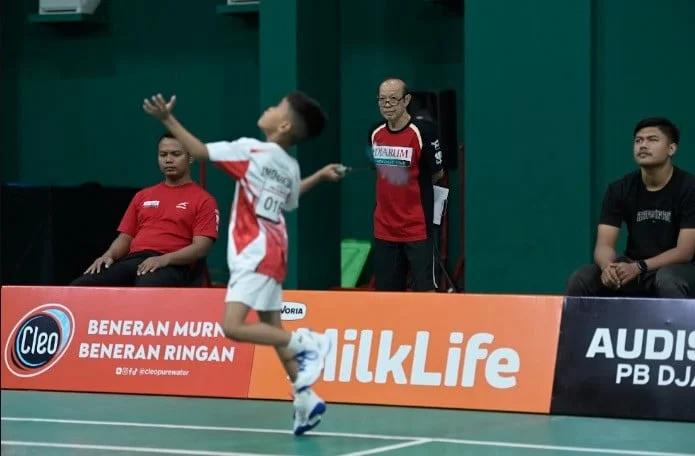
The atmosphere inside the GOR Djarum in Jati, Kudus, reached a crescendo of intensity this Saturday, September 12, 2026, as the Audisi Umum PB Djarum 2026 entered its pivotal fourth day. As the tournament structure narrows, the pressure on young badminton hopefuls has escalated, shifting from a broad test of skill to a microscopic evaluation of potential. With the coveted Super Tiket—the golden gateway to becoming a PB Djarum trainee—on the line, the event has transformed into a high-stakes arena where raw talent meets professional scrutiny.
The Mechanism of the Super Tiket and Talent Identification
The Audisi Umum PB Djarum operates on a dual-track selection process designed to ensure that no promising talent is overlooked. While the primary path to success is through the competitive tournament bracket, the organization maintains a specialized "talent scouting" system. This mechanism allows the official Talent Scouting Team to award Super Tikets to participants who may have faltered in the tournament phase but demonstrated exceptional athletic qualities, tactical awareness, or physical growth potential that aligns with world-class standards.
This dual approach is critical to the philosophy of PB Djarum, which has long viewed its scouting process not merely as a competition, but as a long-term investment in Indonesian badminton. The Talent Scouting Team consists of seasoned legends of the sport, including Hastomo Arbi, a stalwart of the 1984 Thomas Cup-winning team. These scouts are tasked with identifying the "X-factor" in children as young as 11, looking beyond simple victory counts to assess fundamental techniques, footwork, agility, and the psychological resilience required for the grueling life of a professional athlete.
Expert Insights: The Scout’s Perspective
Hastomo Arbi, observing the proceedings from the sidelines, provided a candid look at the rigorous evaluation criteria currently in play. According to Arbi, the scouting process is comprehensive, focusing on a blend of technical prowess and physiological readiness.
"I have already earmarked several names because their skill sets are truly impressive," Arbi noted. "When observing these young athletes, you notice differences in their court movement, their tactical decision-making, and their physical posture compared to their peers. However, the most vital component of our assessment is projection. We are not just looking at how they play today; we are analyzing whether their current foundation can be refined to mold them into world-class athletes in the future."
Arbi’s emphasis on "projection" highlights the foresight required in youth development. The transition from a local junior player to an international champion involves years of rigorous training, injury management, and psychological maturation. By identifying those with the inherent capacity for growth, the scouts ensure that the PB Djarum training camp is populated with individuals who possess the highest ceiling for professional development.
A Journey of Resilience: The Story of Jethro Alexander Kemas
The human element of the tournament was best exemplified by the performance of Jethro Alexander Kemas, a participant in the KU-11 (Under-11) boys’ category. Hailing from Palembang, Jethro’s journey through the audition process serves as a narrative arc for the perseverance required of these young hopefuls.
Jethro’s presence at the 2026 auditions is the culmination of a three-year effort. His debut in 2024 ended in a swift exit during the first round, a harsh introduction to the competitive reality of the sport. His 2025 campaign saw significant improvement, as he managed to reach the quarantine phase—a penultimate stage where candidates are monitored more closely—only to have his dreams dashed by illness, which hindered his performance and ultimately cost him a spot in the club.
Returning in 2026 with renewed vigor, Jethro faced a significant mental hurdle on Saturday: a match against the very opponent who had eliminated him in the previous year’s edition. In a display of growth and tactical maturity, Jethro secured a decisive victory.

"I really want to join PB Djarum so I can become a great player," Jethro shared following his match. "I also want to make my parents proud, as they have sacrificed so much for my training. I hope that this year, I can secure the Super Tiket and finally earn my place in the club." His story reflects the broader narrative of the auditions—a grueling test of character where the ability to overcome past failures is just as valued as natural aptitude.
Historical Context and The Evolution of the Audition
The PB Djarum Audisi Umum has evolved significantly since its inception. Originally serving as a localized talent search, it has expanded into a national scouting program that attracts thousands of young athletes annually from across the Indonesian archipelago. The event is widely regarded as the most significant pipeline for the Indonesian national team, given that a vast majority of the country’s Olympic and World Championship medalists have passed through the doors of the Djarum training facility in Kudus.
The 2026 edition reflects a continuation of the club’s commitment to scouting at a younger age. By targeting the KU-11 and KU-13 categories, the club aims to instill professional habits and fundamental techniques before athletes reach their mid-teens, a critical window for physical development. The structure of the event, which spans several days and includes rigorous physical, medical, and psychological screenings, is modeled after elite international sports academies.
Broader Implications for Indonesian Badminton
The implications of the current audition process extend well beyond the individual participants. As Indonesia seeks to maintain its status as a global badminton powerhouse, the sustainability of its talent pipeline is paramount. The PB Djarum scouting initiative acts as a vital mechanism to identify and cultivate athletes who can succeed the current generation of international competitors.
Data from the previous decade indicates that the effectiveness of this scouting model is high, with a strong correlation between successful audition candidates and later success in national-level tournaments. The professionalization of the scouting process—incorporating sports science, physical testing, and long-term psychological evaluation—has set a benchmark for other clubs in the region.
However, the process is not without its challenges. The intense pressure placed on young athletes is a subject of ongoing discussion within the sporting community. Critics and proponents alike debate the balance between fostering a competitive spirit and maintaining the well-being of child athletes. The current management of the audition, which emphasizes a "developmental potential" approach rather than just tournament results, is a strategic shift intended to mitigate some of these pressures by recognizing talent even when it does not result in a match win.
Looking Ahead: The Final Phase
As the tournament moves toward its conclusion, the focus will shift from the sheer volume of participants to the quality of the final candidates. The Talent Scouting Team is expected to hold a final evaluation meeting where the performance data from the last four days will be reviewed against the long-term strategic needs of the club.
The distribution of the Super Tiket is not guaranteed; it is a merit-based award that signifies that an athlete has demonstrated the "Djarum standard." For those who receive it, the journey is only just beginning. Admission to the club brings with it intense training regimens, academic integration, and exposure to elite coaching staff, all aimed at one goal: representing Indonesia on the podiums of the All England, the World Championships, and the Olympic Games.
As the sun sets on the GOR Djarum in Kudus, the eyes of the badminton world remain fixed on the young shuttlers who are currently defining their own futures. For scouts like Hastomo Arbi, the task remains clear: to find the next generation of icons, one match at a time, ensuring that the legacy of Indonesian badminton remains firmly secured for the next decade.
