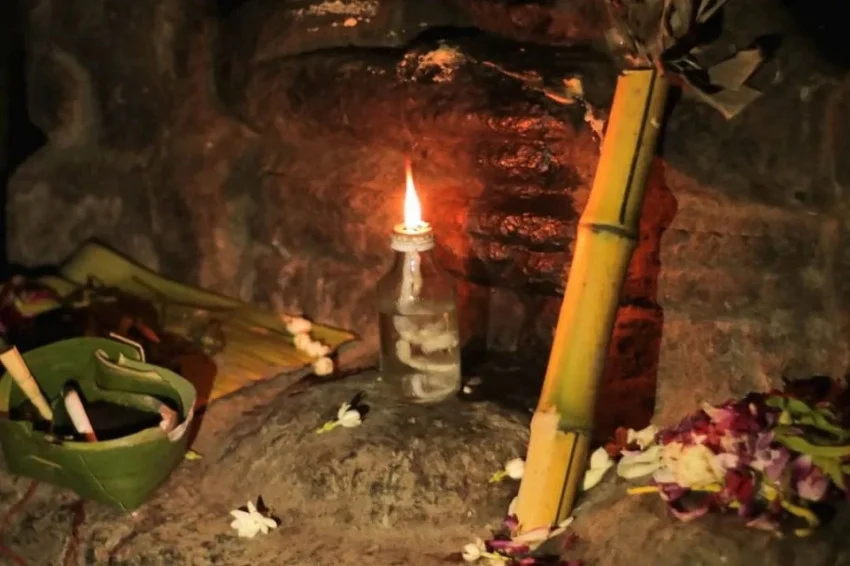
The allure of rapid wealth accumulation continues to exert a powerful pull on segments of society, leading some individuals to bypass conventional economic efforts in favor of metaphysical shortcuts. In contemporary digital discourse, the term "pesugihan"—an umbrella term for occult practices aimed at acquiring prosperity through supernatural intervention—has seen a marked resurgence in search engine queries and social media discussions. This phenomenon, which blends traditional folklore with modern desperation, has drawn sharp criticism from Islamic scholars, who categorize such endeavors not merely as prohibited, but as fundamental breaches of the core tenets of the faith.
Defining Pesugihan and Its Societal Context
At its core, pesugihan represents a transactional approach to the spiritual realm. Practitioners typically seek the assistance of entities such as jinns, demons, or other spectral forces to secure financial success that would otherwise take years of labor and business acumen to achieve. These rituals often involve the use of amulets, the offering of sacrifices or "sesajen," and the performance of specific, often clandestine, ceremonies.
Sociologically, the rise of interest in these practices is often correlated with periods of economic instability. When traditional avenues for wealth creation—such as formal employment, entrepreneurship, or investment—become increasingly difficult or when income inequality widens, vulnerable individuals may become susceptible to narratives that promise instant, albeit illicit, solutions. The digital era has facilitated this by providing platforms where self-proclaimed "spiritual masters" advertise their services, blurring the lines between legitimate spiritual guidance and exploitative charlatanism.
The Theological Stance: A Violation of Tauhid
From an Islamic perspective, the prohibition of pesugihan is absolute. The foundational principle of Islam is "Tauhid," the absolute oneness of God. Any act that attributes divine power—such as the ability to provide sustenance (rizq)—to entities other than Allah SWT is classified as "syirik" (polytheism).
Prominent Islamic scholar KH Yahya Zainul Ma’arif Jamzuri, widely known as Buya Yahya, has frequently addressed this issue through his platform at the Al Bahjah Institute. In his lectures, he emphasizes that a Muslim’s reliance must be placed solely on the Creator. When an individual seeks wealth through the intercession of a jinn or a spirit, they are effectively shifting their allegiance and hope away from Allah. According to Buya Yahya, such an act constitutes a major sin, as it elevates a created being to a status that belongs exclusively to the Divine.
The Quranic basis for this stance is clear. In Surah An-Nisa, verse 48, it is stated: "Indeed, Allah does not forgive association with Him, but He forgives what is less than that for whom He wills." This verse serves as a stern warning regarding the gravity of syirik, framing it as the most significant spiritual transgression one can commit.
Historical Context and the Evolution of Occult Practices
The history of pesugihan is deeply embedded in the cultural landscape of Southeast Asia, where animistic traditions historically intertwined with the arrival of major world religions. Historically, these practices were often localized and shrouded in secrecy, passed down through oral traditions or restricted to specific village shamans.
In the mid-20th century, these practices were largely relegated to the periphery of urbanizing societies. However, the late 1990s and the subsequent decades of the 21st century have seen a transformation. With the advent of the internet, the "market" for occult services has shifted from remote, word-of-mouth encounters to globalized digital marketplaces. Modern practitioners often utilize social media to build credibility, using testimonials and "before-and-after" financial narratives to lure victims. This evolution has expanded the reach of these practices from traditional rural settings into high-density urban environments, where the pressure for status and rapid financial growth is often higher.
Economic and Psychological Implications
Beyond the religious implications, the pursuit of pesugihan carries significant economic and psychological risks. First, there is the issue of financial exploitation. Many "masters" of these rituals operate as fraudulent actors, preying on the financial desperation of their clients by charging exorbitant fees for services that yield no tangible results. Victims often find themselves in deeper debt, having exhausted their savings to pay for rituals, only to be left in a worse economic position than when they started.
Psychologically, the reliance on pesugihan creates a cycle of dependency. Practitioners may become detached from the reality of the labor market, believing that their failure is not due to a lack of strategy or effort, but rather an error in the ritual or a lack of sufficient offerings. This detachment can lead to severe mental health struggles, as individuals become increasingly isolated, paranoid, and fearful of the "demands" of the entities they believe they have engaged.
Official Responses and Preventive Measures
Religious institutions and law enforcement agencies have adopted a dual approach to addressing this issue. Educational campaigns led by figures like Buya Yahya focus on the spiritual education of the public, reinforcing the concept that "rizq" (provision) is granted by Allah through effort ("ikhtiar") and prayer ("doa"). These scholars argue that wealth is a test, and that the method of acquisition is just as important as the outcome.
In many jurisdictions, while the act of believing in the occult is not illegal, the fraudulent practices associated with it often fall under the purview of consumer protection laws and anti-fraud statutes. Law enforcement agencies in the region have occasionally intervened when these practices lead to extortion, human trafficking, or physical harm. However, because these transactions are often conducted in secret and rely on the fear of the victim, they remain notoriously difficult to track and prosecute.
A Societal Analysis: The Ethics of Wealth
The persistence of pesugihan highlights a broader crisis in the understanding of the ethics of wealth. In an age dominated by social media displays of extreme wealth and the "hustle culture" mentality, the patience required for traditional wealth building is often devalued. The desire for "instant gratification" is not merely an economic issue; it is a moral one.
Economists observing the phenomenon note that societies with high levels of social trust and robust financial inclusion systems tend to see lower rates of participation in such irrational economic behaviors. Conversely, where formal financial institutions are inaccessible or where social mobility is perceived to be blocked, individuals are more likely to seek "outside" solutions. Therefore, combating the prevalence of pesugihan requires not only religious education but also broader socio-economic reforms that provide transparent, accessible, and ethical paths to prosperity.
Conclusion: Realigning with Ethical Principles
The discourse surrounding pesugihan serves as a stark reminder of the tension between human desire and moral boundaries. While the lure of quick wealth is a universal human vulnerability, the Islamic perspective offers a grounding framework: that true success is found in hard work, integrity, and reliance on divine providence.
By categorizing pesugihan as a form of syirik, Islamic teachings do more than define a prohibition; they provide a protective mechanism against the exploitation and psychological ruin that these practices entail. For the modern believer, the challenge lies in maintaining faith in the face of economic pressure, recognizing that the shortcut offered by occult practices is not a path to riches, but a detour away from one’s spiritual and ethical foundation. As society continues to navigate the complexities of the digital age, the importance of fostering a culture of patience, education, and honest labor remains as critical as ever, serving as the only true, sustainable, and blessed path to lasting prosperity.