The central bank of Indonesia, Bank Indonesia (BI), has officially released its latest findings regarding the health of the nation’s industrial landscape, indicating that the processing and manufacturing sectors remained resilient and within the expansionary zone throughout the second quarter of 2026. This stability is underscored by the Prompt Manufacturing Index Bank Indonesia (PMI-BI), which was recorded at 51.43 percent for the period. In the context of economic indicators, a PMI reading above the 50-point threshold signifies growth and expansion, while a reading below that mark would suggest a contraction in industrial activity. The current figure suggests that despite various global economic headwinds, Indonesia’s domestic industrial capacity continues to scale upward, driven by robust internal demand and strategic sectoral growth.
Ramdan Denny Prakoso, the Executive Director and Head of the Communication Department at Bank Indonesia, confirmed these findings in a formal statement released on Friday, July 17, 2026. He noted that the majority of the sub-components that constitute the PMI-BI have remained in a state of expansion. Specifically, the indicators for Volume of Production, Volume of Finished Goods Inventory, and Volume of Total Orders have all contributed positively to the overall index. These metrics are critical for assessing the short-term trajectory of the economy, as they reflect the actual operational throughput of factories and the level of demand coming from both domestic and international buyers.
Understanding the Components of the Prompt Manufacturing Index
The Prompt Manufacturing Index (PMI-BI) serves as a vital barometer for the central bank to monitor the pulse of the manufacturing sector. Unlike lagging indicators such as Gross Domestic Product (GDP) growth, which is reported months after a period ends, the PMI is a "leading indicator" that provides real-time insights into the intentions and activities of business leaders. The survey is conducted among a broad spectrum of manufacturing entities across the Indonesian archipelago, ranging from heavy industry to consumer goods.
For the second quarter of 2026, the specific strength in "Volume of Production" indicates that manufacturers have been increasing their output to meet rising market needs. Simultaneously, the "Volume of Total Orders" suggests a healthy pipeline of future work, ensuring that the production levels are backed by actual market demand rather than just speculative manufacturing. The "Volume of Finished Goods Inventory" also remains in the expansion zone, which typically suggests that while goods are being produced at a high rate, they are being moved through the supply chain efficiently, with stock levels being maintained at levels that support continuous sales.
Analysis of Leading Industrial Subsectors
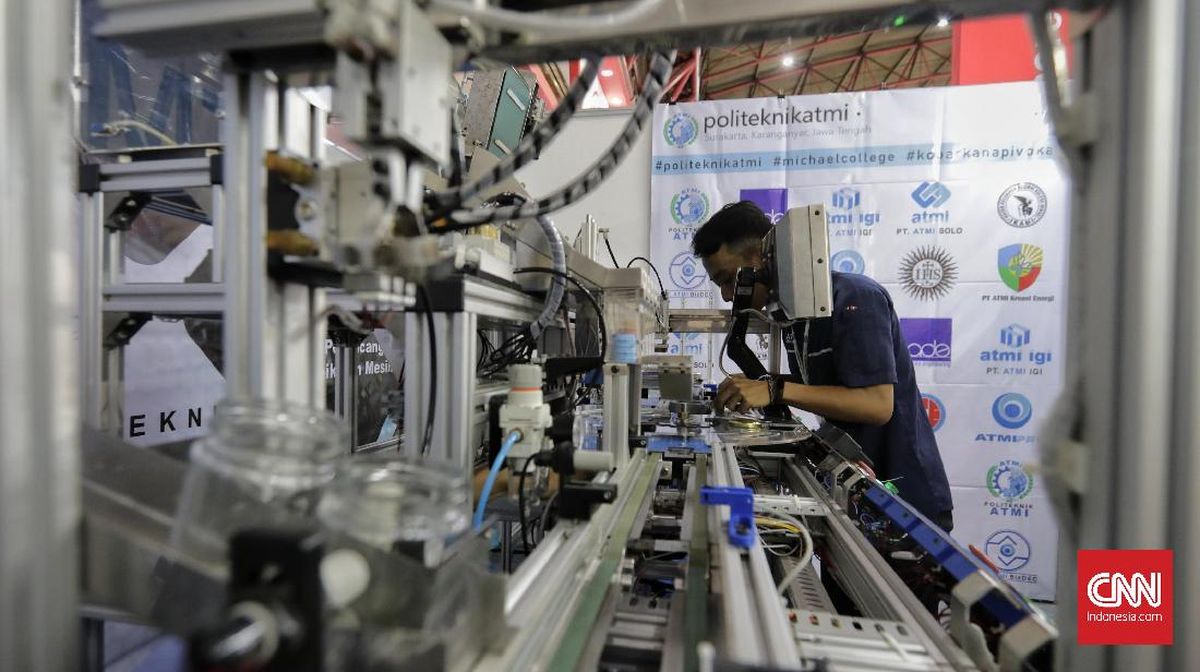
The performance of the manufacturing sector was not uniform across all industries, as some sub-sectors outperformed others significantly. According to the Bank Indonesia report, the highest performance in the second quarter was achieved by the Machinery and Equipment Industry. This particular sector is often seen as a bellwether for broader economic investment; when companies invest in new machinery, it indicates long-term confidence in the economy and a desire to expand productive capacity.
Following closely behind the machinery sector were the Food and Beverage (F&B) Industry, the Basic Metal Industry, and the Non-Metallic Mineral Goods Industry. The strength of the F&B sector is largely attributed to Indonesia’s massive domestic consumer base, which provides a consistent floor for demand regardless of global volatility. Meanwhile, the expansion in the Basic Metal Industry is a direct reflection of Indonesia’s ongoing "downstreaming" (hilirisasi) policies. By processing raw minerals like nickel and copper into higher-value metal products domestically, Indonesia has successfully bolstered its industrial output and reduced its reliance on raw commodity exports.
The Non-Metallic Mineral Goods Industry, which includes the production of cement, glass, and ceramics, has benefited from the continued push for infrastructure development and the construction of the new capital city, Ibu Kota Nusantara (IKN). As these large-scale projects move into advanced stages of construction, the demand for building materials remains a primary driver of industrial growth.
Projections for the Third Quarter of 2026
Bank Indonesia’s outlook for the remainder of the year is notably optimistic. The central bank projects that manufacturing activity will not only remain in the expansion zone but will actually strengthen in the third quarter of 2026. The PMI-BI is forecasted to rise to 52.32 percent, indicating an acceleration in the pace of growth.
Ramdan Denny Prakoso explained that this anticipated uptick will be supported by a further surge in production volumes and a continued increase in total orders. Historically, the third quarter often sees a ramp-up in activity as businesses prepare for year-end demand and finalize annual production targets. Furthermore, the central bank expects the Tobacco Processing Industry and the Transportation Equipment Industry to join the ranks of the top-performing sub-sectors in the coming months.
The rise in the Transportation Equipment Industry is particularly significant as it points toward a recovery or expansion in the automotive sector, possibly driven by the increasing adoption of electric vehicles (EVs) in Indonesia. As the government continues to provide incentives for EV production and purchase, local manufacturers are shifting their assembly lines to cater to this burgeoning market, contributing to the overall rise in the manufacturing index.
The Role of Manufacturing in Indonesia’s Economic Strategy
The manufacturing sector is a cornerstone of the "Indonesia Emas 2045" (Golden Indonesia 2045) vision, which aims to transform the country into one of the world’s top five economies by its centenary. To achieve this, the government and Bank Indonesia have focused on "re-industrialization"—a strategy to increase the manufacturing sector’s contribution to the national GDP, which had seen a slight stagnation in previous decades.
By maintaining the PMI-BI above the 50-point mark, Indonesia demonstrates that it is successfully navigating the transition from a commodity-based economy to a production-based one. The stability of the index provides a sense of security for foreign and domestic investors, signaling that the macroeconomic environment is conducive to business expansion. When the manufacturing sector expands, it creates a multiplier effect: more jobs are created, household income rises, and the government collects more tax revenue, which can then be reinvested into social programs and further infrastructure.
Chronology and Context of Industrial Resilience
The steady performance in 2026 follows a period of significant structural reform in the Indonesian economy. Between 2023 and 2025, the government implemented several key policies, including the simplification of business licensing through the Omnibus Law and the aggressive pursuit of Free Trade Agreements (FTAs) with major trading partners. These reforms were designed to lower the "cost of doing business" and make Indonesian manufactured goods more competitive on the global stage.
In early 2026, there were concerns that fluctuating energy prices and global supply chain disruptions might dampen industrial enthusiasm. However, the data from the first and second quarters shows that Indonesian manufacturers have adapted by diversifying their supply sources and increasing operational efficiency. The central bank’s proactive monetary policy, which has focused on maintaining Rupiah stability and managing inflation, has also provided a predictable environment for manufacturers to plan their capital expenditures.
Implications for Monetary Policy and Future Investment
The expansionary state of the PMI-BI gives Bank Indonesia more flexibility in its monetary policy decisions. Because the industrial sector is growing healthily, the central bank can focus on its primary mandate of price stability without the immediate pressure to aggressively cut interest rates to stimulate a failing economy. Conversely, the growth is not so excessive as to trigger "overheating" concerns, which would necessitate sharp interest rate hikes.
For investors, the report serves as a green light for capital allocation. The consistent growth in the Machinery and Basic Metal sectors suggests that there are deep opportunities in the industrial supply chain. Analysts suggest that if the PMI-BI continues its upward trend into 2027, Indonesia could see a significant increase in Foreign Direct Investment (FDI) specifically targeting high-tech manufacturing and renewable energy components.
Broader Economic Impact and Conclusion
The manufacturing sector’s resilience is a testament to the synergy between government policy, central bank oversight, and private sector agility. While global markets remain unpredictable, Indonesia’s focus on domestic processing and infrastructure-led demand has created a "buffer" that protects the national economy from external shocks.
As the country moves toward the third quarter of 2026, the focus will likely shift toward ensuring that the growth is inclusive. While large-scale industries are thriving, there is an ongoing effort by the authorities to integrate Small and Medium Enterprises (SMEs) into the manufacturing supply chain. If the projected PMI of 52.32 is realized, it will mark one of the strongest periods of industrial growth in the post-pandemic era, further solidifying Indonesia’s position as a regional manufacturing powerhouse in Southeast Asia.
In conclusion, the latest PMI-BI report from Bank Indonesia provides a clear and factual narrative of a nation on the move. With the Machinery, Food, and Metal industries leading the way, and a positive forecast for the months ahead, the Indonesian manufacturing sector remains a vital engine of national prosperity and a key indicator of the country’s burgeoning economic maturity.