
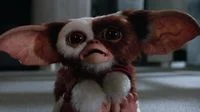
Warner Bros. has officially announced a significant adjustment to its upcoming theatrical release schedule, pushing the highly anticipated horror-comedy sequel Gremlins 3 nearly a full year back from its initial premiere date. Originally slated to hit theaters on November 19, 2027, the movie will now make its global cinematic debut on October 6, 2028. This scheduling shift extends the patience of a devoted fanbase that has waited decades for a proper continuation of the beloved creature-feature franchise, marking yet another milestone in the protracted development history of the property.
The decision by Warner Bros. underscores the studio’s careful planning for what it hopes will be a major box office event, balancing holiday theatrical windows with the complex production demands of a modern creature feature that relies heavily on practical effects mixed with cutting-edge visual technology. As fans process the delay, industry analysts are closely watching how the studio positions the project within its broader theatrical slate for late 2028.
Development Background and Corporate Genesis
The resurgence of the Gremlins franchise first came to light during an investor earnings call in 2025, when Warner Bros. Discovery CEO and President David Zaslav formally confirmed that a third installment was in active development. The announcement sent waves of nostalgia through the entertainment industry, validating years of rumors, false starts, and speculative scripts that had circulated in Hollywood since the release of the second film in 1990.
Behind the scenes, Warner Bros. has assembled an elite creative roster to steer the nostalgic property into the modern era. Cinematic legend Steven Spielberg, who executive-produced the original 1984 classic and its 1990 sequel, is officially returning to executive produce Gremlins 3 alongside Eleanor Columbus. Meanwhile, Chris Columbus—widely celebrated for his directorial work on the first two Harry Potter films and his foundational screenwriting contributions to 1980s classics like The Goonies and Gremlins itself—is taking the helm as both director and producer.
The screenplay for the upcoming film has been penned by Hannah Marks. Her script is built upon a foundational story draft collaboratively developed by Chris Columbus, Zach Lipovsky, and Adam Stein. Production duties are heavily anchored by prominent industry banners, with Kristie Macosko Krieger and Holly Bario producing under the Amblin Entertainment umbrella, alongside Michael Barnathan and Mark Radcliffe representing 26th Street Pictures.
Despite the revelation of this powerhouse creative team, Warner Bros. has maintained a strict veil of secrecy surrounding the project. As of publication, the studio has yet to disclose specific plot details, the official subtitle of the film, or any casting announcements regarding human or creature performers.
Executive Perspectives and Franchise Legacy
Speaking on the strategic importance and cultural weight of reviving the property, Jesse Ehrman, President of Development and Production at Warner Bros. Pictures, expressed profound enthusiasm during the initial rollout of the project.
"Not many titles are as universally beloved and deeply iconic as Gremlins, and we are absolutely thrilled to bring it back for both our loyal, longtime fans and an entirely new generation of moviegoers," Ehrman stated in an official company release. "It is an absolute honor to collaborate with Steven [Spielberg], Chris [Columbus], and this extraordinary lineup of creative talent. We simply cannot wait for audiences to experience the unique blend of magic, absolute chaos, and heartfelt warmth that defines the world of Gremlins on the big screen."
The cultural footprint of the Gremlins franchise dates back to the summer of 1984, when the original film was released under the direction of Joe Dante. Written by Chris Columbus and executive produced by Steven Spielberg, the film became an immediate cultural touchstone. Beyond its box office success, the original Gremlins holds a historic place in American cinematic history for its role in the creation of the Motion Picture Association of America (MPAA) PG-13 rating. Due to intense sequences of dark comedy and creature violence—most notably involving a food processor and a microwave—the film pushed the boundaries of the existing PG rating, prompting Spielberg to suggest an intermediate rating between PG and R. This led directly to the establishment of the PG-13 rating in July 1984, with Gremlins serving as a prime example of the type of mature family fare that necessitated the new category.
The narrative of the original film follows Billy Peltzer, a young man who receives an exotic, furry pet called a Mogwai named Gizmo from his eccentric father. However, Billy is given three strict rules that must never be broken: keep the Mogwai away from bright light, never let it get wet, and, most importantly, never feed it after midnight. When these rules are inevitably violated, Gizmo multiplies, and his offspring mutate into vicious, scaled, gremlin-like monsters that terrorize a small town on Christmas Eve.
Financial Performance and Historical Context
The commercial success of the 1984 original remains a legendary Hollywood case study. Produced on a modest budget of approximately $11 million, Gremlins became a massive global phenomenon, grossing roughly $212 million worldwide at the box office. Its unique blend of suburban satire, horror tropes, and holiday setting made it an enduring classic.
Capitalizing on this momentum, Warner Bros. greenlit a sequel, Gremlins 2: The New Batch, released in June 1990. Directed once again by Joe Dante, the sequel took a heavily satirical, anarchic, and meta-textual approach, moving the setting from a quaint snow-covered town to a hyper-modern, high-tech corporate skyscraper in Manhattan. Despite featuring groundbreaking animatronic creations by master puppeteer Rick Baker and offering sharp commentary on consumer culture and media, the sequel underperformed domestically compared to its predecessor. Gremlins 2 finished its theatrical run with approximately $41 million globally against a significantly higher production budget.
In the decades following the release of The New Batch, the franchise transitioned into cult classic status. While numerous attempts, pitches, and script treatments for a third film were floated throughout the 1990s, 2000s, and 2010s, none managed to secure greenlit production status until recent years, with the animated prequel series Gremlins: Secrets of the Mogwai serving as a modern bridge for the IP.
Broader Industry Implications and Outlook
The decision to shift the release of Gremlins 3 from late 2027 to October 2028 carries several strategic implications for Warner Bros. Pictures. By planting the film in an early October release slot, the studio positions the project directly within the lucrative pre-Halloween theatrical window—a prime calendar placement historically reserved for mainstream horror, supernatural thrillers, and family-friendly spookiness.
This scheduling adjustment also allows the extensive visual effects and animatronic teams additional breathing room. Given the industry-wide pushback against over-reliance on purely digital computer-generated imagery (CGI), expectations are high that the production will honor the practical creature-effects roots of the first two films by integrating physical puppetry with modern technological enhancements. Balancing these complex production pipelines requires meticulous oversight, making the extra months of runway a practical necessity for a major tentpole production.
As the new release date of October 6, 2028, approaches, industry observers anticipate that Warner Bros. will begin rolling out promotional materials, casting confirmations, and narrative teasers. Until then, the nearly four-year wait continues for audiences eager to see how modern Hollywood will handle the return of the world’s most famous rule-breaking Mogwai.
