The global mobile technology landscape is bracing for a significant shift as Honor prepares to unveil its latest flagship lineup, the Magic9 series. Scheduled for an official global launch on September 28, the series promises to challenge industry norms through a combination of proprietary imaging hardware, professional-grade cinematography features, and record-breaking battery density. As the competition in the premium smartphone market intensifies, Honor’s strategic move to integrate professional film-industry technology into a mobile form factor underscores the brand’s ambition to dominate the high-end photography niche.
A New Vision: The Agile Eye Camera Technology
At the heart of the innovation narrative surrounding the Magic9 and Magic9 Pro Max is the introduction of the "Agile Eye" front-facing camera. For years, the smartphone industry has standardized circular or "pill-shaped" camera cutouts, which often limit the sensor’s light-gathering potential due to surface area constraints. Honor is breaking this mold by debuting a square-shaped, 55-megapixel selfie sensor.
Technical analysis suggests that the square geometry allows for a more efficient utilization of the sensor’s active area, potentially enhancing the capture of light and color depth. This departure from conventional design is not merely aesthetic; it is an architectural decision aimed at providing users with higher dynamic range in self-portraits. By optimizing the lens assembly to fit a square profile, Honor claims to have increased the effective field of view without sacrificing pixel density, a challenge that has long plagued mobile front-camera development. While this feature will be exclusive to the flagship Magic9 and Magic9 Pro Max models, it signals a potential industry-wide pivot toward non-traditional sensor housing as computational photography demands more raw data from the front-facing optics.
Cinematic Ambitions: The ARRI Partnership
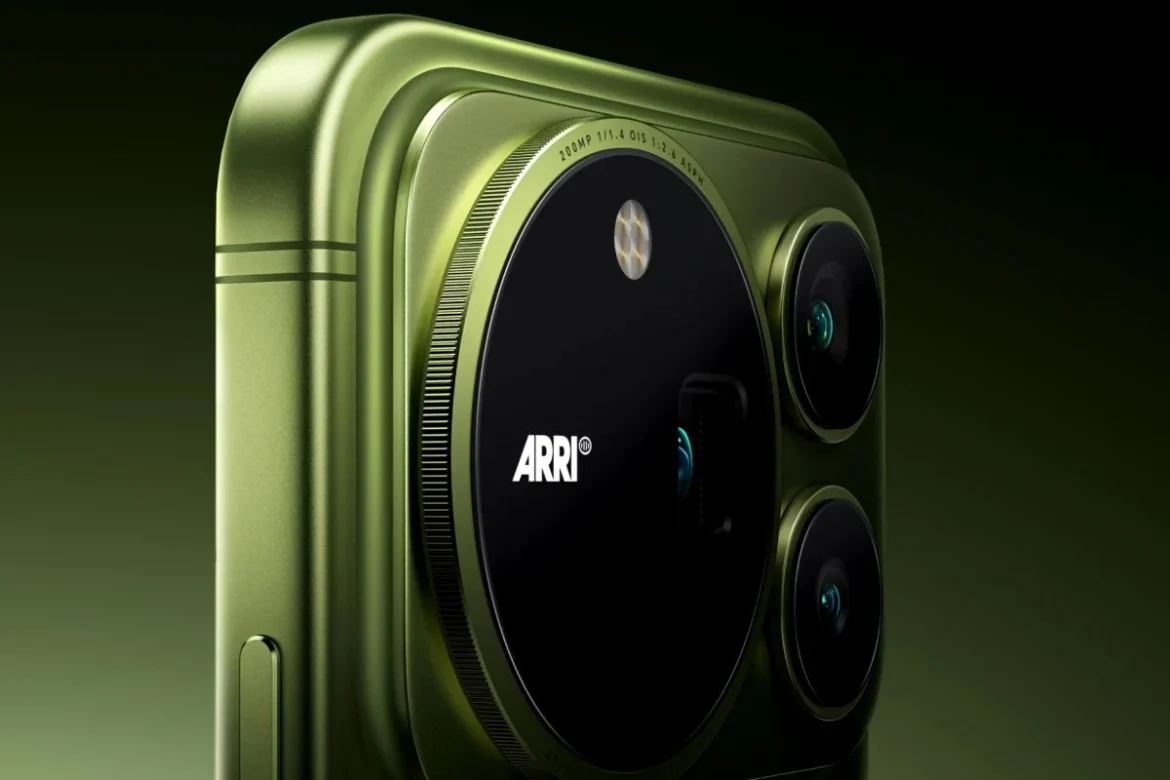
Perhaps the most significant development for the series is the strategic partnership between Honor and ARRI, the legendary German manufacturer of professional cinema cameras. Known for their ubiquitous presence on high-budget film sets, ARRI’s involvement with the Magic9 series marks a transition from standard mobile photography to professional-grade cinematography.
The Magic9 Pro Max is expected to feature a triple-camera rear module headlined by dual 200-megapixel sensors. This configuration is supported by a sophisticated 500mm teleconverter, specifically engineered to maintain clarity and detail at extreme zoom levels. The integration of the ARRI Cinema Mode is intended to replicate the color science and dynamic compression found in professional digital cinema cameras. The visual design of the rear camera module, modeled after the iconic ARRIFLEX 35, serves as a symbolic tribute to the heritage of cinema.
Industry analysts observe that this collaboration is a direct response to the growing demand for mobile devices that can serve as primary production tools for independent filmmakers and content creators. By aligning with ARRI, Honor is positioning its hardware as a legitimate alternative to secondary camera equipment, effectively blurring the lines between consumer electronics and professional production gear.
Pushing Limits: The 11,000 mAh Super Edition
Beyond imaging, the Honor Magic9 Super Edition is poised to disrupt the mobile power market. Current flagship standards typically oscillate between 5,000 mAh and 6,000 mAh, but the Super Edition is reported to feature an unprecedented 11,000 mAh battery. This represents a nearly twofold increase over industry averages, a feat achieved through advancements in solid-state or high-density lithium-ion cell technology.
To manage the logistics of such a massive power cell, the device includes 80W wired fast charging and 50W wireless charging. The inclusion of an internal cooling fan—a feature usually reserved for dedicated gaming smartphones—is a necessary addition to manage the thermal output generated by the Snapdragon 8 Elite Gen 5 processor under sustained load. The combination of high-performance silicon and active cooling suggests that the Super Edition is targeting power users, mobile gamers, and video editors who require sustained performance without the risk of thermal throttling.
Technical Specifications and Configuration
The market trajectory for the Honor Magic9 series is characterized by a tiered approach, offering a wide spectrum of capabilities across its models.
Honor Magic9 Super Edition Key Specifications:
- Processor: Snapdragon 8 Elite Gen 5
- Display: 6.81-inch flat AMOLED, 1.5K resolution
- Memory: 12GB/256GB, 12GB/512GB, 16GB/512GB variants
- Operating System: Magic 11 OS (based on Android 17)
- Battery: 11,000 mAh with 80W wired/50W wireless charging
- Colorways: Yellow, Green, White, and Black
The modular nature of the series ensures that Honor captures multiple market segments. While the Super Edition prioritizes raw power and endurance, the Pro Max focuses on optical excellence. The differentiation in camera hardware—with the Pro Max emphasizing dual 200MP sensors and the Super Edition potentially opting for a more standard 50MP main configuration—suggests that Honor is segmenting its flagship line to cater to both professional photographers and tech-enthusiast power users.
The Broader Implications for the Smartphone Market
The release of the Magic9 series arrives at a pivotal moment in the smartphone industry. As hardware maturity plateaus, manufacturers are increasingly forced to innovate in specialized areas. Honor’s focus on high-capacity energy storage and professional-grade imaging represents a broader trend of "specialization" in flagship devices.
- Supply Chain Dynamics: The use of a square 55MP sensor necessitates new manufacturing processes for display cutouts and lens housing. If successful, this could force suppliers to adjust their production lines to accommodate non-circular optics, potentially driving up costs but also setting a new premium standard.
- Professionalization of Mobile Video: The ARRI partnership is a bellwether for the future of mobile video. As social media platforms prioritize high-fidelity video, the integration of cinema-standard color science will likely become a mandatory feature for all flagship devices by 2027.
- Battery Density Wars: With the Super Edition breaking the 10,000 mAh barrier, competitors may feel pressured to accelerate their own research into silicon-carbon or solid-state batteries. The primary hurdle remains the trade-off between weight, thickness, and safety; the success of Honor’s thermal management system will be closely scrutinized by competitors.
Chronology of Development
The path to the September 28 launch has been marked by a series of controlled leaks and strategic announcements, characteristic of modern mobile product cycles.
- Early Q2 2026: Initial reports emerge regarding Honor’s development of a "square-format" front sensor.
- Mid Q3 2026: Partnership with ARRI is confirmed, signaling a shift toward cinematic-grade mobile hardware.
- Late August 2026: Early benchmarks for the Snapdragon 8 Elite Gen 5 appear, hinting at the high performance expected in the Super Edition.
- September 2026: Final certification and mass production phases conclude, leading to the formal invitation for the global launch event.
Conclusion: A Calculated Bet
Honor is clearly attempting to reclaim the "innovation leader" mantle with the Magic9 series. By focusing on tangible, high-impact features—namely the camera form factor, cinematography capabilities, and battery endurance—the company is moving beyond the incremental updates that have defined the market for the past few years.
However, the success of the series will ultimately depend on software optimization and global supply chain reliability. The integration of Magic 11 OS with advanced camera hardware will be the final test of whether the company can translate its impressive specifications into a seamless user experience. As the industry turns its eyes toward the September 28 launch, the Honor Magic9 series stands as a testament to the fact that, even in a saturated market, there remains significant room for hardware-driven disruption. The tech world will be watching closely to see if these aggressive specifications translate into the performance expected of a true flagship contender.