
The maritime tragedy involving the KM Virgo Transport 8, which capsized in the treacherous waters of the Masalembo strait in the Java Sea on Sunday, September 13, 2026, has prompted a massive humanitarian response. As rescue operations transition into a critical recovery and identification phase, the Indonesian National Police have deployed specialized Disaster Victim Identification (DVI) units to Surabaya and Banjarmasin to manage the process of identifying the six confirmed fatalities. The incident has sent shockwaves through the regional shipping community, raising urgent questions regarding maritime safety protocols, vessel maintenance, and the unpredictable meteorological conditions that frequently plague the Masalembo region.
Chronology of the Disaster
The KM Virgo Transport 8 departed on its scheduled route, encountering severe weather conditions while traversing the Masalembo area—a region notorious in maritime circles for its erratic currents and sudden squalls. According to initial reports, the vessel began taking on water on the morning of Sunday, September 13, 2026. The distress signals, which were received by the Search and Rescue (SAR) agencies, indicated that the vessel had lost stability, leading to a rapid capsizing event.
By the time rescue vessels from the National Search and Rescue Agency (Basarnas) reached the coordinates, the vessel was largely submerged. The immediate focus was on locating survivors and recovering those who had perished in the cold, turbulent waters. By Tuesday, September 15, 2026, authorities confirmed that six passengers and crew members had lost their lives, while several others were treated for injuries and exposure. The recovery of the bodies necessitated the immediate activation of the DVI protocol to ensure that the victims could be returned to their grieving families with dignity and scientific accuracy.
The Role of DVI in Maritime Tragedies
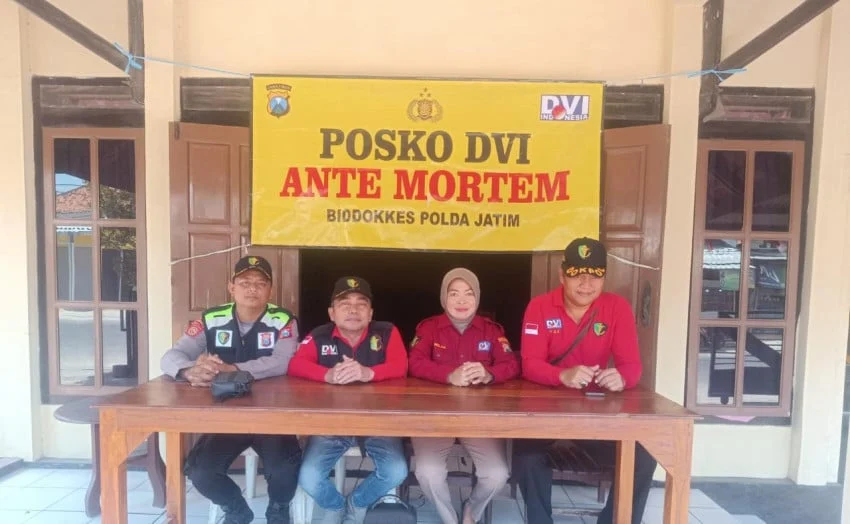
The Disaster Victim Identification (DVI) process is a rigorous, internationally recognized scientific procedure used to identify victims of mass casualty incidents. In the wake of the KM Virgo Transport 8 tragedy, Brigadier General Sumy Hastry Purwanti, the Head of the Police Medical and Health Bureau, confirmed that the DVI teams are operating at full capacity. The strategic placement of DVI command posts in both Surabaya and Banjarmasin is designed to facilitate the arrival of families from both sides of the Java Sea.
"The Indonesian National Police are committed to supporting the search and recovery mission through our DVI units, which are embedded within every regional police headquarters," stated Brigadier General Hastry. "For this specific incident, our teams are fully prepared to provide the necessary forensic expertise to assist in the identification of the six victims recovered so far."
The DVI process involves a multi-stage approach, primarily divided into "Post Mortem" and "Ante Mortem" data collection. Post Mortem data includes physical markers, dental records, and DNA samples collected from the victims. Conversely, the Ante Mortem phase relies heavily on the cooperation of the victims’ families, who are encouraged to provide medical history, dental records, fingerprints, or personal belongings that might contain the victims’ DNA.
Meteorological and Geographical Challenges
The Masalembo strait has long been a subject of concern for maritime safety experts. Geographically, it serves as a convergence point for currents from the Java Sea and the Makassar Strait. These hydrodynamic conditions, combined with the "bottle-neck" effect of the surrounding islands, create high-velocity currents and unpredictable wave patterns.

Maritime analysts have noted that even vessels equipped with modern navigational aids can face catastrophic failure when subjected to the rapid, high-impact wave formations common in this area. While the investigation into the exact cause of the KM Virgo Transport 8’s capsizing is ongoing, weather data from September 13 suggests that high-intensity winds and significant wave heights were present, likely exceeding the vessel’s design specifications for stability during that specific window of time.
Institutional Response and Safety Debates
The accident has reignited a broader national discourse regarding the age and maintenance standards of the Indonesian inter-island shipping fleet. Critics have argued that the incident might have been avoided with stricter adherence to load-limit regulations and weather-based departure bans. However, industry experts from the Maritime Transport Institute (MTI) have cautioned against immediately blaming the age of the vessel.
"The age of a ship is not a definitive verdict on the cause of an accident," an MTI representative stated, emphasizing that many older vessels remain sea-worthy if subjected to rigorous, recurring maintenance schedules and strict safety inspections. The focus of the current investigation, therefore, is expected to shift toward the vessel’s manifest, loading procedures, and whether the captain received sufficient meteorological warnings prior to entering the high-risk zone.
Collaboration Between Agencies
The identification process is currently a collaborative effort involving the Indonesian National Police, the Ministry of Transportation, and Basarnas. This synergy is essential to ensure that no victim is left unidentified. By coordinating between the ports of origin and destination, authorities aim to minimize the emotional toll on the families by providing a centralized point of contact for information regarding the identification status.
The Ministry of Transportation has announced that it will conduct a comprehensive audit of the shipping company involved to determine if there were any procedural lapses in the lead-up to the disaster. This audit will likely examine the vessel’s last dry-docking records, the certification of the crew, and the adherence to safety protocols during the voyage.
Future Implications for Maritime Safety
The loss of six lives in the Java Sea serves as a somber reminder of the persistent dangers in maritime transportation. As the DVI teams continue their work, the broader maritime industry is looking toward potential policy changes. These may include:
- Enhanced Weather Monitoring: Implementing stricter "no-sail" zones for smaller vessels when meteorological data indicates high-risk conditions in the Masalembo strait.
- Digital Manifesting: Mandating real-time, digital passenger manifests that are accessible to authorities at all times, ensuring that search and rescue teams have an accurate count of souls on board during an emergency.
- Modernized Tracking: Equipping smaller commercial vessels with satellite-based tracking systems that provide automated distress alerts, reducing the response time for SAR teams.
- Forensic Infrastructure: Strengthening the capacity of regional police medical departments to respond to maritime disasters, ensuring that DVI teams can be deployed even more rapidly in the future.
Conclusion
As of September 15, 2026, the recovery phase remains the priority for the authorities on the ground. The DVI teams in Surabaya and Banjarmasin continue to work tirelessly, knowing that the precision of their work is the only solace for the families of the victims. The tragedy of the KM Virgo Transport 8 is a stark illustration of the challenges inherent in navigating the Indonesian archipelago. While the immediate focus remains on the identification of the deceased, the long-term objective of the subsequent investigation must be the implementation of safety measures that prevent such a tragedy from recurring. The maritime industry, in cooperation with the government, must ensure that the lessons learned from this incident are translated into tangible improvements in safety, communication, and emergency response across the region. The families of the six victims deserve nothing less than a transparent investigation and a commitment to ensuring that the seas are made safer for all who traverse them.
