
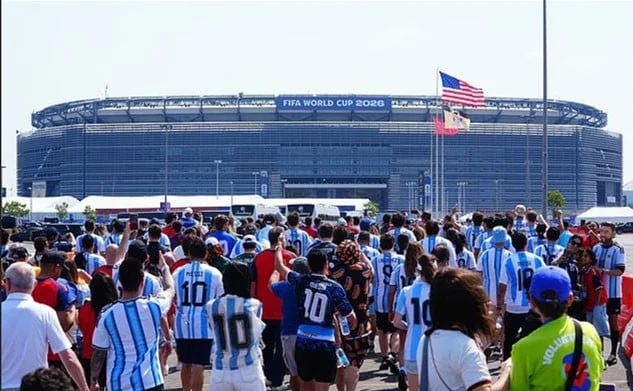
The dream of witnessing the pinnacle of global football, the 2026 FIFA World Cup Final between Spain and Argentina, nearly transformed into a logistical nightmare for thousands of eager supporters. Hours before the highly anticipated kick-off at MetLife Stadium in East Rutherford, New Jersey, on Monday, July 20, 2026, a sprawling multitude of fans found themselves ensnared in serpentine queues, stretching endlessly and threatening to overshadow the monumental occasion with confusion, frustration, and mounting panic. This unprecedented bottleneck, affecting multiple access points to the 80,000-capacity venue, cast a dark cloud over what was meant to be a celebration of sport.
A Day of High Stakes and Unforeseen Delays
The stage was set for a historic clash: Spain, aiming for their second World Cup title, against Argentina, with Lionel Messi potentially making his final World Cup appearance and seeking an unprecedented third consecutive triumph. The air around MetLife Stadium, one of the principal venues for the North American co-hosted tournament, was thick with anticipation. From early morning, legions of fans, many having traveled internationally and invested significantly in tickets, flights, and accommodation, began converging on the stadium complex. FIFA, the global governing body for football, had proactively issued advisories in the days leading up to the final, strongly urging ticket holders to arrive up to four hours prior to the 3:00 PM EST kick-off. This recommendation was designed to facilitate thorough security screenings and allow ample time for spectators to experience the elaborate closing ceremony, scheduled to commence approximately 90 minutes before the match. However, the reality on the ground diverged drastically from these well-intentioned guidelines.
As the midday sun climbed higher, the sheer volume of attendees overwhelmed the meticulously planned ingress points. Eyewitness accounts and reports from various media outlets, including the DailyMail, painted a picture of disarray. Thousands of supporters, adorned in national colours and clutching their prized tickets, choked every pathway leading into the colossal stadium. The primary cause for the escalating crisis appeared to be a combination of factors: unusually slow security checks, compounded by reported glitches within the electronic ticket scanning systems. These technical malfunctions meant that the flow of fans through turnstiles was drastically reduced, creating a cascading effect that saw queues grow exponentially, snaking through pedestrian plazas and access roads.
Chronology of a Crowd Management Crisis
- Days Prior (July 17-19): FIFA issues multiple public advisories via official channels, email, and social media, stressing early arrival (up to 4 hours before kick-off) for security checks and pre-match entertainment.
- Morning of July 20 (8:00 AM – 11:00 AM): Dedicated fans, heeding FIFA’s advice, begin arriving at MetLife Stadium. Initial entry is smooth but at a steady pace, belying the impending issues.
- Midday (11:00 AM – 1:00 PM): The volume of arriving fans increases dramatically. Queues begin to lengthen at various gates, but still appear manageable. Security personnel are visible, initiating bag checks and preliminary screenings.
- Early Afternoon (1:00 PM – 2:00 PM): The situation deteriorates rapidly. Queues become static, barely moving for extended periods. Reports of ticket scanner malfunctions begin to surface, corroborated by visible frustration among fans and operational slowdowns at entry points. Security personnel, though numerous, appear overwhelmed and disorganised, with some attempting to redirect large groups.
- Late Afternoon (2:00 PM – 3:00 PM – Kick-off): The crisis peaks. Thousands remain outside, desperately watching the clock. Many fans are redirected multiple times to different gates, only to find similar gridlock. The pre-match ceremony begins and ends, with large sections of the stadium still empty. Social media erupts with images and videos of the chaos, showing distressed fans, some near tears, fearing they will miss the opening whistle of the biggest match in football.
- Post Kick-off (3:00 PM onwards): While some fans eventually gain entry, many report missing the first 15-30 minutes of the match, an unforgivable oversight for an event of this magnitude. Efforts to expedite entry continue, but the damage to the fan experience is already done.
The Scene on the Ground: Frustration and Disbelief
For many, the pilgrimage to the World Cup final represents a once-in-a-lifetime opportunity. Tickets for the final were among the most expensive in sporting history, with face values reaching several thousand dollars, and resale markets seeing prices soar into five figures. Fans had invested not only financially but also emotionally, traveling thousands of miles from across the globe. To then be met with such profound logistical failure was a source of immense disappointment and anger.
"We arrived almost three hours early, just like FIFA told us," recounted Maria Rodriguez, a fan from Buenos Aires, visibly shaken by the experience. "We went to Gate B, waited for an hour, then were told to go to Gate D. At Gate D, the line was even longer, and the scanners weren’t working. It’s an absolute joke. This is the World Cup final, not a local league match!" Her sentiment was echoed by countless others who spoke of being trapped in a "human bottleneck," with limited access to water or facilities, and a growing sense of panic as the clock ticked closer to kick-off.
The lack of clear communication from event staff exacerbated the problem. Many fans reported being given conflicting instructions by different security personnel, leading to further confusion and wasted time as they navigated the sprawling stadium perimeter. The sight of large sections of the stadium remaining noticeably empty during the pre-match ceremonies, a spectacle meticulously choreographed to build anticipation, served as a stark visual testament to the severity of the entry issues.
Official Responses and Explanations
In the immediate aftermath, pressure mounted on FIFA and the local organising committee (LOC) to address the unfolding debacle. A preliminary statement from FIFA acknowledged "unforeseen technical difficulties" with some ticketing systems and "higher-than-anticipated peak crowd flows" in the final hours leading up to the match. The statement emphasised the paramount importance of security, asserting that "all security protocols remained fully in place to ensure the safety and well-being of all attendees, which at times led to slower processing."
The MetLife Stadium management, in conjunction with the New Jersey Sports and Exposition Authority (NJSEA), released a separate statement. While expressing regret for the inconvenience caused to fans, they pointed to the "unprecedented scale" of a World Cup final and the need for rigorous security measures. They also indicated that a "comprehensive review" of the ticketing technology and crowd management procedures would be undertaken in collaboration with FIFA and local law enforcement. Local police officials, who were heavily involved in perimeter security and crowd control, highlighted the inherent challenges of managing such massive crowds at a major international event, especially when unexpected technical issues arise. They confirmed that despite the chaos, no major security breaches or serious injuries were reported.
Security and Operational Challenges: A Deeper Dive
The 2026 World Cup is notable for being the first to be co-hosted by three nations (USA, Canada, and Mexico) and for featuring an expanded 48-team format, leading to a record 104 matches across 16 venues. MetLife Stadium, with its history of hosting major events like Super Bowls, Copa América finals, and numerous high-profile concerts, was considered a highly capable venue. However, the unique demands of a World Cup final, with its global audience, heightened security threat levels, and intricate operational requirements, present distinct challenges.
The incident at MetLife Stadium underscores the delicate balance between security imperatives and fan experience. Modern stadium security protocols for events of this magnitude typically involve multiple layers: an outer perimeter check, ticket validation, secondary security screening (metal detectors, bag checks), and finally, entry into the stadium bowl. Each step adds time, and any bottleneck in this chain can have severe consequences. The reported failure of electronic ticket scanning systems is particularly concerning, as these are designed to expedite entry. A system glitch can quickly force a return to manual checks, which are inherently slower and less efficient for tens of thousands of people.
Moreover, effective crowd management relies on dynamic real-time communication and flexible deployment of staff. Reports of security personnel appearing confused or giving conflicting directions suggest a potential breakdown in command and control, or inadequate training for managing a crisis of this scale. The sheer volume of international visitors, many unfamiliar with the stadium layout or local procedures, further complicates the task.
Broader Context: The 2026 World Cup and Host Cities
This incident at the final raises pertinent questions for the broader 2026 World Cup, particularly given its distributed nature across three countries and numerous cities. The logistical complexities of coordinating security, transport, and fan services across such a vast geographical area are immense. While the final is arguably the most scrutinised event, similar issues, albeit on a smaller scale, could plague other matches or venues if lessons are not learned swiftly.
The host cities, including New York/New Jersey, Atlanta, Dallas, Los Angeles, Miami, Philadelphia, Seattle, San Francisco, Boston, Houston, Kansas City, Toronto, Vancouver, Mexico City, Guadalajara, and Monterrey, are all preparing for an influx of millions of fans. Each venue will face unique challenges related to local infrastructure, public transport, and security arrangements. The MetLife incident serves as a critical stress test, highlighting the need for robust contingency plans, advanced technological redundancy, and exceptionally well-drilled staff at all levels. The economic boost promised by the World Cup to these regions is substantial, estimated to be in the billions of dollars, but such benefits hinge on a smooth and positive fan experience.
Historical Precedent and Lessons Unlearned
While the scale of the MetLife incident is significant, it is not entirely unprecedented in the history of major sporting events. The 2022 UEFA Champions League final in Paris, where Liverpool and Real Madrid fans faced severe delays, overcrowding, and even aggressive policing outside the Stade de France, serves as a recent and stark reminder of what can go wrong. Investigations into that event revealed systemic failures in planning, communication, and execution by organisers and local authorities, leading to apologies and promises of reform. Similarly, the UEFA Euro 2020 final at Wembley Stadium saw thousands of ticketless fans breach security, highlighting the dangers of inadequate crowd control.
These historical precedents underscore that despite decades of experience in hosting mega-events, the challenges of managing immense human flows and ensuring security remain formidable. Each event, with its unique context, requires tailored and adaptable solutions. The MetLife situation suggests that some of these lessons, particularly regarding technical reliability and dynamic crowd management, may not have been fully integrated into the 2026 World Cup final planning.
Implications for Future Major Events and Fan Trust
The chaotic scenes at the 2026 World Cup final will undoubtedly have far-reaching implications. For FIFA, an organisation that prides itself on delivering world-class events, it represents a significant reputational blow. The images of frustrated fans missing key moments of the final will linger, potentially impacting future bids for major tournaments and the overall perception of FIFA’s organisational capabilities.
More importantly, the incident erodes fan trust. Supporters invest considerable time, money, and emotion into attending these events. When that investment is met with disorganisation and the risk of missing the very spectacle they came to see, it can breed disillusionment. For the host cities and countries, the negative publicity, however contained, can detract from the positive legacy they hope to build.
Looking ahead, a thorough, transparent, and independent investigation into the MetLife Stadium incident will be crucial. This must go beyond mere apologies and identify specific points of failure, whether technological, operational, or in communication protocols. Recommendations for future events must be concrete and actionable, focusing on:
- Technological Resilience: Implementing redundant ticket scanning systems and robust network infrastructure.
- Dynamic Crowd Management: Enhancing real-time monitoring, communication, and flexible deployment of security and volunteer staff.
- Clearer Communication: Providing consistent, multilingual information to fans, especially during crises.
- Contingency Planning: Developing detailed protocols for various scenarios, including system failures and unexpected crowd surges.
The 2026 FIFA World Cup was envisioned as a grand celebration, a monumental undertaking across three nations. While the football on the pitch promised to be spectacular, the logistical challenges off it, exemplified by the MetLife Stadium entry chaos, serve as a potent reminder that even the biggest sporting spectacles are only as successful as their foundational operational planning. For the thousands of fans who endured the frustrating queues, the memory of the final may forever be tainted by the anxiety of nearly missing their dream.
