
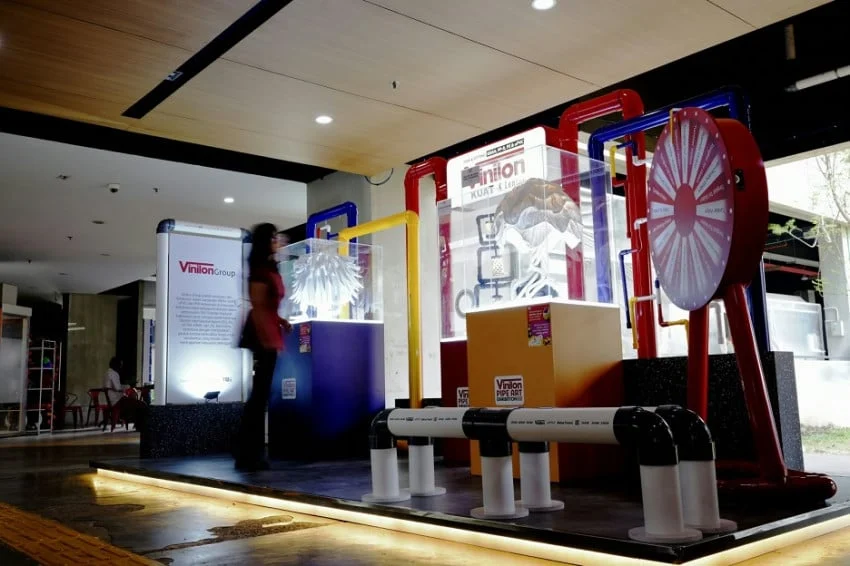
The Taman Ismail Marzuki (TIM) in Jakarta has transformed into a showcase of industrial ingenuity and artistic expression as the Vinilon Group hosts the Pipe Art Exhibition 2026. Running from October 28 to November 8, 2026, the exhibition serves as the culmination of the annual Pipe Art Competition, an initiative that has successfully bridged the gap between the rigid world of infrastructure engineering and the fluid realm of fine art. By utilizing PVC pipes, fittings, and industrial adhesives as primary creative mediums, the exhibition challenges conventional perceptions of construction materials, inviting the public to witness how mundane utility can be repurposed into sophisticated sculptural installations.
A Three-Year Evolution of Creative Engagement
The 2026 iteration marks the third consecutive year that the Vinilon Group has organized this multidisciplinary event. What began as a niche experiment in material exploration has rapidly evolved into a significant platform for Indonesia’s creative class. The journey of the Pipe Art Competition began in July 2026, when the call for submissions was opened to a diverse demographic, including architecture students, professional designers, fine arts practitioners, and creative hobbyists.
The selection process was rigorous, focusing on the ability of participants to manipulate high-density PVC materials into structurally sound yet aesthetically compelling forms. Over the past three years, the event has seen a steady increase in both the number of entries and the technical complexity of the projects submitted. While the inaugural year focused on basic geometric exploration, the 2026 exhibition displays a marked shift toward abstract conceptualism and large-scale architectural integration, signaling a maturation of the movement.
The Material Shift: PVC as a Canvas
In the traditional construction landscape, PVC piping is categorized by its utility—conveying water, gas, or electrical wiring. However, the Pipe Art Exhibition 2026 aims to redefine this narrative. By positioning the pipe as an artistic medium, the exhibition forces an interaction between form and function.
Participants were challenged to move beyond the utilitarian nature of the material, using the cylindrical shapes of the pipes to create intricate textures, rhythmic patterns, and structural frameworks. The exhibition space at TIM highlights this transition, showcasing works that range from delicate, light-based installations to heavy, industrial-style structures. This re-contextualization serves as a practical demonstration of material versatility, suggesting that industrial waste or overstock can be diverted from landfills and repurposed into aesthetic assets.
Official Perspectives and Industry Synergy
General Manager of Marketing for Vinilon Group, Christian Rudolf, addressed the press on November 4, 2026, noting the significance of the event’s growth. According to Rudolf, the decision to scale up the exhibition this year was driven by the overwhelming response from the creative community.
"In its third year, the Pipe Art Exhibition has surpassed our expectations in terms of participation and quality of work," Rudolf stated. "We have witnessed a growing appetite among young designers and architects to engage with industrial materials in ways that challenge the status quo. Our goal is to provide a dedicated space where the industrial sector and the arts can converge, fostering a collaborative ecosystem that benefits both industries."
Rudolf further emphasized that the initiative is not merely about brand exposure for Vinilon, but about encouraging sustainable material handling. By demonstrating the structural integrity and aesthetic potential of their products, the group hopes to inspire a generation of designers to consider the creative life cycle of building materials. Partners and sponsors involved in the logistics of the event have similarly reported an increase in interest regarding the sustainability aspects of PVC usage, acknowledging that the exhibition has provided a unique, albeit unexpected, PR platform for the construction industry.
Chronology of the 2026 Pipe Art Initiative
The success of the exhibition is the result of a meticulously planned schedule designed to maintain momentum throughout the year:
- July 2026: Official launch of the Pipe Art Competition 2026. Call for submissions begins, targeting universities, architecture firms, and independent design studios.
- August 2026: Technical workshops and webinars conducted by the Vinilon Group to educate participants on the physical limitations and capabilities of PVC materials.
- September 2026: Submission deadline and intensive judging period. A panel of experts comprising architects, interior designers, and industrial engineers evaluated entries based on innovation, material utilization, and visual impact.
- October 28, 2026: Grand opening of the Pipe Art Exhibition at Taman Ismail Marzuki, Jakarta.
- November 4, 2026: Mid-exhibition press briefing and public engagement session.
- November 8, 2026: Final day of the exhibition, featuring an awards ceremony for the top creative contributors.
The Broader Impact on Design and Architecture
The implications of the Pipe Art Exhibition extend beyond the confines of the gallery walls. For the architectural industry in Indonesia, this exhibition highlights a growing trend of "material activism." As urbanization continues to accelerate in Jakarta, the need for sustainable and innovative building practices is more critical than ever. By experimenting with the structural possibilities of PVC—a material already ubiquitous in the city’s plumbing and electrical grids—designers are discovering new ways to integrate art into urban infrastructure.
Furthermore, the participation of architecture students and young designers indicates a shift in the pedagogical approach to design. There is an increasing emphasis on interdisciplinary learning, where engineering students are encouraged to consider the aesthetic outcomes of their calculations, and art students are challenged to understand the physical constraints of the materials they employ. This cross-pollination is essential for the future of the construction industry, which is facing mounting pressure to improve efficiency and reduce environmental impact.
Data from the event organizers indicates that the 2026 exhibition saw a 35% increase in entries from university-level students compared to the 2025 event. This statistic alone suggests that the initiative is successfully embedding itself into the academic curriculum of design and engineering programs across the country.
Analyzing the Synergy of Engineering and Art
The "artification" of industrial components serves as a case study for corporate social responsibility in the industrial sector. By funding this exhibition, the Vinilon Group is moving away from traditional, product-centric advertising and toward a narrative of cultural contribution. This strategy aligns with global trends where industrial brands seek to establish relevance by supporting the arts and fostering community engagement.
From an economic perspective, the exhibition also functions as an R&D showcase. While the primary objective is aesthetic, the technical solutions developed by participants to join, bend, or manipulate pipes often yield insights that can be shared with manufacturers. These insights—while anecdotal—provide a unique perspective on how the market engages with the product, potentially influencing future product designs that are more modular and adaptable.
Conclusion: A Vision for Future Integration
As the Pipe Art Exhibition 2026 concludes its tenure at Taman Ismail Marzuki, the discourse it has generated is likely to persist. The event has successfully demonstrated that, with the right creative framework, industrial materials can transcend their primary functions to become vehicles for cultural commentary and artistic innovation.
For the Vinilon Group, the challenge moving forward will be to sustain this momentum. With three years of proven success, the event has established a baseline of quality and public interest that will be difficult to replicate without further innovation. Plans for 2027 are reportedly already in the conceptual stage, with discussions centering on potentially expanding the competition to include international participants or integrating more complex, automated elements into the installations.
Ultimately, the Pipe Art Exhibition serves as a testament to the fact that when industrial entities open their doors to the creative community, the results are rarely limited to the sum of their parts. By transforming PVC pipes from hidden infrastructure into the centerpiece of a Jakarta cultural hub, the Vinilon Group has provided a blueprint for how industry and art can coexist, collaborate, and contribute to the evolution of the modern urban landscape. The legacy of the 2026 exhibition will be measured not just in the number of attendees or the press coverage received, but in the shift in perspective among the next generation of designers who will carry these lessons into their future professional practices.
