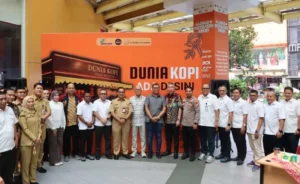
PT Pertamina (Persero) has taken a monumental step in championing local entrepreneurship by facilitating the participation of eight micro, small, and medium enterprises (MSMEs) in the prestigious SIAL (Salon International de l’Alimentation) Food & Drinks Indonesia 2026. The high-profile international trade exhibition officially opened its doors at the Jakarta International Expo (JIExpo) Kemayoran, running a three-day schedule from November 4 to November 6, 2026. This strategic initiative serves as a vital bridge connecting homegrown Indonesian food and beverage producers with a vast network of international and domestic buyers, institutional suppliers, and industrial distributors.
Operating under the umbrella of Pertamina’s flagship Small Medium Enterprise Partnership Program (SMEPP), the selection process involved rigorous curation. From a vast pool of thousands of nurtured business partners spanning various provinces across the archipelago, only eight exceptional enterprises were handpicked. The stringent selection criteria prioritized scalable production capacities, superior product quality standards, and absolute readiness to engage in business-to-business (B2B) commercial arrangements.
The inclusion of these local businesses in an internationally recognized exhibition underscores a broader corporate commitment to elevating Indonesian brands onto the global stage. By providing direct access to premium market segments, Pertamina aims to accelerate the transition of traditional micro-enterprises into globally competitive commercial entities capable of sustaining long-term, high-volume supply chains.
Strategic Preparation and Comprehensive Capacity Building
Participation in a major international exhibition like SIAL requires far more than mere physical presence; it demands rigorous commercial readiness, cross-cultural negotiation skills, and adherence to international trade compliance. Recognizing these prerequisites, PT Pertamina (Persero) instituted a comprehensive pre-event incubation and training regimen for the eight selected MSMEs.
Leading up to the November exhibition, the participants underwent intensive workshops focusing on modern business communication, strategic product pitching, and high-stakes negotiation techniques. According to SMEPP Manager Fety, equipping the business owners with these core competencies is essential for building immediate credibility with prospective institutional buyers. Furthermore, specialized guidance was provided regarding product certification, stringent regulatory compliance, and legal documentation—elements that serve as non-negotiable trust signals in the international B2B marketplace.
"We brought eight carefully selected MSMEs, curated from thousands of our fostered partners, because we identified exceptionally strong potential within their operations—ranging from robust production capacities to distinct product advantages, ensuring they are fully prepared for business-to-business engagements," Fety explained in an official written statement released on Friday, November 6, 2026.
Beyond initial pitching, the training emphasized operational consistency. Fety stressed that maintaining uniform product quality and ensuring strict adherence to delivery timelines are the ultimate cornerstones of sustainable commercial partnerships. Without these safeguards, even the most innovative products fail to secure long-term repeat orders from large-scale distributors and hospitality chains.
Connecting Local Producers with Global Value Chains
The overarching vision of Pertamina’s trade exhibition program extends beyond short-term sales promotion; it is designed to integrate local enterprises deeply into global and national supply value chains. Muhammad Baron, Vice President of Corporate Communication at PT Pertamina (Persero), elaborated on the strategic intent behind the initiative, emphasizing the transformative ripple effect of successful B2B matchmaking.
"We aim to connect our fostered MSMEs with prospective buyers whose procurement needs align precisely with our partners’ product lines and production capacities. Our ultimate expectation is that these introductory meetings will organically evolve into formal, long-term commercial agreements and recurring purchase orders," Baron stated. He further highlighted the socioeconomic multiplier effect of such expansions, noting, "When the market footprint of an MSME grows, the tangible benefits are directly felt by the local communities and grassroots workers involved in the regional production processes."
This philosophy of inclusive economic growth forms the bedrock of Pertamina’s corporate social responsibility framework. By granting regional entrepreneurs a platform at events like SIAL Food & Drinks Indonesia, the state-owned energy enterprise actively mitigates traditional market barriers such as high distribution costs, lack of networking channels, and limited exposure to institutional procurement networks.
Meet the Eight Trailblazing MSMEs
The delegation representing Pertamina at JIExpo Kemayoran showcased a diverse array of value-added food and beverage products, reflecting the rich agricultural biodiversity of Indonesia. The eight enterprises chosen for the 2026 showcase include Naza De Coco, Roemah Rempah, Dapur Sehati, Natural Bali Kulkul, Dede Satoe, Alzavera, Bali Taru Rahayu, and Legend Tren. Each business brought a unique value proposition designed to capture the interest of domestic retailers, international importers, institutional caterers, and the hospitality sector.
Among the standout participants is Bali Taru Rahayu, an enterprise based in Denpasar, Bali, founded by Ni Wayan Sudanti. Having joined Pertamina’s partnership program in 2020, Sudanti’s business specializes in transforming Indonesia’s abundant tropical fruits into premium artisanal jams boasting a remarkably high fruit content exceeding 65 percent. Out of roughly 20 distinct flavor variants developed over the years, specific formulations—notably mango, lemongrass, and ginger jams—have successfully penetrated the stringent supply chains of five-star hotels across Bali. Through its presence at SIAL 2026, the enterprise sought to expand its reach among executive chefs, luxury hotels, upscale restaurants, and major airline catering providers.
Another prominent success story is Naza De Coco, hailing from Ciamis Regency in West Java. Founded by Enok Sri Kurniasih, the enterprise specializes in converting rural coconut water into high-value nata de coco products. Demonstrating impressive industrial scale, Naza De Coco operates with a robust production capacity of 20 tons per week. Approximately 90 percent of its total market output is dedicated to the B2B segment, serving major industrial food and beverage manufacturers.
Empowering Rural Communities and Social Inclusion
The journey of Naza De Coco exemplifies the profound socioeconomic impact achievable when grassroots entrepreneurship is coupled with strategic corporate mentorship. Enok Sri Kurniasih, who is a person with a disability, has transformed her local enterprise into a vital engine of rural employment. Her business operations actively engage nearly 50 women from surrounding villages, providing them with stable, dignified livelihoods.
In addition to traditional food applications, Enok has spearheaded innovative diversification efforts, pioneering the development of nata de coco as an eco-friendly, organic alternative material to animal leather. This innovative biomaterial is currently being adapted for use in fashion and lifestyle goods, including footwear and handbags, thereby tapping into the rapidly growing global market for sustainable and cruelty-free consumer products.
Reflecting on her partnership with the state energy company, Enok expressed deep gratitude for the continuous guidance received. "We are an MSME originating from a rural village, but with Pertamina’s unwavering assistance, our market access has become virtually boundless. We have acquired extensive knowledge through structured training modules covering comprehensive business planning, business model canvas frameworks, and online marketplace management," she noted.
Alignment with National Development Goals and Global Sustainability Targets
The strategic intervention executed by PT Pertamina (Persero) in supporting these eight MSMEs transcends commercial enterprise development; it represents a deliberate contribution to national policy frameworks and international sustainability commitments.
The initiative directly supports Sustainable Development Goal (SDG) 8, which promotes sustained, inclusive, and sustainable economic growth, full and productive employment, and decent work for all. By fostering an environment where rural enterprises can scale their operations, create jobs, and integrate into international trade networks, Pertamina actively addresses economic disparities at the regional level.
Furthermore, this program aligns seamlessly with Indonesia’s broader national policy blueprints, specifically the Asta Cita strategic vision. It directly advances Asta Cita’s third pillar, which focuses on aggressively driving national entrepreneurship, creative industries, and self-reliance. Simultaneously, it supports the sixth pillar, which emphasizes strengthening economic growth and ensuring equitable distribution originating from rural areas and villages ("building from the village up").
As trade exhibitions like SIAL Food & Drinks Indonesia continue to serve as vital crucibles for commercial exchange, the proven resilience, adaptability, and export readiness of Pertamina’s fostered MSMEs demonstrate that Indonesian micro-enterprises possess the capability to compete and thrive on the global economic stage.